

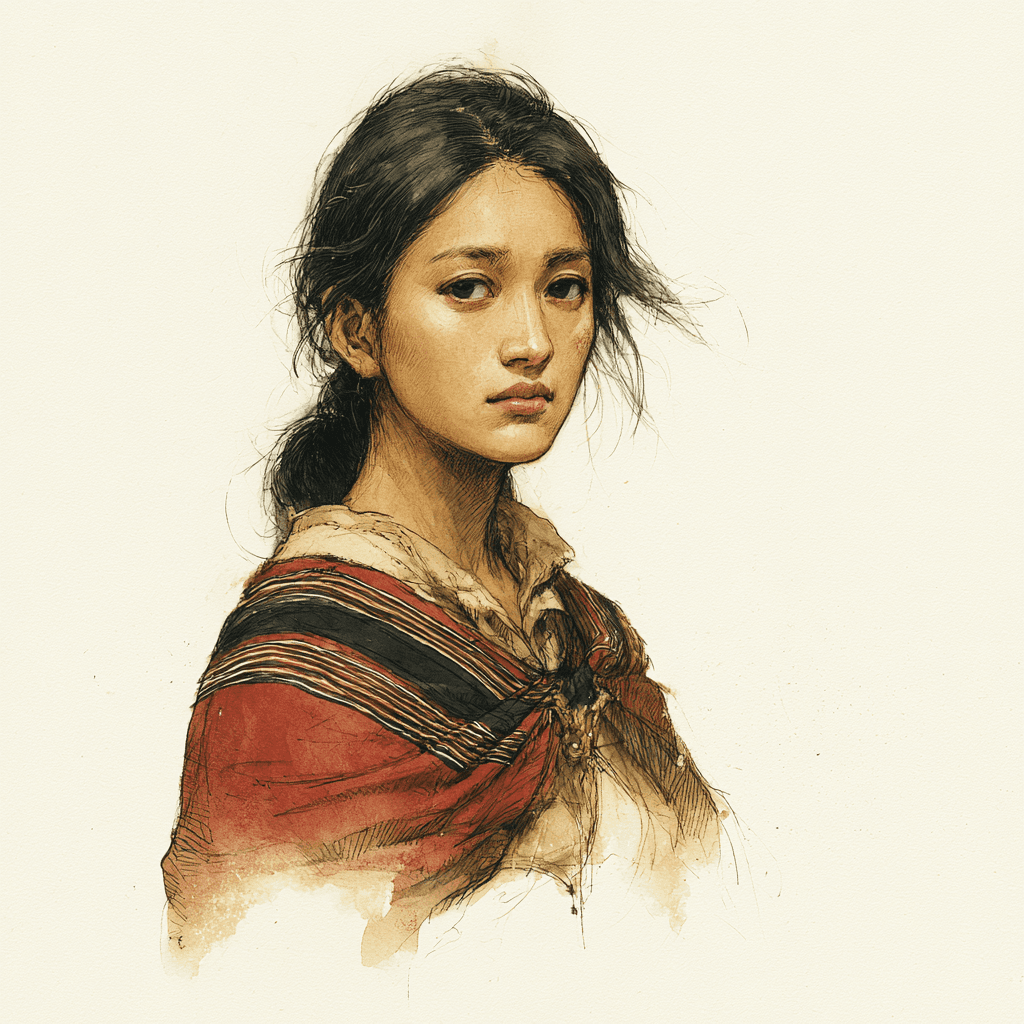
Mahung Mona
Survivor of the Wushe Incident
Japanese Rule
1908–1973
Mahung Mona (1908–1973), a daughter of Mona Rudao, the chieftain of the Mahebu community of the Seediq, was one of the few survivors directly involved in the Wushe Incident of 1930. After the uprising broke out her father Mona Rudao led the people in revolt against the Japanese and finally took his own life in defeat, while her elder brother Tado Mona and the other men of the clan died in battle or hanged themselves under the overwhelming Japanese forces and gas attacks, so that the entire family and community were all but wiped out. As a woman she survived the catastrophe, yet had to bear the heavy trauma of losing her father, brothers and most of her people. In the aftermath the surviving Seediq suffered the retaliatory 'Second Wushe Incident' and were forcibly relocated by the colonial authorities to Kawanakajima (today's Qingliu community) for concentrated control, and she too was driven from her ancestral land. Over the long years that followed she lived on as a survivor into the postwar period, preserving the memories she had witnessed through oral testimony and becoming an important witness for later generations seeking to understand the truth of the Wushe Incident and the suffering of the Seediq people. She died in 1973, her life embodying the collective trauma and resilience of a people torn apart by colonial violence.
1930 Lost her family in the Wushe Incident
1931+ Survived and was relocated to Kawanakajima
Survivor of the Wushe Incident
Mahung Mona
Era
Japanese Rule
Lifespan
1908–1973
Mahung Mona (1908–1973), a daughter of Mona Rudao, the chieftain of the Mahebu community of the Seediq, was one of the few survivors directly involved in the Wushe Incident of 1930. After the uprising broke out her father Mona Rudao led the people in revolt against the Japanese and finally took his own life in defeat, while her elder brother Tado Mona and the other men of the clan died in battle or hanged themselves under the overwhelming Japanese forces and gas attacks, so that the entire family and community were all but wiped out. As a woman she survived the catastrophe, yet had to bear the heavy trauma of losing her father, brothers and most of her people. In the aftermath the surviving Seediq suffered the retaliatory 'Second Wushe Incident' and were forcibly relocated by the colonial authorities to Kawanakajima (today's Qingliu community) for concentrated control, and she too was driven from her ancestral land. Over the long years that followed she lived on as a survivor into the postwar period, preserving the memories she had witnessed through oral testimony and becoming an important witness for later generations seeking to understand the truth of the Wushe Incident and the suffering of the Seediq people. She died in 1973, her life embodying the collective trauma and resilience of a people torn apart by colonial violence.
1930 Lost her family in the Wushe Incident
1931+ Survived and was relocated to Kawanakajima