

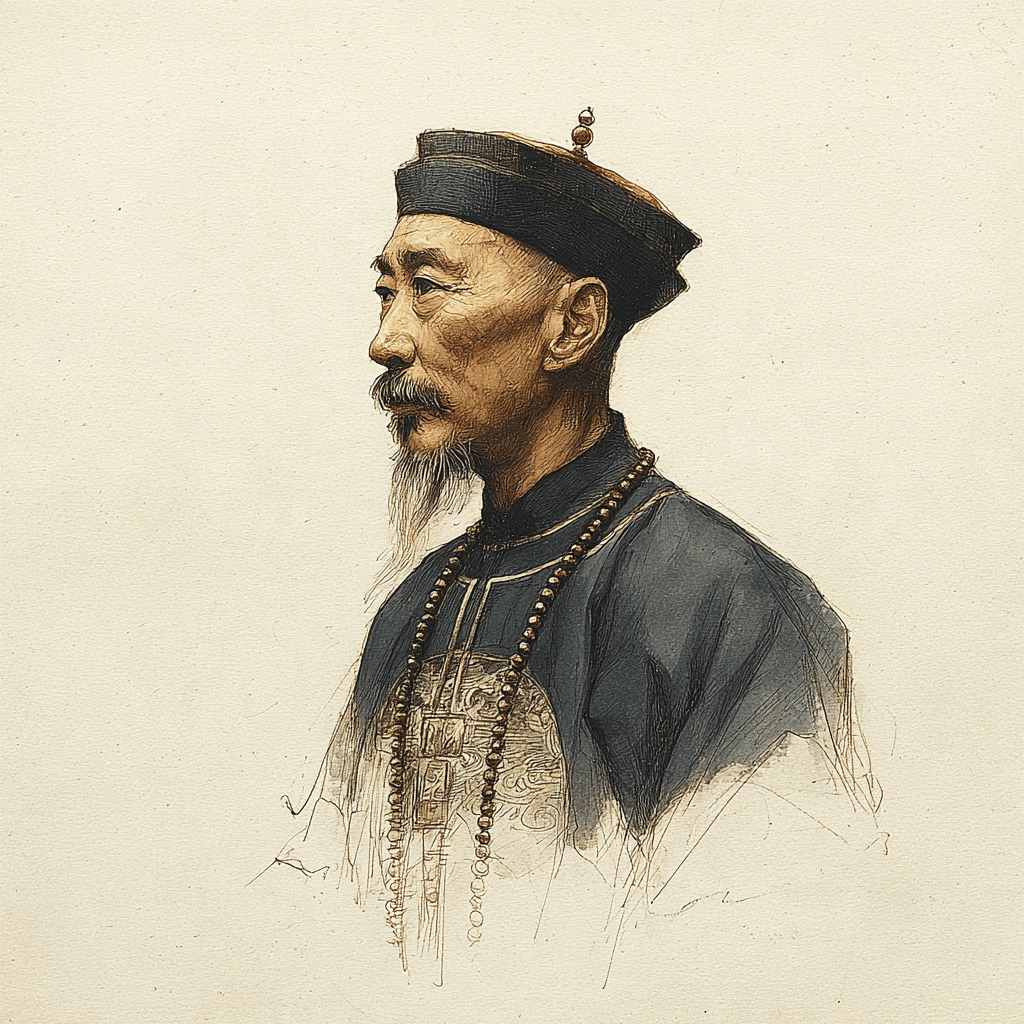
Gioro Manbao
Governor-General of Fujian and Zhejiang
Qing Dynasty
1673–1725
Manbao, of the Gioro clan and the Plain Yellow Banner, was born in 1673. He took the metropolitan examination in 1694, served as a Hanlin bachelor, rose through the Directorate of Education and the Grand Secretariat, became governor of Fujian in 1711 and Governor-General of Fujian and Zhejiang in 1715.
When Zhu Yigui rose in the fourth month of 1721 and Taiwan was lost, Manbao judged Xiamen to be the throat of the island and went to Quanzhou himself, ordering all troops to assemble at Xiamen by sea. To hold grain prices down he shipped in provincial and upriver stores and borrowed tens of thousands of piculs from eastern Guangdong, and the price of rice in Xiamen fell back. Command of the crossing went to Lan Tingzhen of the Nan'ao garrison; Qing troops reached Luermen on the sixteenth of the sixth month and retook the prefectural city on the twenty-third.
What he did after the rising mattered more to southern Taiwan than the campaign itself. The Hakka villages on the east bank of the Lower Tamsui River had formed seven camps and held the southern route while government troops were absent. He memorialised the throne to commend them, gave their district the name Huaizhong, "Cherishing Loyalty," and in 1722 ordered a Hall of Loyalty and Righteousness built at Xishi. Li Zhisan, Hou Guande and five others were promoted to the rank of qianzong, with 950 taels of silver, 300 shi of rice and 100 bolts of silk. The status of yimin, "righteous people," was fixed from then on, and with it a local force the court could call out again and again in the south.
He died in office in 1725, was additionally appointed Minister of War, and left a collection of writings, the Jianxintang ji.
Directed the suppression of the Zhu Yigui rebellion in 1721, holding Xiamen and shipping in grain to steady supplies and the rice price
Named the district Huaizhong and ordered the Hall of Loyalty and Righteousness built in 1722, establishing the status of yimin
Gioro Manbao
Governor-General of Fujian and Zhejiang
Era
Qing Dynasty
Lifespan
1673–1725
Manbao, of the Gioro clan and the Plain Yellow Banner, was born in 1673. He took the metropolitan examination in 1694, served as a Hanlin bachelor, rose through the Directorate of Education and the Grand Secretariat, became governor of Fujian in 1711 and Governor-General of Fujian and Zhejiang in 1715.
When Zhu Yigui rose in the fourth month of 1721 and Taiwan was lost, Manbao judged Xiamen to be the throat of the island and went to Quanzhou himself, ordering all troops to assemble at Xiamen by sea. To hold grain prices down he shipped in provincial and upriver stores and borrowed tens of thousands of piculs from eastern Guangdong, and the price of rice in Xiamen fell back. Command of the crossing went to Lan Tingzhen of the Nan'ao garrison; Qing troops reached Luermen on the sixteenth of the sixth month and retook the prefectural city on the twenty-third.
What he did after the rising mattered more to southern Taiwan than the campaign itself. The Hakka villages on the east bank of the Lower Tamsui River had formed seven camps and held the southern route while government troops were absent. He memorialised the throne to commend them, gave their district the name Huaizhong, "Cherishing Loyalty," and in 1722 ordered a Hall of Loyalty and Righteousness built at Xishi. Li Zhisan, Hou Guande and five others were promoted to the rank of qianzong, with 950 taels of silver, 300 shi of rice and 100 bolts of silk. The status of yimin, "righteous people," was fixed from then on, and with it a local force the court could call out again and again in the south.
He died in office in 1725, was additionally appointed Minister of War, and left a collection of writings, the Jianxintang ji.
Directed the suppression of the Zhu Yigui rebellion in 1721, holding Xiamen and shipping in grain to steady supplies and the rice price
Named the district Huaizhong and ordered the Hall of Loyalty and Righteousness built in 1722, establishing the status of yimin