

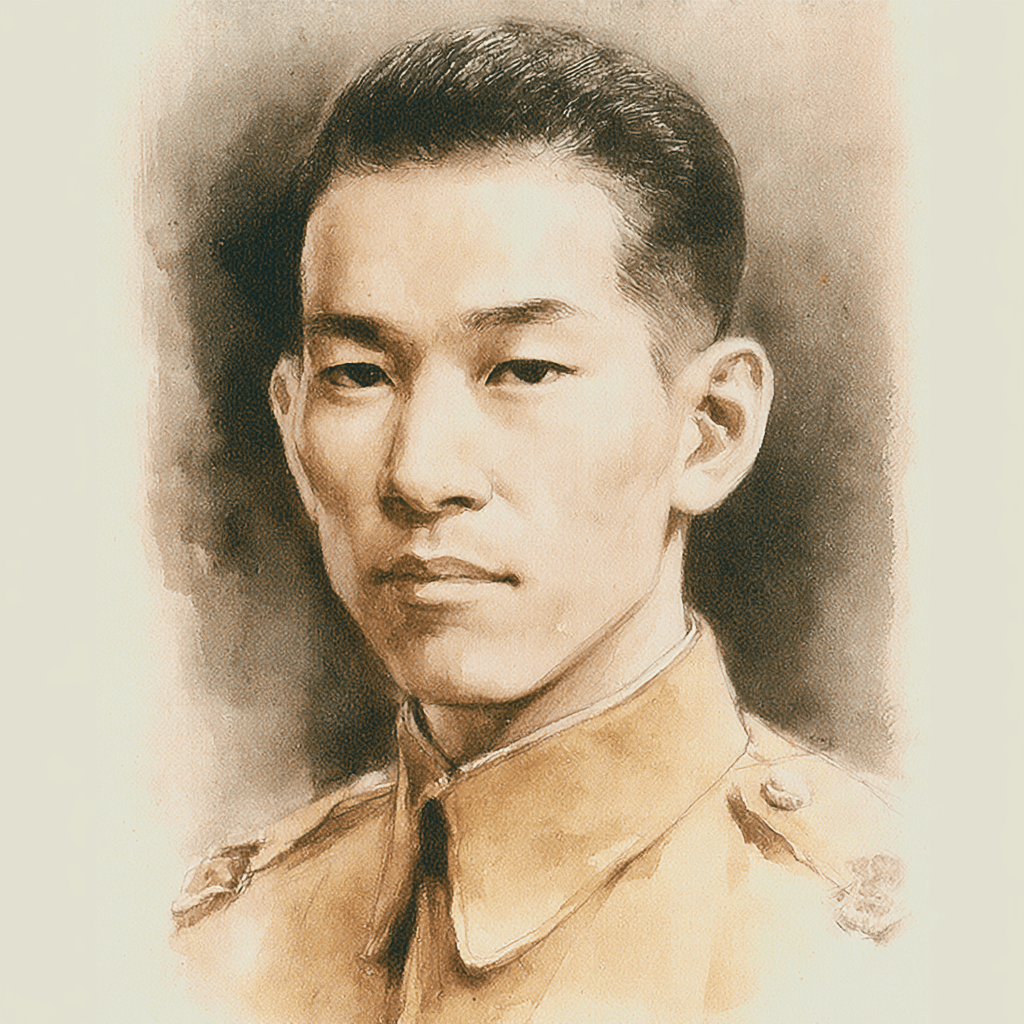
Peng Meng-chi
Kaohsiung Fortress Commander & Army General
Post-War Taiwan
1908–1997
Peng Meng-chi, born in 1908 in Wuchang, Hubei, was the most controversial military commander of the February 28 Incident and later a trusted senior general under the Chiang father and son. He studied at the Whampoa Military Academy and pursued advanced training at the Japanese Army Artillery School, one of the few Nationalist officers with modern artillery training. He held artillery commands during the war against Japan and, after the war, was posted to Taiwan as commander of the Kaohsiung Fortress. When the February 28 Incident broke out in 1947 and clashes between officials and the public spread across the island, local Kaohsiung leaders went to the fortress to negotiate with him. He refused to compromise and on March 6 ordered his troops to attack, striking the city hall, the railway station, and the urban area with machine guns and artillery, causing heavy casualties. This made Kaohsiung one of the most brutally suppressed areas on the island and earned him the epithet "Butcher of Kaohsiung." After February 28 he faced no accountability but was instead promoted for "quelling the rebellion." His career then soared: he served successively as Taiwan garrison commander-in-chief, commander-in-chief of the army, and chief of the general staff, rose to full general, and served as envoy to Japan and Thailand. Long at the core of military-political power, he was a key pillar of the authoritarian system, dying in Taipei in 1997. Peng's life epitomizes the perpetrator's perspective in February 28, and his decisions and subsequent rise remain focal points in debates over transitional justice and historical responsibility.
Ordered the armed suppression of Kaohsiung during February 28 (1947)
Later served as garrison commander-in-chief and chief of the general staff
Kaohsiung Fortress Commander & Army General
Peng Meng-chi
Era
Post-War Taiwan
Lifespan
1908–1997
Peng Meng-chi, born in 1908 in Wuchang, Hubei, was the most controversial military commander of the February 28 Incident and later a trusted senior general under the Chiang father and son. He studied at the Whampoa Military Academy and pursued advanced training at the Japanese Army Artillery School, one of the few Nationalist officers with modern artillery training. He held artillery commands during the war against Japan and, after the war, was posted to Taiwan as commander of the Kaohsiung Fortress. When the February 28 Incident broke out in 1947 and clashes between officials and the public spread across the island, local Kaohsiung leaders went to the fortress to negotiate with him. He refused to compromise and on March 6 ordered his troops to attack, striking the city hall, the railway station, and the urban area with machine guns and artillery, causing heavy casualties. This made Kaohsiung one of the most brutally suppressed areas on the island and earned him the epithet "Butcher of Kaohsiung." After February 28 he faced no accountability but was instead promoted for "quelling the rebellion." His career then soared: he served successively as Taiwan garrison commander-in-chief, commander-in-chief of the army, and chief of the general staff, rose to full general, and served as envoy to Japan and Thailand. Long at the core of military-political power, he was a key pillar of the authoritarian system, dying in Taipei in 1997. Peng's life epitomizes the perpetrator's perspective in February 28, and his decisions and subsequent rise remain focal points in debates over transitional justice and historical responsibility.
Ordered the armed suppression of Kaohsiung during February 28 (1947)
Later served as garrison commander-in-chief and chief of the general staff