

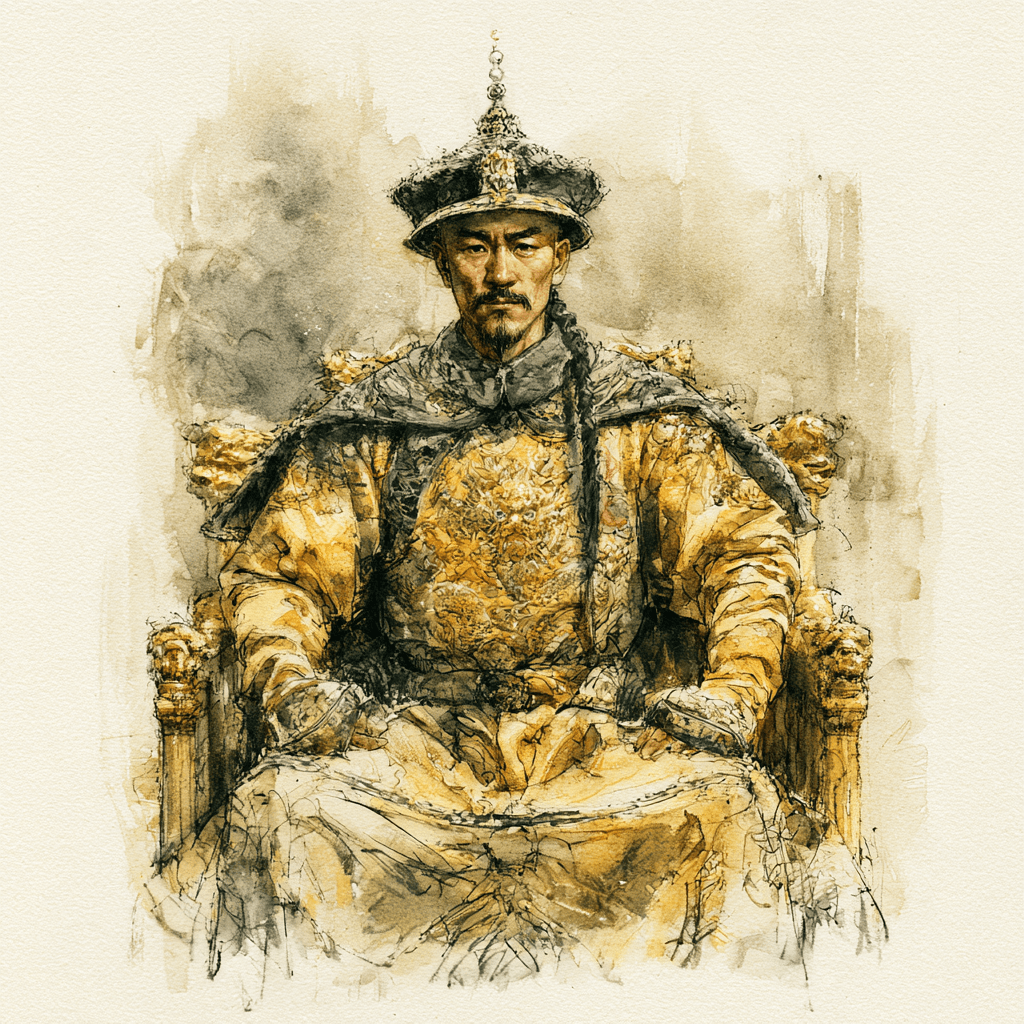
Qianlong Emperor
Sixth Emperor of the Qing Dynasty
High Qing Era
1711–1799
The Qianlong Emperor, personal name Aisin Gioro Hongli, was born in Beijing in 1711 as the fourth son of the Yongzheng Emperor and was personally selected by his grandfather the Kangxi Emperor as the dynasty's eventual heir. After Yongzheng's death in 1735, he formally ascended the throne the following year as Emperor Gaozong of the Qing. His reign of sixty years and a further three years as retired emperor amounted to roughly sixty-three years of effective rule, the longest period of personal authority of any Chinese monarch in recorded history. From the outset of his reign he pursued a policy of personal autocracy that built upon the centralized administration of his father and grandfather, expanding the role of the Grand Council and refining the balance between Manchu and Han Chinese officials. He waged the so-called Ten Great Campaigns — including expeditions against the Dzungar Khanate, the Tarim oases, the Jinchuan tribes, Burma, Annam, and Nepal, along with the suppression of the Lin Shuangwen rebellion on Taiwan and the early White Lotus uprisings in Fujian — pushing the Qing empire to its greatest territorial extent. In his governance of Taiwan he maintained the strict savage-boundary policy of his predecessors and remained extremely conservative regarding migration permits and frontier expenditure. When the Lin Shuangwen rebellion broke out in 1786, he personally ordered his favored general Fukang'an to lead a sixty-thousand-strong army across the strait to suppress it. In 1787, to honor the residents of the city of Chu-lo for their resolute defense against the rebels, he bestowed the new name Jiayi — meaning praiseworthy righteousness — on the city, a name that survives to this day. Culturally he sponsored the compilation of the Siku Quanshu, the largest officially commissioned anthology in Chinese history at over three thousand four hundred titles and nearly eighty thousand fascicles, while simultaneously pursuing more than a hundred literary inquisitions that brought thought control to its Qing-era peak. In his later years he came under the influence of the corrupt favorite Heshen, and the costs of his seven southern tours and the construction of the imperial gardens at Chengde and Yuanmingyuan drained a once-flush treasury, setting the stage for the decline of the early nineteenth century. In 1796 he formally abdicated in deference to his vow not to exceed his grandfather's sixty-one-year reign, but he continued to govern from behind the throne until his death at the age of eighty-eight in 1799. The Qianlong Emperor is generally regarded as the last symbol of the High Qing era, and his military suppression of Taiwan together with his imperial naming of Jiayi constituted the most emblematic act of the Qing transition from defensive containment to active management of the Taiwanese frontier.
Imperially named Jiayi County in 1787 after the suppression of the Lin Shuangwen rebellion
Sixth Emperor of the Qing Dynasty
Qianlong Emperor
Era
High Qing Era
Lifespan
1711–1799
The Qianlong Emperor, personal name Aisin Gioro Hongli, was born in Beijing in 1711 as the fourth son of the Yongzheng Emperor and was personally selected by his grandfather the Kangxi Emperor as the dynasty's eventual heir. After Yongzheng's death in 1735, he formally ascended the throne the following year as Emperor Gaozong of the Qing. His reign of sixty years and a further three years as retired emperor amounted to roughly sixty-three years of effective rule, the longest period of personal authority of any Chinese monarch in recorded history. From the outset of his reign he pursued a policy of personal autocracy that built upon the centralized administration of his father and grandfather, expanding the role of the Grand Council and refining the balance between Manchu and Han Chinese officials. He waged the so-called Ten Great Campaigns — including expeditions against the Dzungar Khanate, the Tarim oases, the Jinchuan tribes, Burma, Annam, and Nepal, along with the suppression of the Lin Shuangwen rebellion on Taiwan and the early White Lotus uprisings in Fujian — pushing the Qing empire to its greatest territorial extent. In his governance of Taiwan he maintained the strict savage-boundary policy of his predecessors and remained extremely conservative regarding migration permits and frontier expenditure. When the Lin Shuangwen rebellion broke out in 1786, he personally ordered his favored general Fukang'an to lead a sixty-thousand-strong army across the strait to suppress it. In 1787, to honor the residents of the city of Chu-lo for their resolute defense against the rebels, he bestowed the new name Jiayi — meaning praiseworthy righteousness — on the city, a name that survives to this day. Culturally he sponsored the compilation of the Siku Quanshu, the largest officially commissioned anthology in Chinese history at over three thousand four hundred titles and nearly eighty thousand fascicles, while simultaneously pursuing more than a hundred literary inquisitions that brought thought control to its Qing-era peak. In his later years he came under the influence of the corrupt favorite Heshen, and the costs of his seven southern tours and the construction of the imperial gardens at Chengde and Yuanmingyuan drained a once-flush treasury, setting the stage for the decline of the early nineteenth century. In 1796 he formally abdicated in deference to his vow not to exceed his grandfather's sixty-one-year reign, but he continued to govern from behind the throne until his death at the age of eighty-eight in 1799. The Qianlong Emperor is generally regarded as the last symbol of the High Qing era, and his military suppression of Taiwan together with his imperial naming of Jiayi constituted the most emblematic act of the Qing transition from defensive containment to active management of the Taiwanese frontier.
Imperially named Jiayi County in 1787 after the suppression of the Lin Shuangwen rebellion