

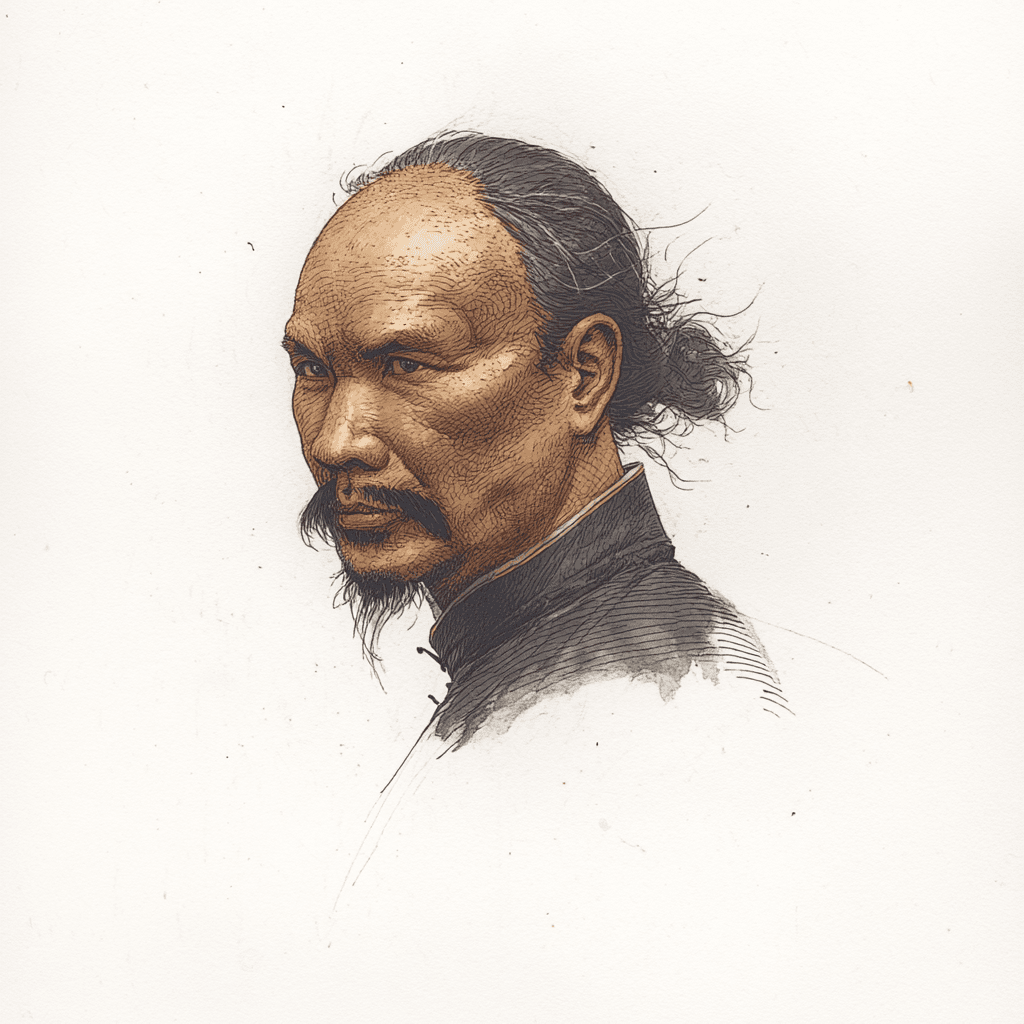
Qiu Fengjia
Hakka Gentry and Volunteer Army Leader
First Sino-Japanese War / 1895
1864–1912
Qiu Fengjia, born in 1864 into a Hakka family in Tongluo, Miaoli, and later resettled in Taichung, was a late-Qing scholar-official, poet, and educator who became a central figure of the 1895 Taiwanese resistance to Japan. He earned the highest imperial examination degree in 1889 and was appointed a junior compiler at the Hanlin Academy but soon returned to Taiwan, citing filial duty, where he founded schools to educate local youth. Influenced by reformist thinkers such as Liang Qichao, he advocated self-strengthening on the island. When news of the Qing defeat in the First Sino-Japanese War and the cession of Taiwan reached him in 1895, he joined Tang Jingsong and other gentry in calling for the establishment of the so-called Republic of Formosa, personally drafting its proclamations. He was appointed Commander of the Righteous Army and Inspector-General of the militia and exhausted his personal fortune raising volunteer units in Taichung, Hsinchu, and other parts of central Taiwan. After Japanese forces broke the northern defenses and pushed south, he withdrew with his troops into the Hsinchu–Miaoli hills before defeat and exhaustion forced him to flee across the strait to Guangdong. In retirement at his ancestral home in Zhenping (modern Jiaoling), Guangdong, he wrote the famous couplet — 'The minister has power to cede land; the loyal subject lacks strength to redeem heaven' — which became one of the most enduring poetic expressions of the loss of Taiwan. He later joined late-Qing educational reform efforts, founded modern schools, and served as Vice-Speaker of the Guangdong Provincial Assembly. After the 1911 Revolution he supported the new republic and was appointed Education Commissioner of the Guangdong military government. He died in 1912 at the age of forty-eight from overwork and illness. Qiu is widely commemorated on both sides of the Taiwan Strait as a leading literati voice of the 1895 resistance and a transitional figure linking late-Qing reform to early Republican-era education and politics.
1895 Co-founded the Republic of Formosa and raised volunteer armies
1895 Withdrew to Guangdong after the collapse of resistance
Hakka Gentry and Volunteer Army Leader
Qiu Fengjia
Era
First Sino-Japanese War / 1895
Lifespan
1864–1912
Qiu Fengjia, born in 1864 into a Hakka family in Tongluo, Miaoli, and later resettled in Taichung, was a late-Qing scholar-official, poet, and educator who became a central figure of the 1895 Taiwanese resistance to Japan. He earned the highest imperial examination degree in 1889 and was appointed a junior compiler at the Hanlin Academy but soon returned to Taiwan, citing filial duty, where he founded schools to educate local youth. Influenced by reformist thinkers such as Liang Qichao, he advocated self-strengthening on the island. When news of the Qing defeat in the First Sino-Japanese War and the cession of Taiwan reached him in 1895, he joined Tang Jingsong and other gentry in calling for the establishment of the so-called Republic of Formosa, personally drafting its proclamations. He was appointed Commander of the Righteous Army and Inspector-General of the militia and exhausted his personal fortune raising volunteer units in Taichung, Hsinchu, and other parts of central Taiwan. After Japanese forces broke the northern defenses and pushed south, he withdrew with his troops into the Hsinchu–Miaoli hills before defeat and exhaustion forced him to flee across the strait to Guangdong. In retirement at his ancestral home in Zhenping (modern Jiaoling), Guangdong, he wrote the famous couplet — 'The minister has power to cede land; the loyal subject lacks strength to redeem heaven' — which became one of the most enduring poetic expressions of the loss of Taiwan. He later joined late-Qing educational reform efforts, founded modern schools, and served as Vice-Speaker of the Guangdong Provincial Assembly. After the 1911 Revolution he supported the new republic and was appointed Education Commissioner of the Guangdong military government. He died in 1912 at the age of forty-eight from overwork and illness. Qiu is widely commemorated on both sides of the Taiwan Strait as a leading literati voice of the 1895 resistance and a transitional figure linking late-Qing reform to early Republican-era education and politics.
1895 Co-founded the Republic of Formosa and raised volunteer armies
1895 Withdrew to Guangdong after the collapse of resistance