

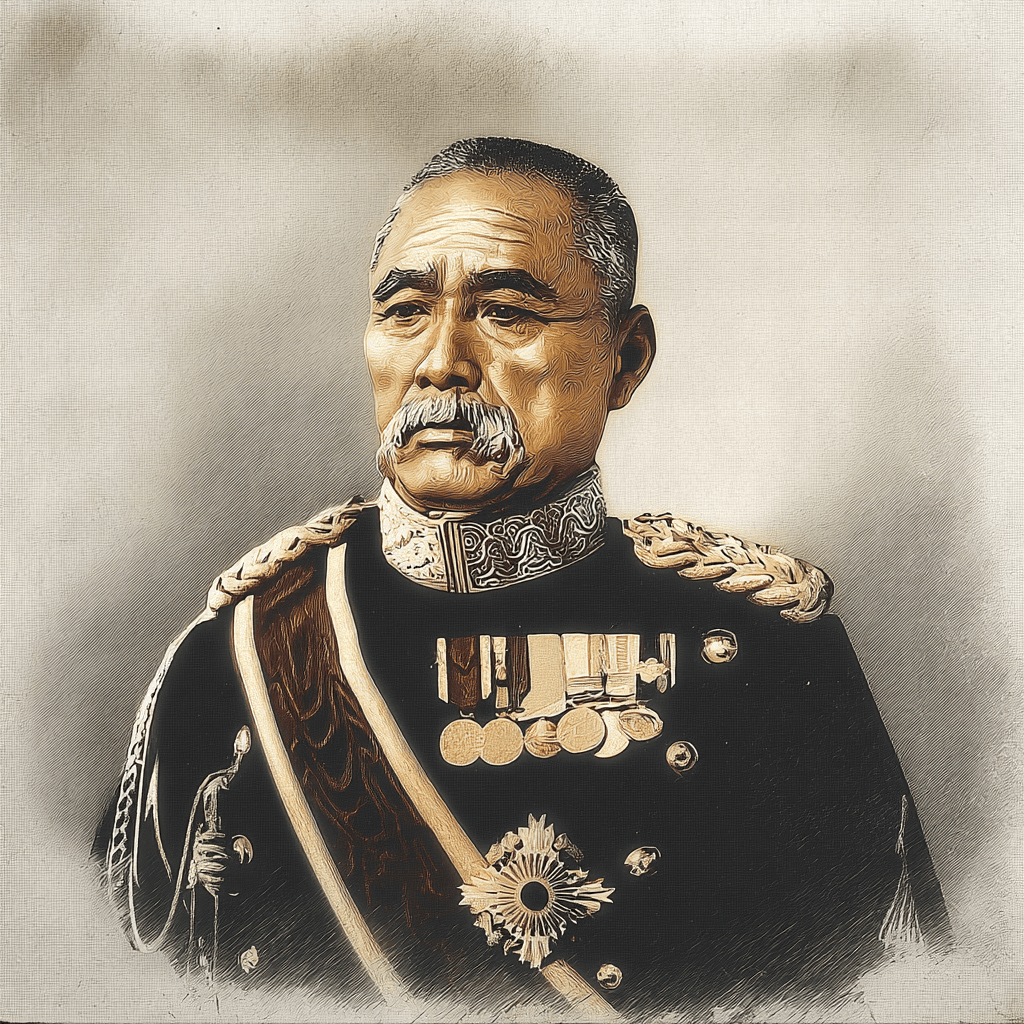
Sakuma Samata
Fifth Governor-General of Taiwan
Japanese Colonial
1844–1915
Sakuma Samata was born in 1844 in the Choshu domain and rose through the Imperial Japanese Army as a career soldier who had fought in Japan's earliest overseas expedition to Taiwan back in 1874. In 1906 he was appointed the fifth Governor-General of Taiwan, an office he would hold for nine years — longer than any other. Where his predecessors had concentrated on the lowlands, Sakuma set his sights on the mountains and the Indigenous peoples who still lived beyond colonial control. In 1910 he launched the Five-Year Plan to Subjugate the Aborigines, driving armed guard-lines deep into the highlands to seize the camphor forests. Its climax was the Taroko War of 1914, in which the seventy-year-old governor personally led a force of over twenty thousand against the Truku people. He was gravely injured in the campaign, resigned the following year, and died in 1915. Sakuma is remembered as the iron-fisted architect of the colonial state's conquest of the mountains — a legacy of roads and administration built atop immense Indigenous suffering.
Launched the Five-Year Plan to Subjugate the Aborigines (1910)
Personally led the Taroko War (1914)
Fifth Governor-General of Taiwan
Sakuma Samata
Era
Japanese Colonial
Lifespan
1844–1915
Sakuma Samata was born in 1844 in the Choshu domain and rose through the Imperial Japanese Army as a career soldier who had fought in Japan's earliest overseas expedition to Taiwan back in 1874. In 1906 he was appointed the fifth Governor-General of Taiwan, an office he would hold for nine years — longer than any other. Where his predecessors had concentrated on the lowlands, Sakuma set his sights on the mountains and the Indigenous peoples who still lived beyond colonial control. In 1910 he launched the Five-Year Plan to Subjugate the Aborigines, driving armed guard-lines deep into the highlands to seize the camphor forests. Its climax was the Taroko War of 1914, in which the seventy-year-old governor personally led a force of over twenty thousand against the Truku people. He was gravely injured in the campaign, resigned the following year, and died in 1915. Sakuma is remembered as the iron-fisted architect of the colonial state's conquest of the mountains — a legacy of roads and administration built atop immense Indigenous suffering.
Launched the Five-Year Plan to Subjugate the Aborigines (1910)
Personally led the Taroko War (1914)