

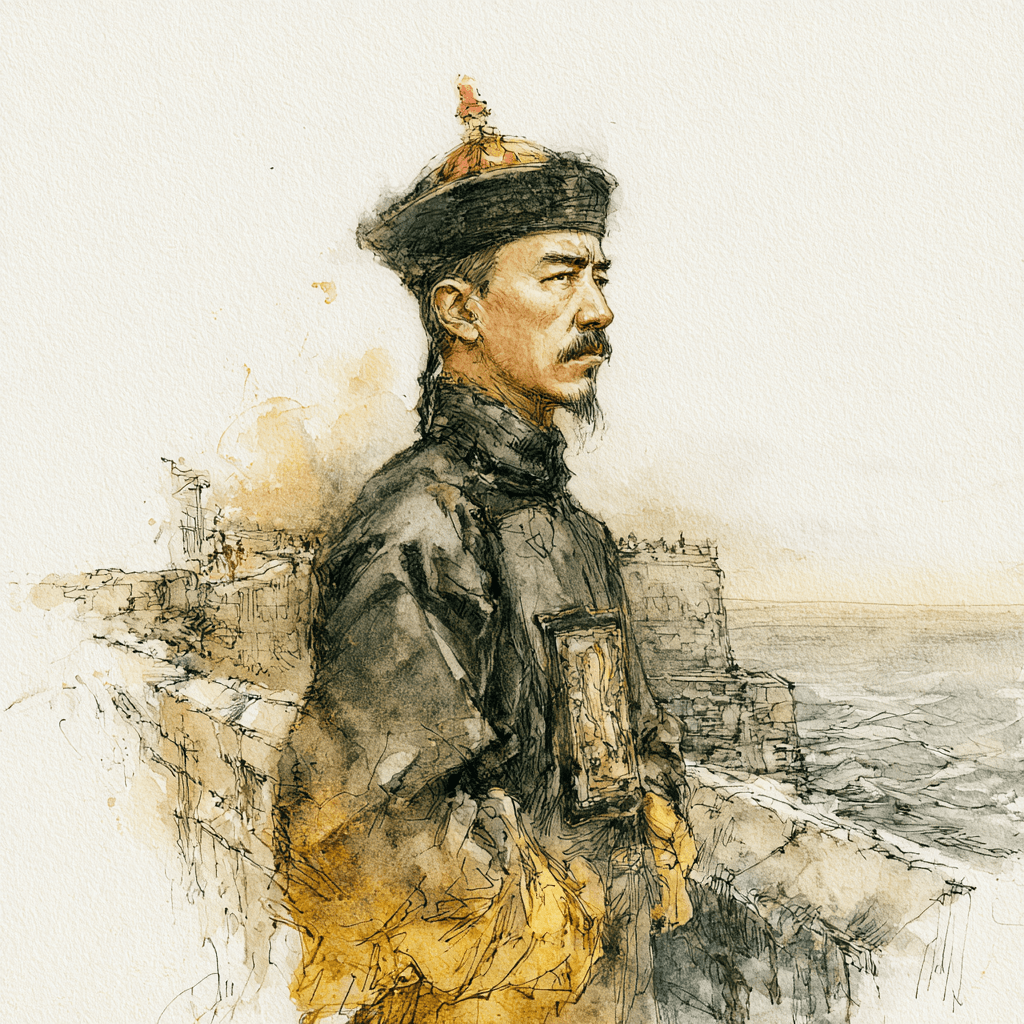
Shen Baozhen
Imperial Commissioner
Late Qing Frontier
1820–1879
Shen Baozhen, born in 1820 in Fuzhou, Fujian, was a senior Qing official and naval modernizer whose 1874–1875 mission as Imperial Commissioner to Taiwan inaugurated the late-Qing transformation of the island. He passed the metropolitan examination in 1847 and rose through the bureaucracy with a reputation for incorruptibility and administrative skill, serving in Jiangxi as a major provincial governor during the Taiping Civil War. He married a daughter of the famed anti-opium statesman Lin Zexu, a family connection that placed him at the heart of the reformist gentry network associated with the Self-Strengthening Movement. From 1867 he served for nearly a decade as the founding head of the Fuzhou Navy Yard at Mawei, building the Qing's first modern shipyard and naval academy and producing the early generation of Chinese steam warships. The 1874 Japanese punitive expedition against the Paiwan villages of Mudan, in southern Taiwan, prompted the Qing court to send him as Imperial Commissioner with full authority over military and civil affairs. Arriving at Tainan in June 1874, he combined firm diplomatic posture with battlefield buildup, eventually persuading Japan to withdraw under a Beijing-mediated settlement that October. He launched the long-planned Open the Mountains, Pacify the Indigenes (開山撫番) campaign, cutting three trans-island military roads — northern, central, and southern — across the central range to integrate indigenous territories with the Qing administrative system. He lifted the centuries-old restriction on family migration from the mainland, abolished the ban on settler-indigenous intermarriage, and authorized large-scale Han settlement in formerly off-limits regions. He reorganized Taiwan's administrative geography, creating Taipei Prefecture, Beinan and Puli sub-prefectures, and elevating the status of eastern and inland districts. He commissioned the construction of the Eternal Golden Castle (億載金城) modern artillery fort at Anping to anchor coastal defense, and modernized the harbors at Anping and Tamsui. He returned to the mainland in mid-1875 to take up senior posts as Governor-General of Liang-Jiang and continued to oversee naval modernization until his death from illness in 1879. Shen's brief but intensive Taiwan mission marked the decisive shift in Qing frontier policy and laid the groundwork for the elevation of Taiwan to provincial status in 1885 under the reformist program of his successor Liu Mingchuan.
Launched the 'open the mountains, pacify the aborigines' (開山撫番) policy
Lifted the migration and family ban; reorganized Taiwan's administrative divisions
Imperial Commissioner
Shen Baozhen
Era
Late Qing Frontier
Lifespan
1820–1879
Shen Baozhen, born in 1820 in Fuzhou, Fujian, was a senior Qing official and naval modernizer whose 1874–1875 mission as Imperial Commissioner to Taiwan inaugurated the late-Qing transformation of the island. He passed the metropolitan examination in 1847 and rose through the bureaucracy with a reputation for incorruptibility and administrative skill, serving in Jiangxi as a major provincial governor during the Taiping Civil War. He married a daughter of the famed anti-opium statesman Lin Zexu, a family connection that placed him at the heart of the reformist gentry network associated with the Self-Strengthening Movement. From 1867 he served for nearly a decade as the founding head of the Fuzhou Navy Yard at Mawei, building the Qing's first modern shipyard and naval academy and producing the early generation of Chinese steam warships. The 1874 Japanese punitive expedition against the Paiwan villages of Mudan, in southern Taiwan, prompted the Qing court to send him as Imperial Commissioner with full authority over military and civil affairs. Arriving at Tainan in June 1874, he combined firm diplomatic posture with battlefield buildup, eventually persuading Japan to withdraw under a Beijing-mediated settlement that October. He launched the long-planned Open the Mountains, Pacify the Indigenes (開山撫番) campaign, cutting three trans-island military roads — northern, central, and southern — across the central range to integrate indigenous territories with the Qing administrative system. He lifted the centuries-old restriction on family migration from the mainland, abolished the ban on settler-indigenous intermarriage, and authorized large-scale Han settlement in formerly off-limits regions. He reorganized Taiwan's administrative geography, creating Taipei Prefecture, Beinan and Puli sub-prefectures, and elevating the status of eastern and inland districts. He commissioned the construction of the Eternal Golden Castle (億載金城) modern artillery fort at Anping to anchor coastal defense, and modernized the harbors at Anping and Tamsui. He returned to the mainland in mid-1875 to take up senior posts as Governor-General of Liang-Jiang and continued to oversee naval modernization until his death from illness in 1879. Shen's brief but intensive Taiwan mission marked the decisive shift in Qing frontier policy and laid the groundwork for the elevation of Taiwan to provincial status in 1885 under the reformist program of his successor Liu Mingchuan.
Launched the 'open the mountains, pacify the aborigines' (開山撫番) policy
Lifted the migration and family ban; reorganized Taiwan's administrative divisions