

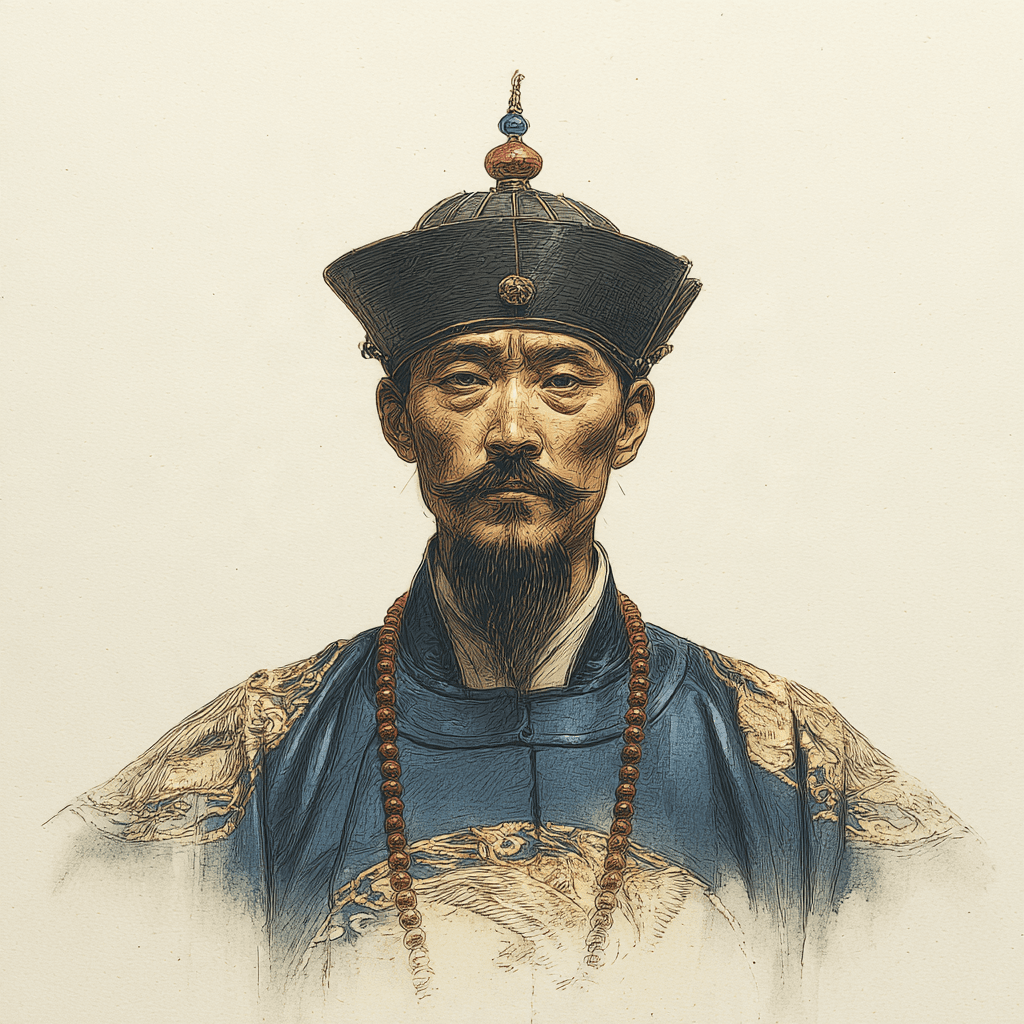
Shi Shibiao
Admiral of the Fujian Navy
Qing Dynasty
1667–1721
Shi Shibiao was a son of Shi Lang, born in 1667 in Jinjiang, Fujian. In 1683, at seventeen, he sailed with his father to Penghu and watched Liu Guoxuan's fleet broken apart in seven days. After that battle Taiwan entered the Qing empire.
He spent his whole life in the navy. When Zhu Yigui rose at Luohanmen in the spring of 1721, Shi already held the post his father once held — Admiral of the Fujian Navy, stationed at Xiamen. In early May the prefectural city fell, the Taiwan garrison commander Ouyang Kai was killed, and the civil and military officials fled by boat to Penghu.
Shi took the fleet to Penghu first, while the Governor-General of Min-Zhe, Gioro Manboo, sent Lan Tingzhen, the brigade commander of Nan'ao, out from Xiamen. The two forces joined at Penghu, eighteen thousand men in all. On the sixteenth day of the sixth month the fleet entered Lu'ermen; on the twenty-third they retook the city. Seven days from landing to entry — fast enough to surprise the court. By then the two rebel camps had split along Fujian and Guangdong lines and turned on each other, and the city was effectively empty. In the intercalary sixth month Zhu Yigui was captured at Gouwei.
Shi did not return to Xiamen at once. He stayed to manage the aftermath. In the eighth month a typhoon flattened most of the houses in and around the city; he directed the relief through the storm, fell ill, and died in Taiwan in the ninth month, aged fifty-four.
Shi Lang did not stay long on the island after taking it. His son died there.
1683 Sailed with his father Shi Lang to the Battle of Penghu
1721 Led the navy across and retook the prefectural city seven days after landing
Shi Shibiao
Admiral of the Fujian Navy
Era
Qing Dynasty
Lifespan
1667–1721
Shi Shibiao was a son of Shi Lang, born in 1667 in Jinjiang, Fujian. In 1683, at seventeen, he sailed with his father to Penghu and watched Liu Guoxuan's fleet broken apart in seven days. After that battle Taiwan entered the Qing empire.
He spent his whole life in the navy. When Zhu Yigui rose at Luohanmen in the spring of 1721, Shi already held the post his father once held — Admiral of the Fujian Navy, stationed at Xiamen. In early May the prefectural city fell, the Taiwan garrison commander Ouyang Kai was killed, and the civil and military officials fled by boat to Penghu.
Shi took the fleet to Penghu first, while the Governor-General of Min-Zhe, Gioro Manboo, sent Lan Tingzhen, the brigade commander of Nan'ao, out from Xiamen. The two forces joined at Penghu, eighteen thousand men in all. On the sixteenth day of the sixth month the fleet entered Lu'ermen; on the twenty-third they retook the city. Seven days from landing to entry — fast enough to surprise the court. By then the two rebel camps had split along Fujian and Guangdong lines and turned on each other, and the city was effectively empty. In the intercalary sixth month Zhu Yigui was captured at Gouwei.
Shi did not return to Xiamen at once. He stayed to manage the aftermath. In the eighth month a typhoon flattened most of the houses in and around the city; he directed the relief through the storm, fell ill, and died in Taiwan in the ninth month, aged fifty-four.
Shi Lang did not stay long on the island after taking it. His son died there.
1683 Sailed with his father Shi Lang to the Battle of Penghu
1721 Led the navy across and retook the prefectural city seven days after landing