

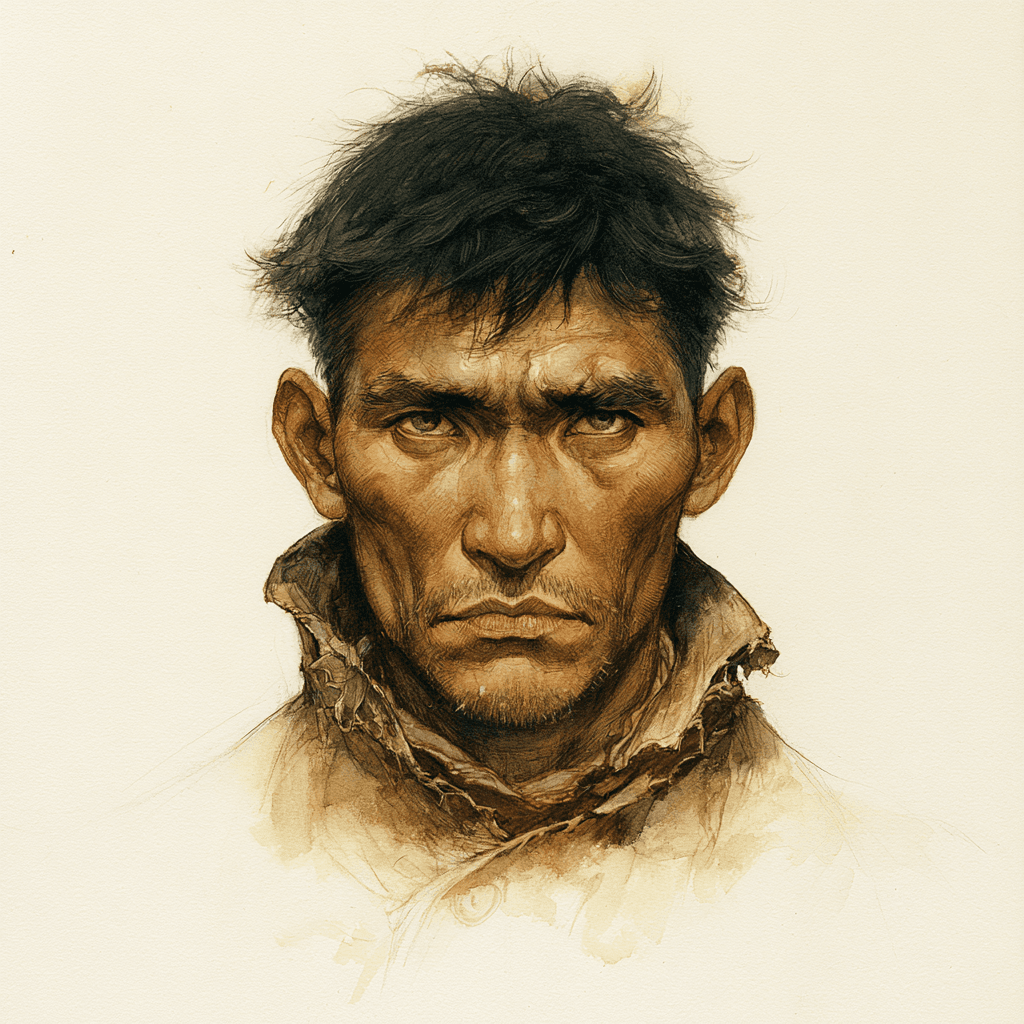
Suniuo
The Last Taiwanese Japanese Soldier to Return
Japanese Rule
1919–1979
Suniuo (1919–1979), an Amis man from Taitung, known by the Japanese name 'Nakamura Teruo' and the postwar Chinese name 'Li Kuang-hui,' is the most representative symbol of the tragic fate of Taiwanese soldiers in the Japanese army. During the Second World War, swept up in the tide of imperialization and wartime mobilization, he was enrolled in the Japanese army's 'Takasago Volunteer Units' and in 1943 was sent to fight on the island of Morotai in the Indonesian South Seas. When Japan was defeated and the war ended in 1945 he became separated from his unit and never received word of the surrender, and so he fled alone deep into the jungle to survive. There he lived off the land in the most primitive way, building a crude shelter, planting crops and setting traps to hunt, passing nearly thirty years in solitude, wholly unaware that the war had long since ended and the world had been turned upside down. Only in 1974 was he discovered and recovered in Indonesia, stunning the world and becoming, after the Japanese soldiers Yokoi Shoichi and Onoda Hiroo, another legend of a 'holdout soldier.' When he returned to Taiwan his homeland, family and the whole of society had utterly changed, and even his language and sense of identity faced a vast rupture—he was neither simply Japanese nor able to reintegrate into postwar Taiwan. Only four years after returning, he died of illness in 1979. The life of Suniuo distils the collective tragedy of the Taiwanese, mobilized, forgotten and cast adrift by the tides of history in the crevice between colonialism and war.
1943 Enrolled in the Takasago Volunteer Units and sent to fight in the South Seas
1974 Found in the Indonesian jungle, ending nearly thirty years in hiding
The Last Taiwanese Japanese Soldier to Return
Suniuo
Era
Japanese Rule
Lifespan
1919–1979
Suniuo (1919–1979), an Amis man from Taitung, known by the Japanese name 'Nakamura Teruo' and the postwar Chinese name 'Li Kuang-hui,' is the most representative symbol of the tragic fate of Taiwanese soldiers in the Japanese army. During the Second World War, swept up in the tide of imperialization and wartime mobilization, he was enrolled in the Japanese army's 'Takasago Volunteer Units' and in 1943 was sent to fight on the island of Morotai in the Indonesian South Seas. When Japan was defeated and the war ended in 1945 he became separated from his unit and never received word of the surrender, and so he fled alone deep into the jungle to survive. There he lived off the land in the most primitive way, building a crude shelter, planting crops and setting traps to hunt, passing nearly thirty years in solitude, wholly unaware that the war had long since ended and the world had been turned upside down. Only in 1974 was he discovered and recovered in Indonesia, stunning the world and becoming, after the Japanese soldiers Yokoi Shoichi and Onoda Hiroo, another legend of a 'holdout soldier.' When he returned to Taiwan his homeland, family and the whole of society had utterly changed, and even his language and sense of identity faced a vast rupture—he was neither simply Japanese nor able to reintegrate into postwar Taiwan. Only four years after returning, he died of illness in 1979. The life of Suniuo distils the collective tragedy of the Taiwanese, mobilized, forgotten and cast adrift by the tides of history in the crevice between colonialism and war.
1943 Enrolled in the Takasago Volunteer Units and sent to fight in the South Seas
1974 Found in the Indonesian jungle, ending nearly thirty years in hiding