

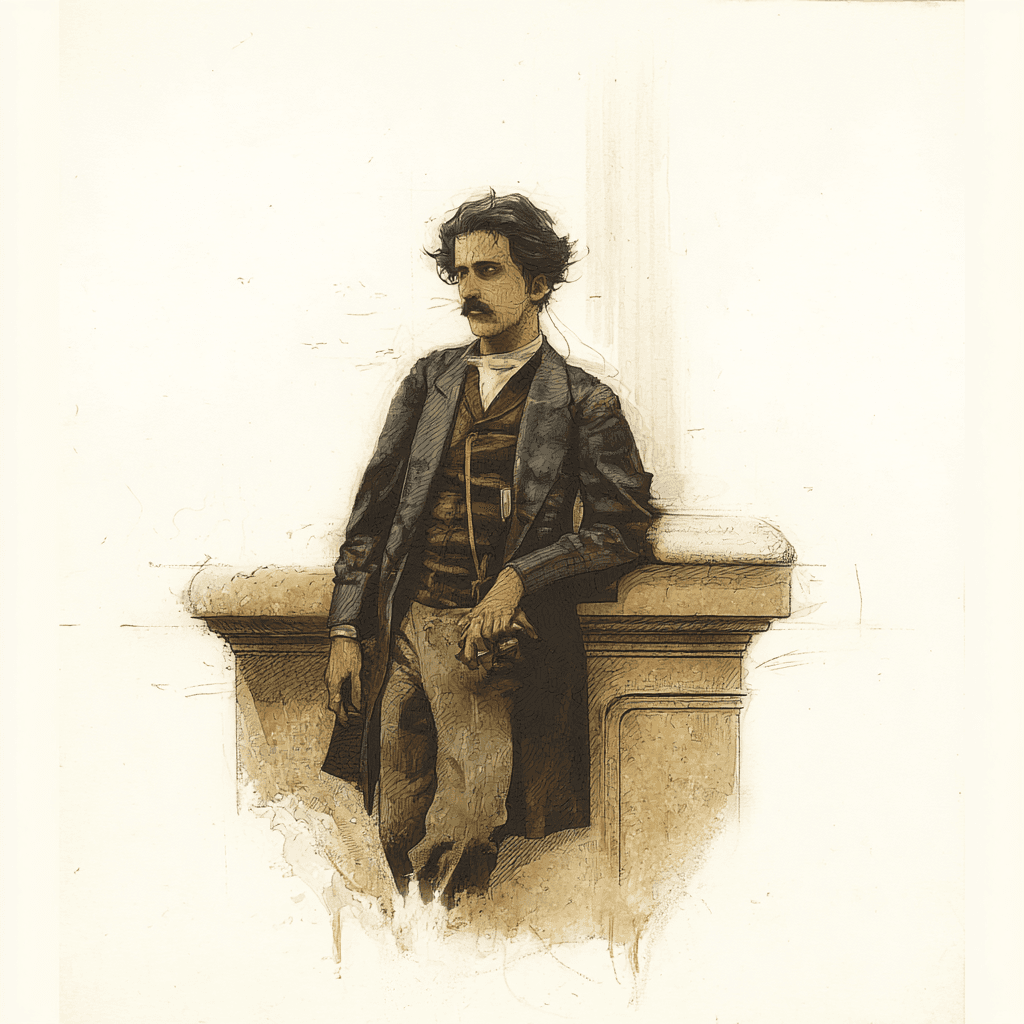
Robert Swinhoe
British Consul and Naturalist
Qing Dynasty
1836–1877
Robert Swinhoe, born in 1836 in Calcutta to a British family, served as British vice-consul and then consul in Taiwan from 1861 to 1866 and conducted during those years the most systematic natural history survey the island had ever received, naming and describing over a hundred new species of birds, mammals, and reptiles and establishing Taiwan's place in the global scientific record of the natural world. He had developed his interest in natural history during earlier postings in Hong Kong and Amoy and brought to Taiwan a rigorous scientific method, collecting specimens, drawing detailed illustrations, and dispatching them to the Zoological Society of London, where his descriptions were formally described and published in the Society's Proceedings throughout the 1860s. Among the species Swinhoe named and described from Taiwan were the Taiwan blue magpie (臺灣藍鵲, Urocissa caerulea), now one of the most beloved national symbols of the island; the Mikado pheasant (帝雉, Syrmaticus mikado), which was later depicted on Taiwan's thousand-dollar banknote; Swinhoe's pheasant (藍腹鷴, Lophura swinhoii), named in his honor by later taxonomists; and dozens of other birds, along with mammals including the Formosan rock macaque, the Formosan serow, and several bat species unique to the island. Swinhoe also collected ethnographic information on the indigenous peoples of Taiwan, producing some of the earliest systematic accounts in any Western language of Siraya, Pazeh, and other Pingpu groups as well as highland Atayal communities, and he documented the physical geography of the island, including the routes through the central mountain range, with a precision that no previous Western observer had achieved. His consular duties required him to manage the complex relations between British merchants, Qing officials, and local communities in the treaty ports of Tamsui and Takao, which he handled with diplomatic skill while continuing his scientific observations in every spare moment. He also made important observations on the island's agriculture, natural resources, and the state of indigenous land rights, which he communicated to both scientific and governmental audiences in London. Swinhoe left Taiwan in 1866 due to deteriorating health and spent the remainder of his career at consular posts in Amoy and Ningbo, continuing to publish on Chinese and Taiwanese fauna and contributing to the broader European scientific understanding of East Asian biodiversity. He was elected a fellow of the Royal Society in 1876 for his contributions to natural history, one of the highest scientific honors of the Victorian era, but died in 1877 at the age of forty before he could fully exploit the recognition his work had earned. His Taiwan specimens, held in the collections of the Natural History Museum in London and the Zoological Society, continue to serve as type specimens for the species he described, meaning that his collections remain scientifically authoritative documents one hundred and fifty years after they were made. Robert Swinhoe is widely regarded as the founding figure of Taiwanese ornithology and zoology — the man who first systematically documented the island's extraordinary biodiversity and placed it within the framework of global natural science.
Named and described over one hundred new species during his Taiwan posting (1861–66), including the Taiwan blue magpie and Mikado pheasant
Elected Fellow of the Royal Society (1876) for his contributions to natural history, cementing Taiwan's place in global scientific literature
British Consul and Naturalist
Robert Swinhoe
Era
Qing Dynasty
Lifespan
1836–1877
Robert Swinhoe, born in 1836 in Calcutta to a British family, served as British vice-consul and then consul in Taiwan from 1861 to 1866 and conducted during those years the most systematic natural history survey the island had ever received, naming and describing over a hundred new species of birds, mammals, and reptiles and establishing Taiwan's place in the global scientific record of the natural world. He had developed his interest in natural history during earlier postings in Hong Kong and Amoy and brought to Taiwan a rigorous scientific method, collecting specimens, drawing detailed illustrations, and dispatching them to the Zoological Society of London, where his descriptions were formally described and published in the Society's Proceedings throughout the 1860s. Among the species Swinhoe named and described from Taiwan were the Taiwan blue magpie (臺灣藍鵲, Urocissa caerulea), now one of the most beloved national symbols of the island; the Mikado pheasant (帝雉, Syrmaticus mikado), which was later depicted on Taiwan's thousand-dollar banknote; Swinhoe's pheasant (藍腹鷴, Lophura swinhoii), named in his honor by later taxonomists; and dozens of other birds, along with mammals including the Formosan rock macaque, the Formosan serow, and several bat species unique to the island. Swinhoe also collected ethnographic information on the indigenous peoples of Taiwan, producing some of the earliest systematic accounts in any Western language of Siraya, Pazeh, and other Pingpu groups as well as highland Atayal communities, and he documented the physical geography of the island, including the routes through the central mountain range, with a precision that no previous Western observer had achieved. His consular duties required him to manage the complex relations between British merchants, Qing officials, and local communities in the treaty ports of Tamsui and Takao, which he handled with diplomatic skill while continuing his scientific observations in every spare moment. He also made important observations on the island's agriculture, natural resources, and the state of indigenous land rights, which he communicated to both scientific and governmental audiences in London. Swinhoe left Taiwan in 1866 due to deteriorating health and spent the remainder of his career at consular posts in Amoy and Ningbo, continuing to publish on Chinese and Taiwanese fauna and contributing to the broader European scientific understanding of East Asian biodiversity. He was elected a fellow of the Royal Society in 1876 for his contributions to natural history, one of the highest scientific honors of the Victorian era, but died in 1877 at the age of forty before he could fully exploit the recognition his work had earned. His Taiwan specimens, held in the collections of the Natural History Museum in London and the Zoological Society, continue to serve as type specimens for the species he described, meaning that his collections remain scientifically authoritative documents one hundred and fifty years after they were made. Robert Swinhoe is widely regarded as the founding figure of Taiwanese ornithology and zoology — the man who first systematically documented the island's extraordinary biodiversity and placed it within the framework of global natural science.
Named and described over one hundred new species during his Taiwan posting (1861–66), including the Taiwan blue magpie and Mikado pheasant
Elected Fellow of the Royal Society (1876) for his contributions to natural history, cementing Taiwan's place in global scientific literature