

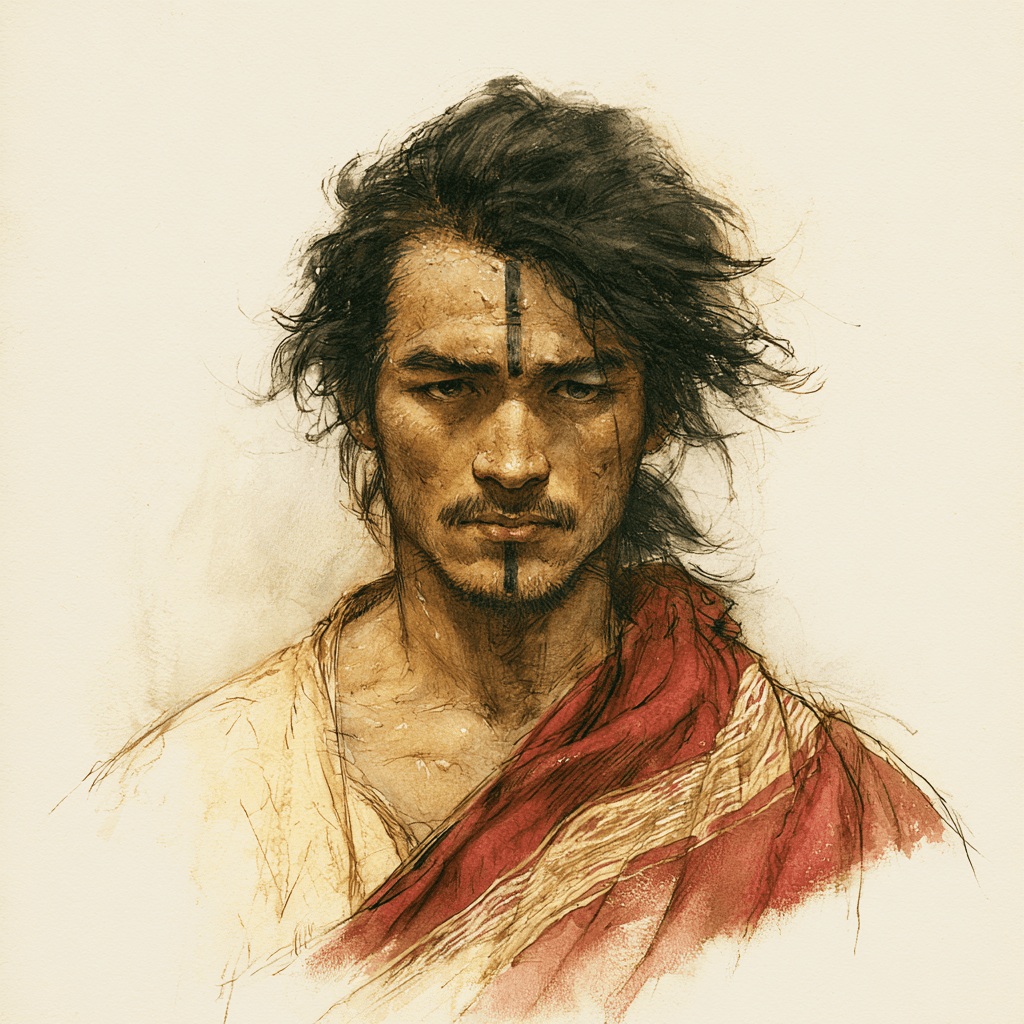
Tado Mona
Lead Warrior of the Mahebu Community
Japanese Rule
1901–1930
Tado Mona (1901–1930) was the eldest son of Mona Rudao, the chief of the Mahebu community of the Seediq people, and one of the principal warriors of the Wushe (Musha) Incident of 1930. Growing up under the tightening control of the Japanese colonial 'savage-管理' policy, he witnessed the forced labor, humiliations, and disruption of traditional life that fueled deep resentment among the Seediq. When the uprising broke out on 27 October 1930 during a school athletic meet at Wushe, Tado Mona, as a warrior in his prime, became a leading figure on the battlefield, helping to coordinate the attack and the subsequent resistance. As the Japanese mobilized overwhelming military force, including artillery, aircraft, and ultimately poison gas, against the rebel communities, Tado Mona led fighters in a desperate defense, withdrawing to the cliffs and caves around Mahebu to wage guerrilla resistance in the mountains. Knowing that defeat and capture were inevitable and that surrender would bring dishonor, many Seediq warriors and their families chose death over submission; numerous women hanged themselves so that the men could fight without the burden of protecting them. In the end, with resistance crushed, Tado Mona himself died in the mountains, hanging himself rather than surrender. He is remembered as a representative warrior of the Seediq armed resistance and one of the tragic central figures of the Wushe Incident, embodying both the courage and the catastrophic cost of the uprising against colonial rule.
1930 Joined the Wushe Uprising as a leading warrior
1930 Led guerrilla resistance in the mountains around Mahebu
1930 Faced overwhelming Japanese force, including poison gas
1930 Hanged himself in the mountains rather than surrender
Lead Warrior of the Mahebu Community
Tado Mona
Era
Japanese Rule
Lifespan
1901–1930
Tado Mona (1901–1930) was the eldest son of Mona Rudao, the chief of the Mahebu community of the Seediq people, and one of the principal warriors of the Wushe (Musha) Incident of 1930. Growing up under the tightening control of the Japanese colonial 'savage-管理' policy, he witnessed the forced labor, humiliations, and disruption of traditional life that fueled deep resentment among the Seediq. When the uprising broke out on 27 October 1930 during a school athletic meet at Wushe, Tado Mona, as a warrior in his prime, became a leading figure on the battlefield, helping to coordinate the attack and the subsequent resistance. As the Japanese mobilized overwhelming military force, including artillery, aircraft, and ultimately poison gas, against the rebel communities, Tado Mona led fighters in a desperate defense, withdrawing to the cliffs and caves around Mahebu to wage guerrilla resistance in the mountains. Knowing that defeat and capture were inevitable and that surrender would bring dishonor, many Seediq warriors and their families chose death over submission; numerous women hanged themselves so that the men could fight without the burden of protecting them. In the end, with resistance crushed, Tado Mona himself died in the mountains, hanging himself rather than surrender. He is remembered as a representative warrior of the Seediq armed resistance and one of the tragic central figures of the Wushe Incident, embodying both the courage and the catastrophic cost of the uprising against colonial rule.
1930 Joined the Wushe Uprising as a leading warrior
1930 Led guerrilla resistance in the mountains around Mahebu
1930 Faced overwhelming Japanese force, including poison gas
1930 Hanged himself in the mountains rather than surrender