

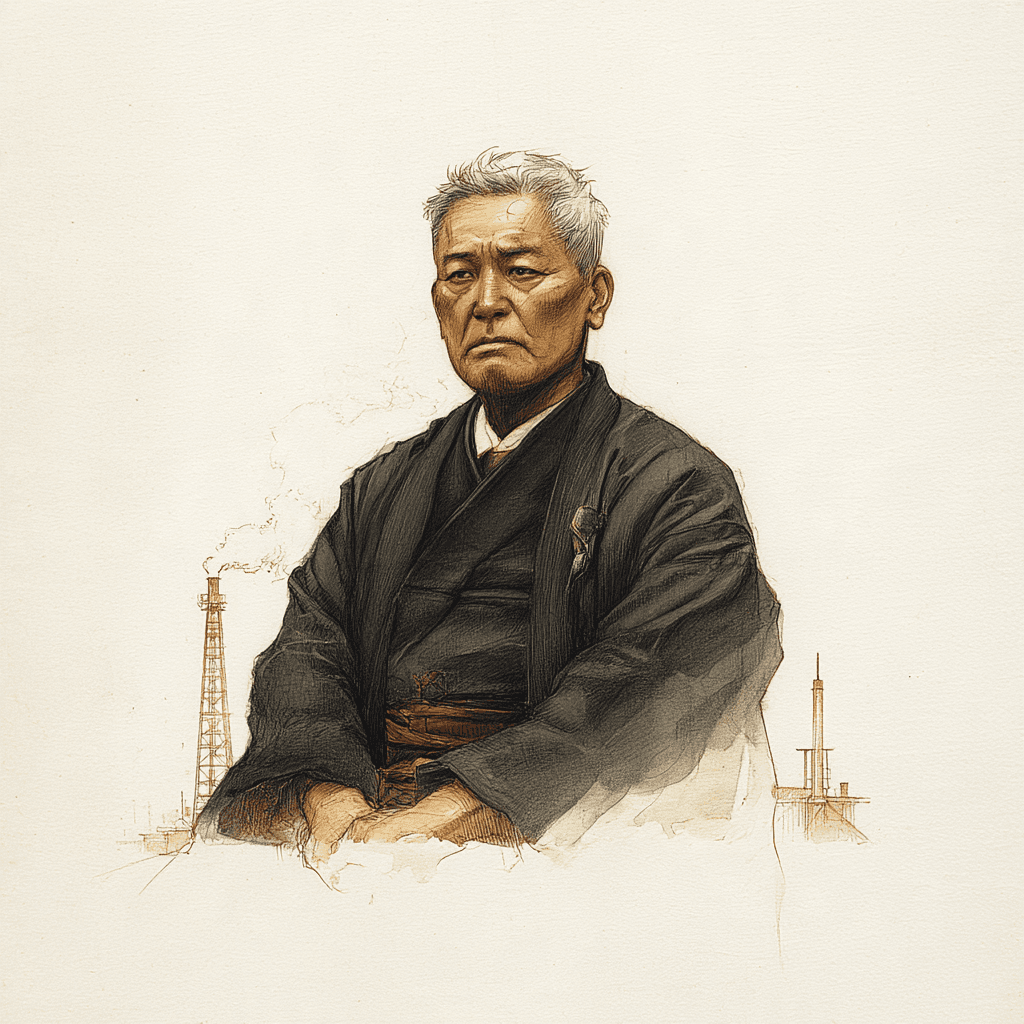
Tanaka Chobei
Mining Entrepreneur
Japanese Colonial
1834–1901
Tanaka Chobei, born in 1834, was an industrialist of the late Tokugawa and Meiji years whose original trade was iron wholesaling. In March 1887 he took over the land, buildings and machinery of the state-run Kamaishi mine, and that July founded the Kamaishi Mine Tanaka Ironworks, one of the openings through which Japan's modern steel industry passed from government into private hands.
In 1896 the Government-General of Taiwan issued its Mining Regulations, under which only Japanese nationals could hold mining rights. That October the mountain at Taiwan's north-eastern corner was cut in two: the Ruifang mine on the west went to the Fujita Group, and the Jinguashi mine on the east to him, where he organised the Tanaka Group to work it. An administrative line decided which company held which hill for the next half century, and it also turned the Taiwanese who had been panning gold there from people who opened their own claims into people who went down other men's shafts.
He died on 7 November 1901. The Jinguashi business passed to his successors, management went to Gomiya Shintaro in 1925, and in 1933 Nippon Mining bought it for about twenty million yen.
He saw none of what followed: gold output at Jinguashi passing seventy thousand taels in 1938, and in November 1942 five hundred and twenty-three Allied prisoners of war marching into these hills to be sent down the tunnels he had acquired, to dig copper.
Took over the state-run Kamaishi mine in 1887 and founded the Kamaishi Mine Tanaka Ironworks
Acquired the mining rights to Jinguashi in 1896 and organised the Tanaka Group to work it
Tanaka Chobei
Mining Entrepreneur
Era
Japanese Colonial
Lifespan
1834–1901
Tanaka Chobei, born in 1834, was an industrialist of the late Tokugawa and Meiji years whose original trade was iron wholesaling. In March 1887 he took over the land, buildings and machinery of the state-run Kamaishi mine, and that July founded the Kamaishi Mine Tanaka Ironworks, one of the openings through which Japan's modern steel industry passed from government into private hands.
In 1896 the Government-General of Taiwan issued its Mining Regulations, under which only Japanese nationals could hold mining rights. That October the mountain at Taiwan's north-eastern corner was cut in two: the Ruifang mine on the west went to the Fujita Group, and the Jinguashi mine on the east to him, where he organised the Tanaka Group to work it. An administrative line decided which company held which hill for the next half century, and it also turned the Taiwanese who had been panning gold there from people who opened their own claims into people who went down other men's shafts.
He died on 7 November 1901. The Jinguashi business passed to his successors, management went to Gomiya Shintaro in 1925, and in 1933 Nippon Mining bought it for about twenty million yen.
He saw none of what followed: gold output at Jinguashi passing seventy thousand taels in 1938, and in November 1942 five hundred and twenty-three Allied prisoners of war marching into these hills to be sent down the tunnels he had acquired, to dig copper.
Took over the state-run Kamaishi mine in 1887 and founded the Kamaishi Mine Tanaka Ironworks
Acquired the mining rights to Jinguashi in 1896 and organised the Tanaka Group to work it