


Authoritarian Era
1924–1954
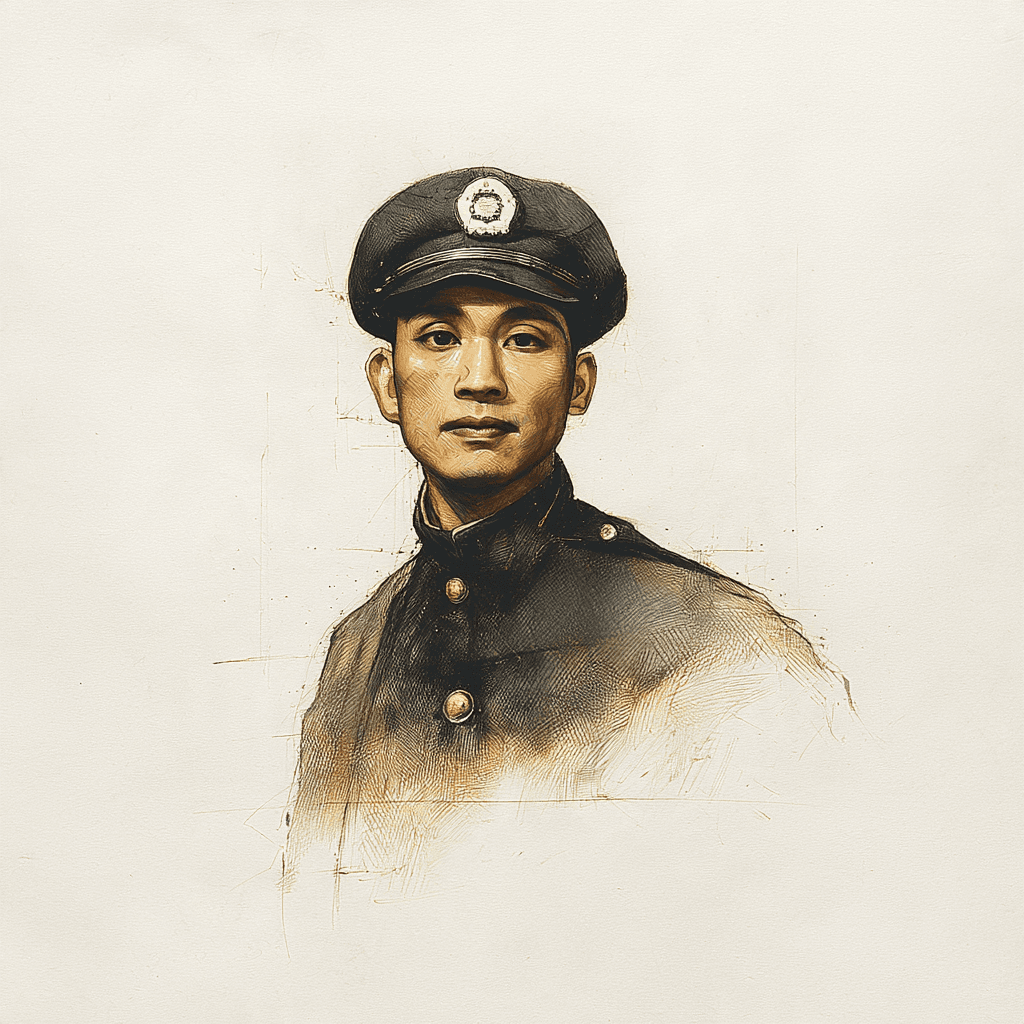
Tang Shou-jen, whose Tsou name was Yapasuyongʉ Yulunana, was born on 7 September 1924 in what is now Alishan township, Chiayi county. He entered the village school for indigenous children in 1932 and graduated four years later at the top of his class. In 1943 he joined the infantry course of the Japanese Army's reserve officer candidate corps, was taken prisoner when the Soviet Union invaded Manchuria in August 1945, sent to Siberia, and only returned to Taiwan after the war.
During the February 28 Incident of 1947 he led Tsou young men down from the mountains, took the Hongmaopi armoury and the Shuishang airfield, and when negotiations began between the two sides he withdrew with the weapons back up into the highlands. That decision kept Alishan from becoming a battlefield when the sweeps came that spring. It also put his name permanently on the security services' lists.
In October 1950 he reported himself to the Taiwan Garrison Command over a communist-agent case, was transferred into its service and assigned to work with its mountain unit, and in March 1952 was dismissed for failing to file the required surety against harbouring communist agents. On 11 September that year he was detained on suspicion of sedition.
On 8 February 1954 Chiang Kai-shek approved the death sentence, on a charge of acting to overthrow the government by unlawful means. He was shot on 17 April at the Ankeng execution ground in Xindian. Executed the same day was Uongu Yata'uyungana, also of the Tsou. One of them had held the politics of the tribe and the other its fighting strength, and they went on the same morning.
Led Tsou young men to take the Hongmaopi armoury and Shuishang airfield in 1947, withdrawing to the mountains once talks began
Executed at the Ankeng ground in Xindian on 17 April 1954, the same day as Uongu Yata'uyungana
Tang Shou-jen
Tsou Leader and Former Japanese Army Officer
Era
Authoritarian Era
Lifespan
1924–1954
Tang Shou-jen, whose Tsou name was Yapasuyongʉ Yulunana, was born on 7 September 1924 in what is now Alishan township, Chiayi county. He entered the village school for indigenous children in 1932 and graduated four years later at the top of his class. In 1943 he joined the infantry course of the Japanese Army's reserve officer candidate corps, was taken prisoner when the Soviet Union invaded Manchuria in August 1945, sent to Siberia, and only returned to Taiwan after the war.
During the February 28 Incident of 1947 he led Tsou young men down from the mountains, took the Hongmaopi armoury and the Shuishang airfield, and when negotiations began between the two sides he withdrew with the weapons back up into the highlands. That decision kept Alishan from becoming a battlefield when the sweeps came that spring. It also put his name permanently on the security services' lists.
In October 1950 he reported himself to the Taiwan Garrison Command over a communist-agent case, was transferred into its service and assigned to work with its mountain unit, and in March 1952 was dismissed for failing to file the required surety against harbouring communist agents. On 11 September that year he was detained on suspicion of sedition.
On 8 February 1954 Chiang Kai-shek approved the death sentence, on a charge of acting to overthrow the government by unlawful means. He was shot on 17 April at the Ankeng execution ground in Xindian. Executed the same day was Uongu Yata'uyungana, also of the Tsou. One of them had held the politics of the tribe and the other its fighting strength, and they went on the same morning.
Led Tsou young men to take the Hongmaopi armoury and Shuishang airfield in 1947, withdrawing to the mountains once talks began
Executed at the Ankeng ground in Xindian on 17 April 1954, the same day as Uongu Yata'uyungana