

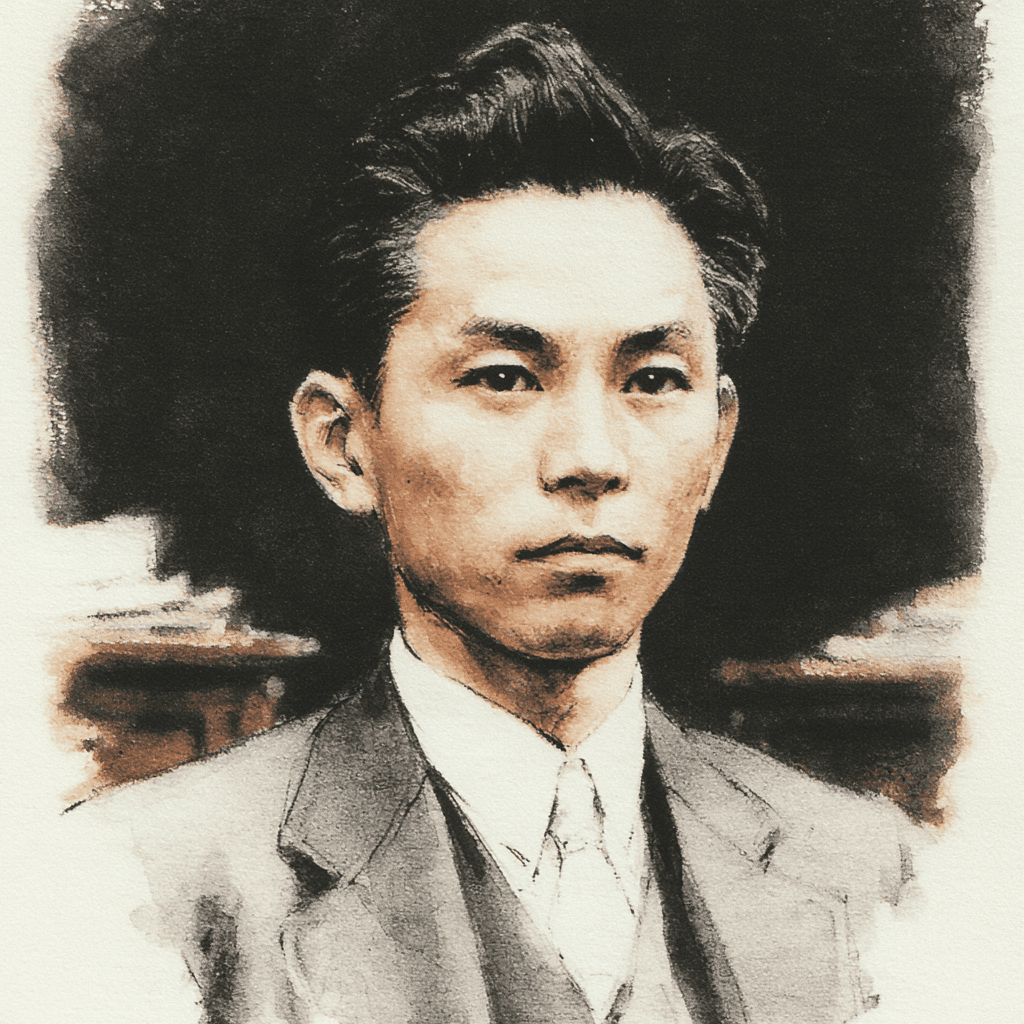
Wang Tien-teng
Key Leader of the 228 Settlement Committee
Post-War Taiwan
1901–1947
Wang Tien-teng, born in 1901 in Ankeng, Xindian, near Taipei, into a farming family, was among the most prominent political and public voices of early post-war Taiwan. Rising through hardship as a working student, he later grew wealthy running the Wenshan Tea Company in Taipei, a self-made tea merchant. Devoted to public affairs, he joined social movements in the late colonial period, concerned with livelihoods and the rights of the Taiwanese. After World War II he was elected to the Taiwan Provincial Consultative Assembly and successively ran newspapers such as the People's Herald and the Liberty News, known for outspoken criticism of the authorities and for his motto that he would "serve the people as an ox and horse." When the February 28 Incident erupted in 1947, he was made a central figure of its Settlement Committee, serving as head of propaganda and broadcasting the unfolding events across the island by radio. He led the drafting of the "32 Demands" (later expanded to 42) submitted to the Administrative Executive Office, calling for political reform and local self-government — the fullest statement of Taiwanese demands during the incident. Yet the authorities treated the document as evidence of rebellion, making him a prime target of the crackdown. After Nationalist troops landed, he was arrested by security agents in March. He is said to have been tortured in custody and then killed, and his body was never recovered. His death became a symbolic case of the purge of the political elite during February 28. Wang is remembered as the spokesman for Taiwanese political aspirations during the incident, and his drafted demands and tragic end remain central texts for understanding the post-war conflict between the state and society.
Drafted the "32 Demands" of the February 28 Incident (1947)
Killed during the February 28 Incident, his body never found (1947)
Key Leader of the 228 Settlement Committee
Wang Tien-teng
Era
Post-War Taiwan
Lifespan
1901–1947
Wang Tien-teng, born in 1901 in Ankeng, Xindian, near Taipei, into a farming family, was among the most prominent political and public voices of early post-war Taiwan. Rising through hardship as a working student, he later grew wealthy running the Wenshan Tea Company in Taipei, a self-made tea merchant. Devoted to public affairs, he joined social movements in the late colonial period, concerned with livelihoods and the rights of the Taiwanese. After World War II he was elected to the Taiwan Provincial Consultative Assembly and successively ran newspapers such as the People's Herald and the Liberty News, known for outspoken criticism of the authorities and for his motto that he would "serve the people as an ox and horse." When the February 28 Incident erupted in 1947, he was made a central figure of its Settlement Committee, serving as head of propaganda and broadcasting the unfolding events across the island by radio. He led the drafting of the "32 Demands" (later expanded to 42) submitted to the Administrative Executive Office, calling for political reform and local self-government — the fullest statement of Taiwanese demands during the incident. Yet the authorities treated the document as evidence of rebellion, making him a prime target of the crackdown. After Nationalist troops landed, he was arrested by security agents in March. He is said to have been tortured in custody and then killed, and his body was never recovered. His death became a symbolic case of the purge of the political elite during February 28. Wang is remembered as the spokesman for Taiwanese political aspirations during the incident, and his drafted demands and tragic end remain central texts for understanding the post-war conflict between the state and society.
Drafted the "32 Demands" of the February 28 Incident (1947)
Killed during the February 28 Incident, his body never found (1947)