

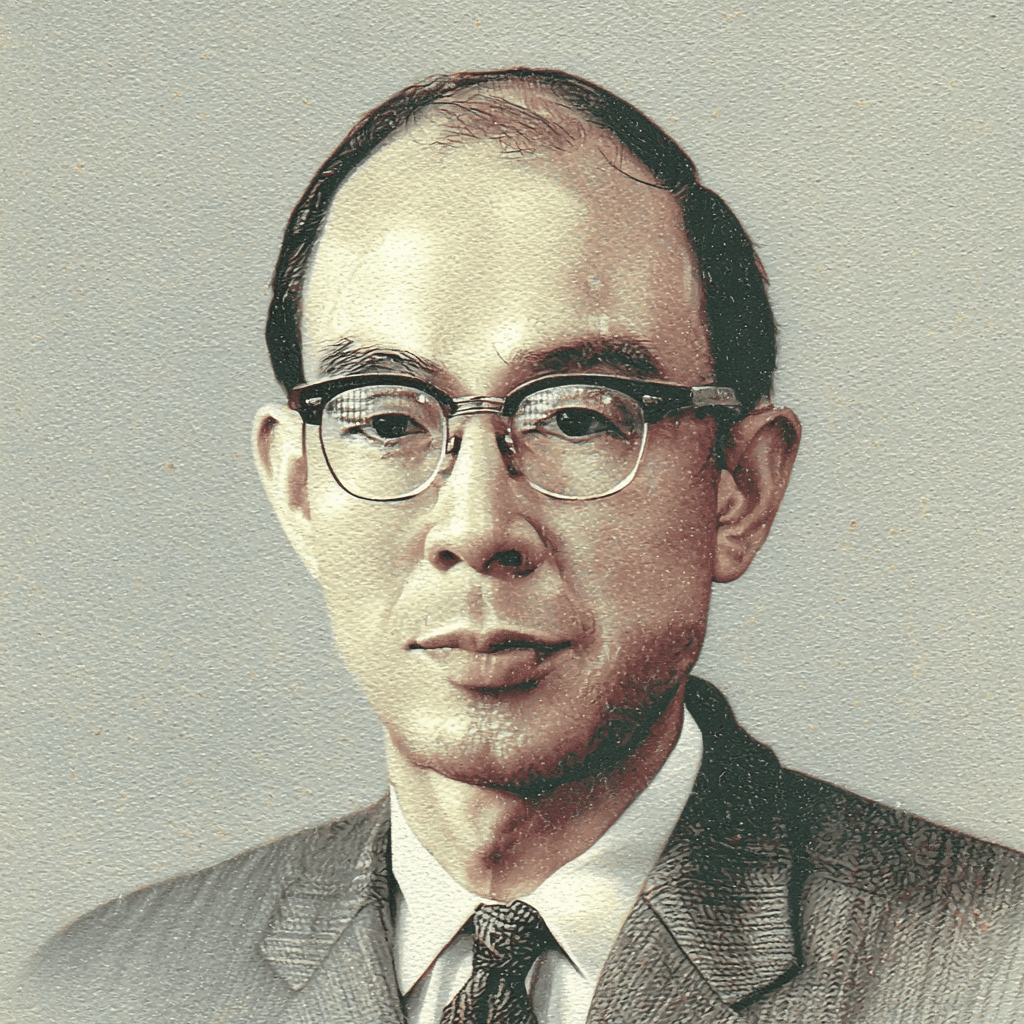
Ong Iok-tek
Linguist & Taiwan Independence Pioneer
Post-War Taiwan
1924–1985
Wang Yu-te, also known by his romanized Taiwanese name Ong Iok-tek, born in 1924 in Tainan, was a pioneering linguist of Taiwanese Hokkien and one of the founding figures of the overseas Taiwan independence movement. He came from a prominent Tainan family and was educated under the Japanese colonial system at the elite Tainan Second Higher School and then at Taipei Imperial University, where he studied Japanese literature. After Japan's surrender in 1945 he returned to teach Japanese and English at Tainan First High School and witnessed firsthand the deteriorating relationship between the mainlander administration and the local population. His elder brother Wang Yu-lin (王育霖), a Hsinchu prosecutor, was abducted and murdered by KMT security forces in the aftermath of the February 28 Incident of 1947, a personal tragedy that radicalized him politically. Threatened by ongoing arrests in the southern Taiwan crackdown, he fled the island in 1949 and made his way to Tokyo, where he would spend the remainder of his life. He resumed academic study at the University of Tokyo and earned a doctorate in linguistics with a pioneering dissertation on the phonological systems of southern Min Chinese. He held appointments at Meiji University and other Tokyo institutions and produced a series of foundational scholarly works, including his Studies on the Southern Min Phonological System (閩音系研究) and the influential primer Introduction to Taiwanese (臺灣語入門). His scholarship was politically significant as well as academically pathbreaking, establishing Taiwanese Hokkien as a fully-fledged language with its own historical phonology rather than a mere dialect of standard Chinese. In 1960 he founded the journal Taiwanese Youth (臺灣青年), the most influential periodical of the overseas independence movement, which sustained debate and organization across the Japanese, North American, and European diaspora communities for decades. He was a co-founder of the World United Formosans for Independence (WUFI), launched in 1970, and remained one of its principal intellectual figures. He was placed on the KMT regime's blacklist for decades and was unable to return to Taiwan during his lifetime, conducting his entire career in exile in Japan. He died of heart failure in Tokyo in September 1985, and his scholarly and political legacies have since converged in the post-democratization Taiwanese language movement, where his Hokkien linguistics remain canonical and his political vision has been widely reassessed.
Fled to Japan after the 228 Incident; became a pioneer of the overseas Taiwan independence movement and Taiwanese linguistics
Linguist & Taiwan Independence Pioneer
Ong Iok-tek
Era
Post-War Taiwan
Lifespan
1924–1985
Wang Yu-te, also known by his romanized Taiwanese name Ong Iok-tek, born in 1924 in Tainan, was a pioneering linguist of Taiwanese Hokkien and one of the founding figures of the overseas Taiwan independence movement. He came from a prominent Tainan family and was educated under the Japanese colonial system at the elite Tainan Second Higher School and then at Taipei Imperial University, where he studied Japanese literature. After Japan's surrender in 1945 he returned to teach Japanese and English at Tainan First High School and witnessed firsthand the deteriorating relationship between the mainlander administration and the local population. His elder brother Wang Yu-lin (王育霖), a Hsinchu prosecutor, was abducted and murdered by KMT security forces in the aftermath of the February 28 Incident of 1947, a personal tragedy that radicalized him politically. Threatened by ongoing arrests in the southern Taiwan crackdown, he fled the island in 1949 and made his way to Tokyo, where he would spend the remainder of his life. He resumed academic study at the University of Tokyo and earned a doctorate in linguistics with a pioneering dissertation on the phonological systems of southern Min Chinese. He held appointments at Meiji University and other Tokyo institutions and produced a series of foundational scholarly works, including his Studies on the Southern Min Phonological System (閩音系研究) and the influential primer Introduction to Taiwanese (臺灣語入門). His scholarship was politically significant as well as academically pathbreaking, establishing Taiwanese Hokkien as a fully-fledged language with its own historical phonology rather than a mere dialect of standard Chinese. In 1960 he founded the journal Taiwanese Youth (臺灣青年), the most influential periodical of the overseas independence movement, which sustained debate and organization across the Japanese, North American, and European diaspora communities for decades. He was a co-founder of the World United Formosans for Independence (WUFI), launched in 1970, and remained one of its principal intellectual figures. He was placed on the KMT regime's blacklist for decades and was unable to return to Taiwan during his lifetime, conducting his entire career in exile in Japan. He died of heart failure in Tokyo in September 1985, and his scholarly and political legacies have since converged in the post-democratization Taiwanese language movement, where his Hokkien linguistics remain canonical and his political vision has been widely reassessed.
Fled to Japan after the 228 Incident; became a pioneer of the overseas Taiwan independence movement and Taiwanese linguistics