

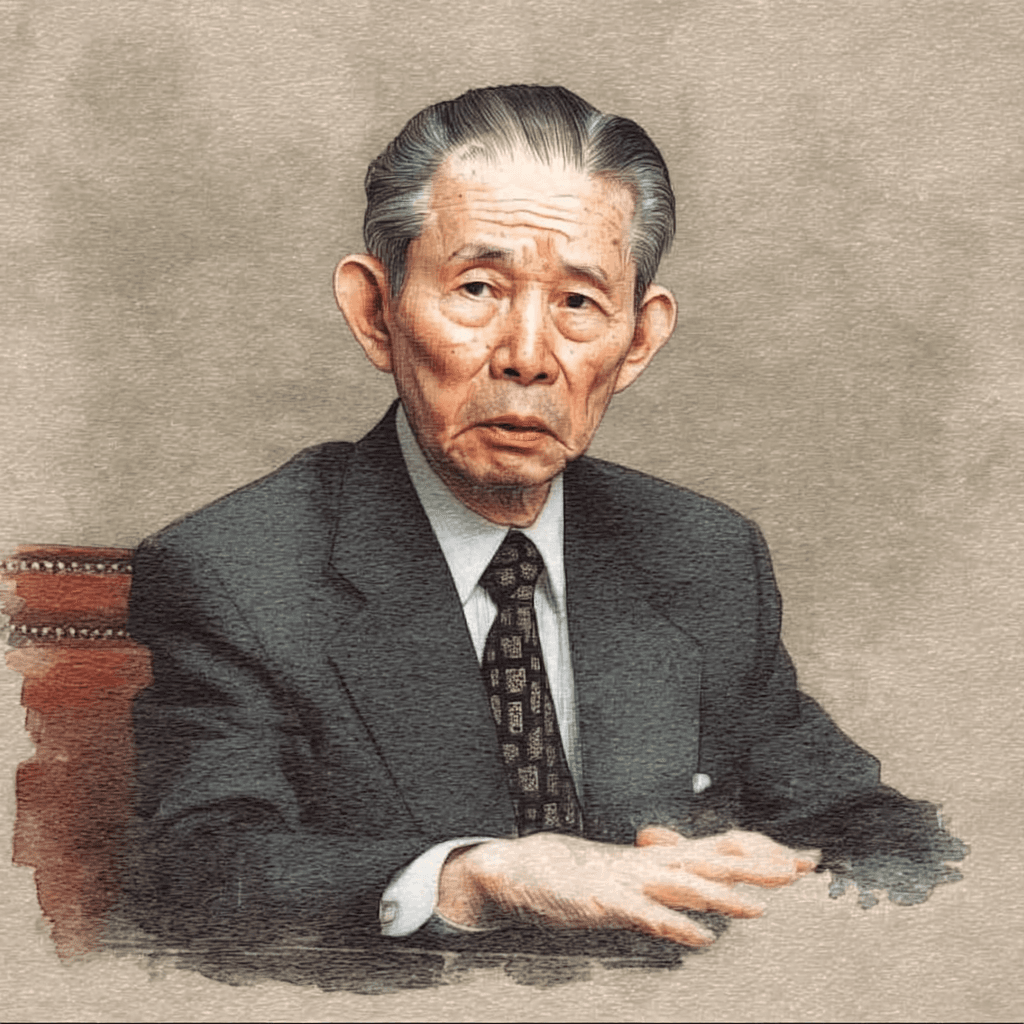
Wang Yung-ching
Founder of Formosa Plastics & "God of Management"
Modern Taiwan
1917–2008
Wang Yung-ching, born in 1917 into a poor tea-farming family in Xindian, Taipei, was among the most representative entrepreneurs of post-war Taiwan, hailed as the "God of Management." With only a primary-school education, he left home to make a living as a youth, starting with a rice shop and accumulating his first capital through diligence and care. In 1954, seizing the opportunities of US aid and industrialization, he founded the Formosa Plastics Company, entering the then-emerging production of plastic raw materials. With a management philosophy of "getting to the root of things and striving for perfection," he built Formosa Plastics step by step into a vast conglomerate spanning petrochemicals, plastics, fibers, and electronics. He drove major investments such as large petrochemical complexes and the Sixth Naphtha Cracker, profoundly shaping Taiwan's industrial structure and economic growth. Known for rigorous cost management and efficiency, his methods and sayings were long treated as gospel in the business world. Beyond industry he engaged in philanthropy, founding the Chang Gung Memorial Hospital and establishing educational institutions such as Chang Gung University and Ming Chi University of Technology to give back to society. He prized diligence and simplicity all his life, keeping a frugal lifestyle even in great wealth, a model of the self-made man. He died in 2008 while inspecting operations in the United States. Wang is seen as an emblematic entrepreneur of the Taiwan economic miracle, his path and philosophy a lasting footnote to the spirit of Taiwanese industry.
Founded the Formosa Plastics Group (1954)
Built Chang Gung Memorial Hospital and invested in education and healthcare
Founder of Formosa Plastics & "God of Management"
Wang Yung-ching
Era
Modern Taiwan
Lifespan
1917–2008
Wang Yung-ching, born in 1917 into a poor tea-farming family in Xindian, Taipei, was among the most representative entrepreneurs of post-war Taiwan, hailed as the "God of Management." With only a primary-school education, he left home to make a living as a youth, starting with a rice shop and accumulating his first capital through diligence and care. In 1954, seizing the opportunities of US aid and industrialization, he founded the Formosa Plastics Company, entering the then-emerging production of plastic raw materials. With a management philosophy of "getting to the root of things and striving for perfection," he built Formosa Plastics step by step into a vast conglomerate spanning petrochemicals, plastics, fibers, and electronics. He drove major investments such as large petrochemical complexes and the Sixth Naphtha Cracker, profoundly shaping Taiwan's industrial structure and economic growth. Known for rigorous cost management and efficiency, his methods and sayings were long treated as gospel in the business world. Beyond industry he engaged in philanthropy, founding the Chang Gung Memorial Hospital and establishing educational institutions such as Chang Gung University and Ming Chi University of Technology to give back to society. He prized diligence and simplicity all his life, keeping a frugal lifestyle even in great wealth, a model of the self-made man. He died in 2008 while inspecting operations in the United States. Wang is seen as an emblematic entrepreneur of the Taiwan economic miracle, his path and philosophy a lasting footnote to the spirit of Taiwanese industry.
Founded the Formosa Plastics Group (1954)
Built Chang Gung Memorial Hospital and invested in education and healthcare