


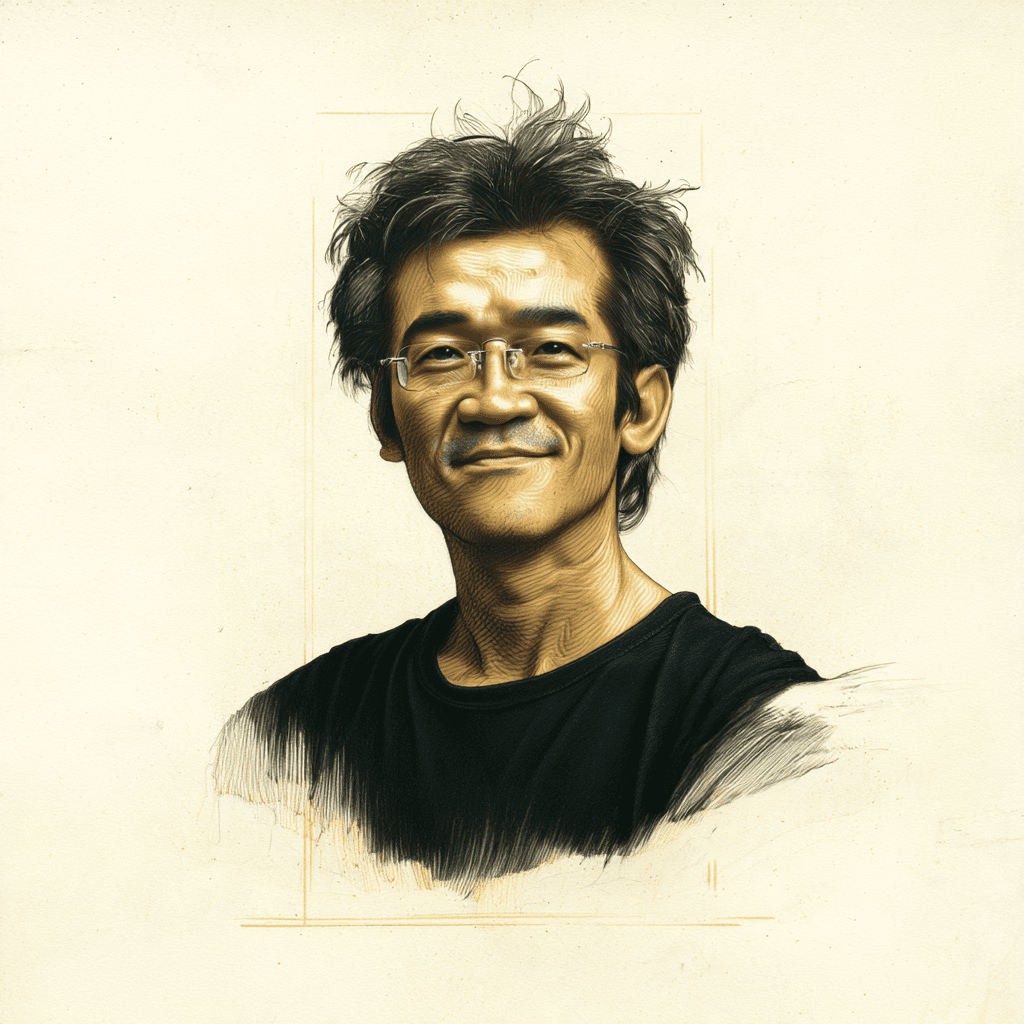
Modern Taiwan
1968–
Wei Te-sheng was born in 1968 in Yongkang, Tainan, and studied electrical engineering at junior college. After military service he went into film, starting as a crew hand and assistant, and was assistant director on Edward Yang's Mahjong.
Around 2000 he finished a script about the Wushe Incident, Seediq Bale, and paid for a five-minute test reel to raise money with. He raised none. Taiwanese films then took almost nothing at the box office, and no one would fund an epic about an indigenous uprising against Japan.
He decided to make something smaller first. Cape No. 7 came out in 2008; he had borrowed to make it. Word of mouth kept extending its run until it took more than NT$500 million, the record for a Taiwanese film. A small town in Hengchun and seven love letters never sent brought back many people who had not watched a local film in a cinema for years.
With that money he finally made Seediq Bale in 2011, in two parts running four and a half hours. In 2014 he produced KANO, about the Chiayi Agriculture and Forestry School baseball team that reached Koshien in 1931. All three films circle the same fact: Japanese and Taiwanese once lived on the same land.
2008 Cape No. 7 set the box-office record for a Taiwanese film
2011 Completed Seediq Bale
Wei Te-sheng
Film Director, Cape No. 7 and Seediq Bale
Era
Modern Taiwan
Lifespan
1968–
Wei Te-sheng was born in 1968 in Yongkang, Tainan, and studied electrical engineering at junior college. After military service he went into film, starting as a crew hand and assistant, and was assistant director on Edward Yang's Mahjong.
Around 2000 he finished a script about the Wushe Incident, Seediq Bale, and paid for a five-minute test reel to raise money with. He raised none. Taiwanese films then took almost nothing at the box office, and no one would fund an epic about an indigenous uprising against Japan.
He decided to make something smaller first. Cape No. 7 came out in 2008; he had borrowed to make it. Word of mouth kept extending its run until it took more than NT$500 million, the record for a Taiwanese film. A small town in Hengchun and seven love letters never sent brought back many people who had not watched a local film in a cinema for years.
With that money he finally made Seediq Bale in 2011, in two parts running four and a half hours. In 2014 he produced KANO, about the Chiayi Agriculture and Forestry School baseball team that reached Koshien in 1931. All three films circle the same fact: Japanese and Taiwanese once lived on the same land.
2008 Cape No. 7 set the box-office record for a Taiwanese film
2011 Completed Seediq Bale