

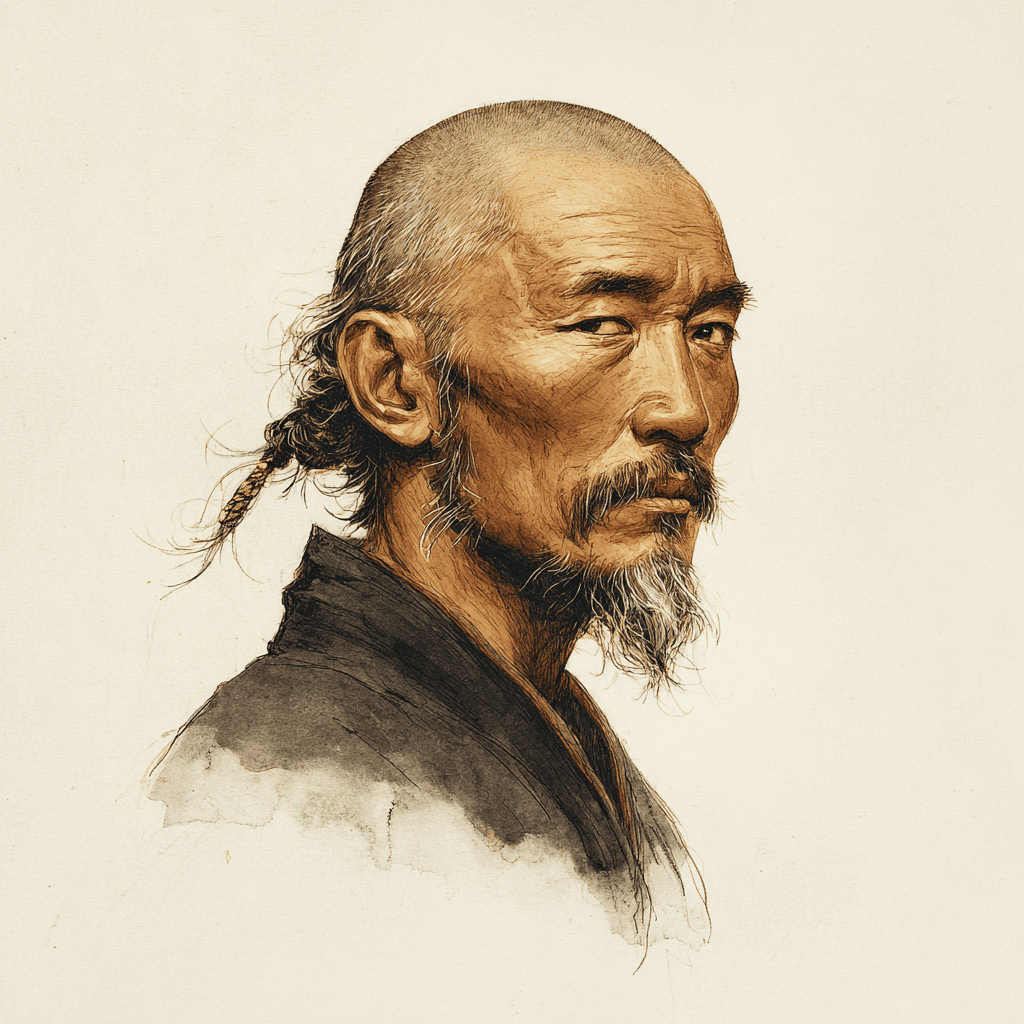
Wu Feng
Interpreter Between Han and Tsou Indigenous Peoples
Qing Dynasty
1699–1769
Wu Feng, born around 1699 in Pinghe County, Fujian, came to Taiwan as a young man and served for decades as the official interpreter (通事) mediating between Qing authorities and the Tsou indigenous communities of the Alishan mountain region, accumulating significant personal landholdings and commercial influence before dying under violent circumstances in 1769 in a conflict whose details remain disputed. He learned the Tsou language and became the essential intermediary through whom Qing officials communicated with and taxed the Alishan communities, a role that gave him extraordinary personal influence and access to the camphor, deer hide, and trade goods that flowed through the mountain communities, and which he leveraged to build substantial personal wealth. The historical facts of Wu Feng's life and death are relatively sparse — what is known is that he served as interpreter for the Tsou for approximately forty years, that he accumulated land and commercial interests in the Alishan foothills, and that he was killed around 1769 in circumstances that appear to have involved disputes over trade goods or tribute payments. However, Wu Feng's real historical significance lies not in his life but in his legend: in the late eighteenth and early nineteenth centuries, a story circulated — and was widely propagated — in which Wu Feng voluntarily sacrificed himself to persuade the Tsou people to abandon the practice of headhunting, appearing dressed in red and telling them he was a criminal who deserved to be killed, thereby triggering a killing that then caused the Tsou to swear off headhunting out of remorse. This legend was adopted and amplified by Japanese colonial authorities, who erected a shrine to Wu Feng at Alishan and incorporated his story into the colonial education curriculum as an example of Han civilization's civilizing influence on indigenous peoples — a narrative that served Japanese colonial ideology by presenting indigenous headhunting as backward and in need of external correction. After the Second World War, the story was preserved by the Republic of China government and taught in Taiwanese schools as a patriotic legend until 1989, when indigenous rights activists successfully campaigned to have it removed from the curriculum on the grounds that it was a fabrication that demeaned Tsou culture and justified their dispossession. The Alishan Wu Feng Shrine was demolished by Tsou activists in 1989 in a symbolic assertion of indigenous dignity, and historians have since confirmed that the self-sacrifice narrative is a colonial-era invention with no basis in contemporary historical sources. Wu Feng himself — the real interpreter who lived, traded, and died at Alishan — remains an intriguing figure whose actual role in the complex economy of the Qing frontier deserves scholarly attention independent of the mythological overlay that obscured him for two centuries. He is recognized today as an example of how colonial powers constructed ideological narratives around historical individuals, and his story — both the fiction and its dismantling — is taught in Taiwan as a lesson in critical historical thinking about indigenous peoples' representation.
Served as interpreter for the Tsou indigenous people of Alishan for approximately forty years under Qing rule
His colonial-era legend — used for two centuries to justify indigenous assimilation — was dismantled in 1989 when Tsou activists demolished the Alishan shrine and had the story removed from Taiwan's school curriculum
Interpreter Between Han and Tsou Indigenous Peoples
Wu Feng
Era
Qing Dynasty
Lifespan
1699–1769
Wu Feng, born around 1699 in Pinghe County, Fujian, came to Taiwan as a young man and served for decades as the official interpreter (通事) mediating between Qing authorities and the Tsou indigenous communities of the Alishan mountain region, accumulating significant personal landholdings and commercial influence before dying under violent circumstances in 1769 in a conflict whose details remain disputed. He learned the Tsou language and became the essential intermediary through whom Qing officials communicated with and taxed the Alishan communities, a role that gave him extraordinary personal influence and access to the camphor, deer hide, and trade goods that flowed through the mountain communities, and which he leveraged to build substantial personal wealth. The historical facts of Wu Feng's life and death are relatively sparse — what is known is that he served as interpreter for the Tsou for approximately forty years, that he accumulated land and commercial interests in the Alishan foothills, and that he was killed around 1769 in circumstances that appear to have involved disputes over trade goods or tribute payments. However, Wu Feng's real historical significance lies not in his life but in his legend: in the late eighteenth and early nineteenth centuries, a story circulated — and was widely propagated — in which Wu Feng voluntarily sacrificed himself to persuade the Tsou people to abandon the practice of headhunting, appearing dressed in red and telling them he was a criminal who deserved to be killed, thereby triggering a killing that then caused the Tsou to swear off headhunting out of remorse. This legend was adopted and amplified by Japanese colonial authorities, who erected a shrine to Wu Feng at Alishan and incorporated his story into the colonial education curriculum as an example of Han civilization's civilizing influence on indigenous peoples — a narrative that served Japanese colonial ideology by presenting indigenous headhunting as backward and in need of external correction. After the Second World War, the story was preserved by the Republic of China government and taught in Taiwanese schools as a patriotic legend until 1989, when indigenous rights activists successfully campaigned to have it removed from the curriculum on the grounds that it was a fabrication that demeaned Tsou culture and justified their dispossession. The Alishan Wu Feng Shrine was demolished by Tsou activists in 1989 in a symbolic assertion of indigenous dignity, and historians have since confirmed that the self-sacrifice narrative is a colonial-era invention with no basis in contemporary historical sources. Wu Feng himself — the real interpreter who lived, traded, and died at Alishan — remains an intriguing figure whose actual role in the complex economy of the Qing frontier deserves scholarly attention independent of the mythological overlay that obscured him for two centuries. He is recognized today as an example of how colonial powers constructed ideological narratives around historical individuals, and his story — both the fiction and its dismantling — is taught in Taiwan as a lesson in critical historical thinking about indigenous peoples' representation.
Served as interpreter for the Tsou indigenous people of Alishan for approximately forty years under Qing rule
His colonial-era legend — used for two centuries to justify indigenous assimilation — was dismantled in 1989 when Tsou activists demolished the Alishan shrine and had the story removed from Taiwan's school curriculum