

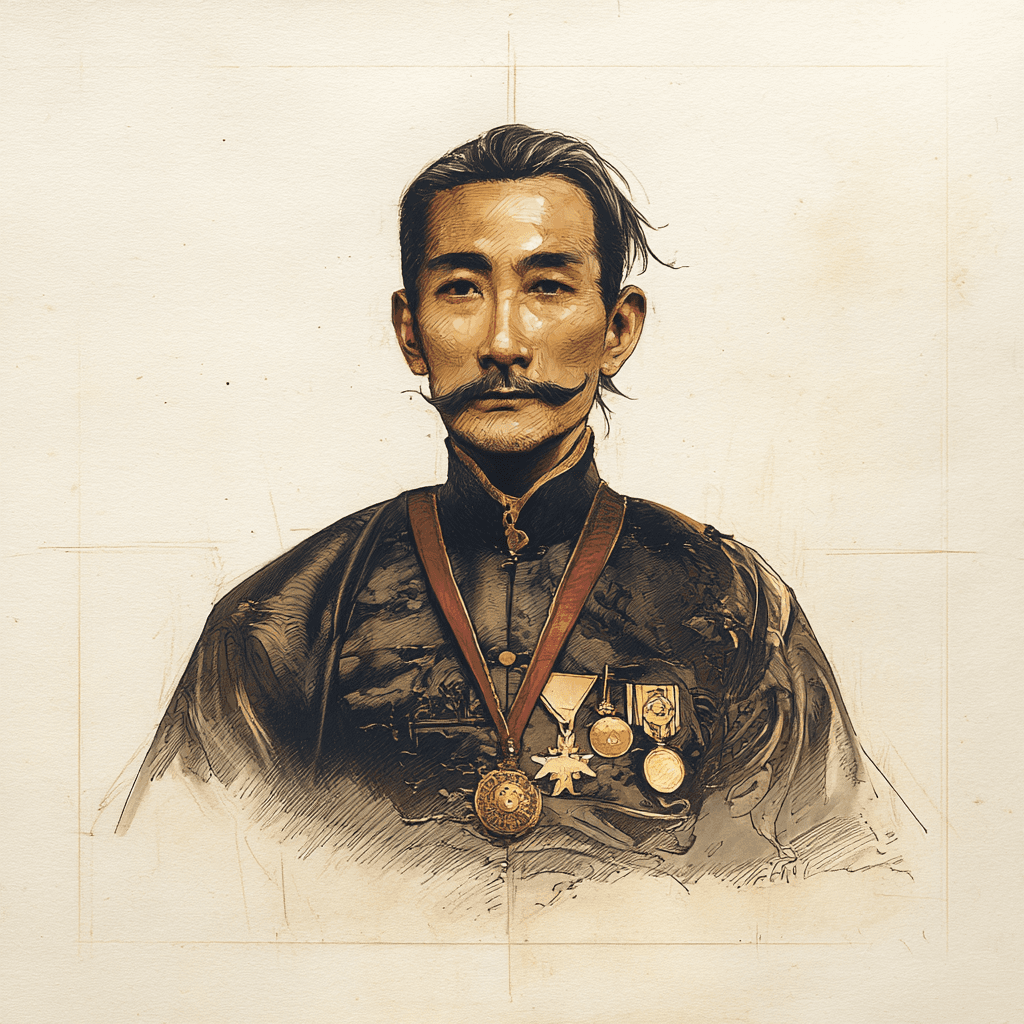
Wu Luanqi
Taichung Magnate · 1895 Resistance Leader
Late Qing
1833–1898
Wu Luanqi was a major gentry figure in central Taiwan whose family rose to prominence in the aftermath of the Dai Chaochun Rebellion of the 1860s. The Wu family became one of the dominant gentry lineages of the Taichung area, controlling extensive landholdings and wielding considerable social authority. When Japanese forces advanced into central Taiwan following the Treaty of Shimonoseki in 1895, Wu Luanqi organized resistance fighters and engaged Japanese troops, becoming the central Taiwan counterpart to the better-known resistance leaders of the north and south. Although ultimately defeated, his military resistance made him a symbol of Taiwan's gentry determination to contest the colonial handover. He died in 1898, his post-surrender years marked by the frustration of defeat and occupation.
Led armed resistance against Japanese forces entering Taichung in 1895
Wu family was the dominant gentry lineage of Qing-era Taichung
Taichung Magnate · 1895 Resistance Leader
Wu Luanqi
Era
Late Qing
Lifespan
1833–1898
Wu Luanqi was a major gentry figure in central Taiwan whose family rose to prominence in the aftermath of the Dai Chaochun Rebellion of the 1860s. The Wu family became one of the dominant gentry lineages of the Taichung area, controlling extensive landholdings and wielding considerable social authority. When Japanese forces advanced into central Taiwan following the Treaty of Shimonoseki in 1895, Wu Luanqi organized resistance fighters and engaged Japanese troops, becoming the central Taiwan counterpart to the better-known resistance leaders of the north and south. Although ultimately defeated, his military resistance made him a symbol of Taiwan's gentry determination to contest the colonial handover. He died in 1898, his post-surrender years marked by the frustration of defeat and occupation.
Led armed resistance against Japanese forces entering Taichung in 1895
Wu family was the dominant gentry lineage of Qing-era Taichung