

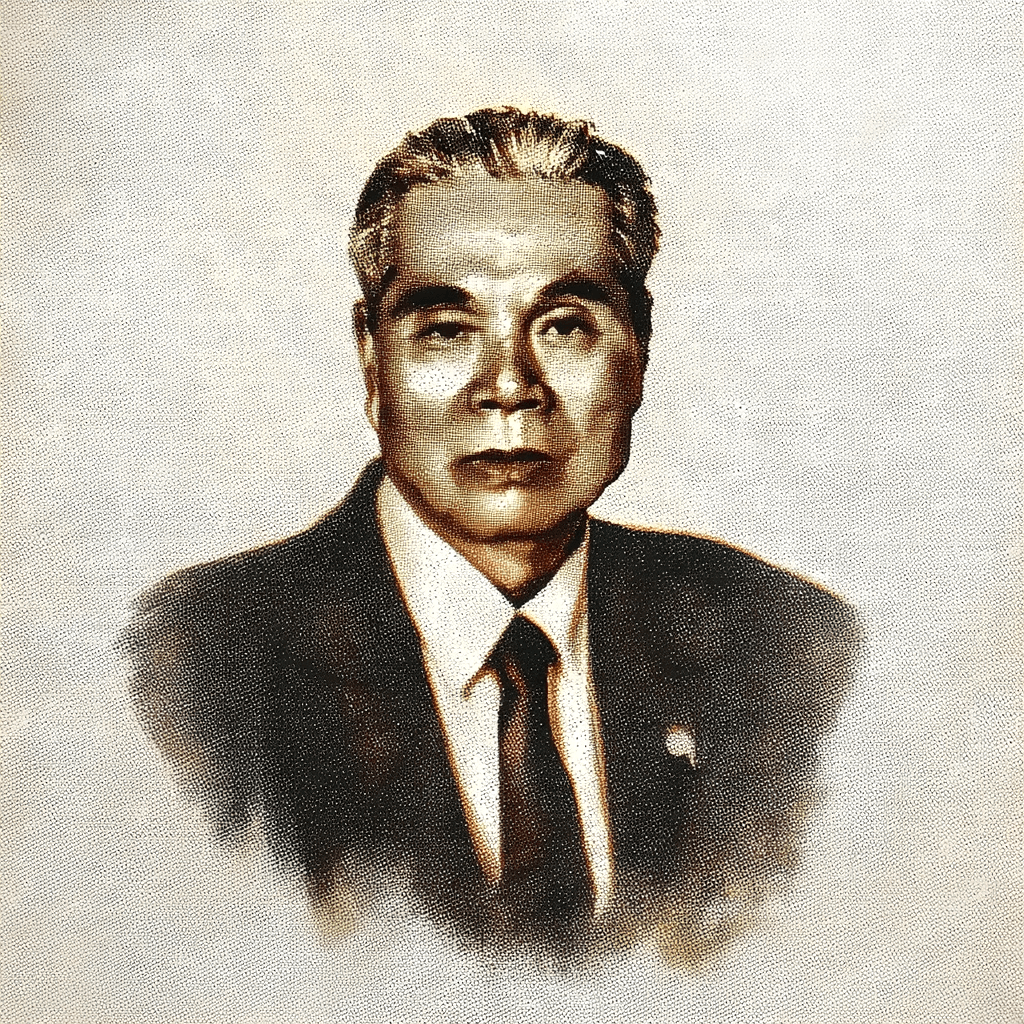
Wu Zhuoliu
Novelist & Journalist
Japanese Colonial / Post-War
1900–1976
Wu Zhuoliu, born Wu Chien-tien in 1900 in Hsinpu, Hsinchu (present-day Hsinchu County) into a Hakka family, was steeped in classical Chinese learning from childhood. He trained at the normal division of the Governor-General's National Language School in Taipei, and after graduating in 1920 returned home to teach at public elementary schools, a profession he pursued for nearly two decades. During his teaching years he grew resentful of the discriminatory treatment that Japanese inspectors meted out to Taiwanese teachers, and in 1940 he resigned from his post in protest. In 1941 he traveled briefly to Nanjing in China as a reporter for the Continental Daily News (大陸新報), witnessing conditions in wartime China before returning to Taiwan. Back home he moved into journalism, working over the years for the Taiwan Daily News and, after the war, papers such as the Taiwan Shin Sheng Daily News and the Min Pao, making reporting his long-term livelihood. Between 1943 and 1945, under the close surveillance of the Japanese colonial authorities, he secretly wrote the novel Orphan of Asia (亞細亞的孤兒). Through its protagonist Hu Tai-ming, the work depicts the plight of Taiwanese caught between Japan and China, belonging fully to neither and left in a state of orphaned identity. After the war he lived through the February 28 Incident and the White Terror, and his disillusionment led him to write the autobiographical works The Fig Tree (無花果) and Taiwan Lianqiao (臺灣連翹), both of which were banned for a time for touching on political taboos. In 1964 he founded the magazine Taiwan Literature (臺灣文藝), which gave post-war nativist writing a lasting platform and nurtured many younger authors. In 1969 he donated his personal savings to establish the Wu Zhuoliu Literary Award, encouraging literature centered on Taiwan itself. Wu died in Taiwan in 1976 at the age of seventy-six. He is widely regarded as a pioneer of Taiwanese nativist literature, and Orphan of Asia is seen as the most representative literary emblem of the identity dilemma of colonial Taiwan.
Secretly wrote the novel Orphan of Asia (1943–1945)
Founded Taiwan Literature magazine and endowed the Wu Zhuoliu Literary Award
Novelist & Journalist
Wu Zhuoliu
Era
Japanese Colonial / Post-War
Lifespan
1900–1976
Wu Zhuoliu, born Wu Chien-tien in 1900 in Hsinpu, Hsinchu (present-day Hsinchu County) into a Hakka family, was steeped in classical Chinese learning from childhood. He trained at the normal division of the Governor-General's National Language School in Taipei, and after graduating in 1920 returned home to teach at public elementary schools, a profession he pursued for nearly two decades. During his teaching years he grew resentful of the discriminatory treatment that Japanese inspectors meted out to Taiwanese teachers, and in 1940 he resigned from his post in protest. In 1941 he traveled briefly to Nanjing in China as a reporter for the Continental Daily News (大陸新報), witnessing conditions in wartime China before returning to Taiwan. Back home he moved into journalism, working over the years for the Taiwan Daily News and, after the war, papers such as the Taiwan Shin Sheng Daily News and the Min Pao, making reporting his long-term livelihood. Between 1943 and 1945, under the close surveillance of the Japanese colonial authorities, he secretly wrote the novel Orphan of Asia (亞細亞的孤兒). Through its protagonist Hu Tai-ming, the work depicts the plight of Taiwanese caught between Japan and China, belonging fully to neither and left in a state of orphaned identity. After the war he lived through the February 28 Incident and the White Terror, and his disillusionment led him to write the autobiographical works The Fig Tree (無花果) and Taiwan Lianqiao (臺灣連翹), both of which were banned for a time for touching on political taboos. In 1964 he founded the magazine Taiwan Literature (臺灣文藝), which gave post-war nativist writing a lasting platform and nurtured many younger authors. In 1969 he donated his personal savings to establish the Wu Zhuoliu Literary Award, encouraging literature centered on Taiwan itself. Wu died in Taiwan in 1976 at the age of seventy-six. He is widely regarded as a pioneer of Taiwanese nativist literature, and Orphan of Asia is seen as the most representative literary emblem of the identity dilemma of colonial Taiwan.
Secretly wrote the novel Orphan of Asia (1943–1945)
Founded Taiwan Literature magazine and endowed the Wu Zhuoliu Literary Award