

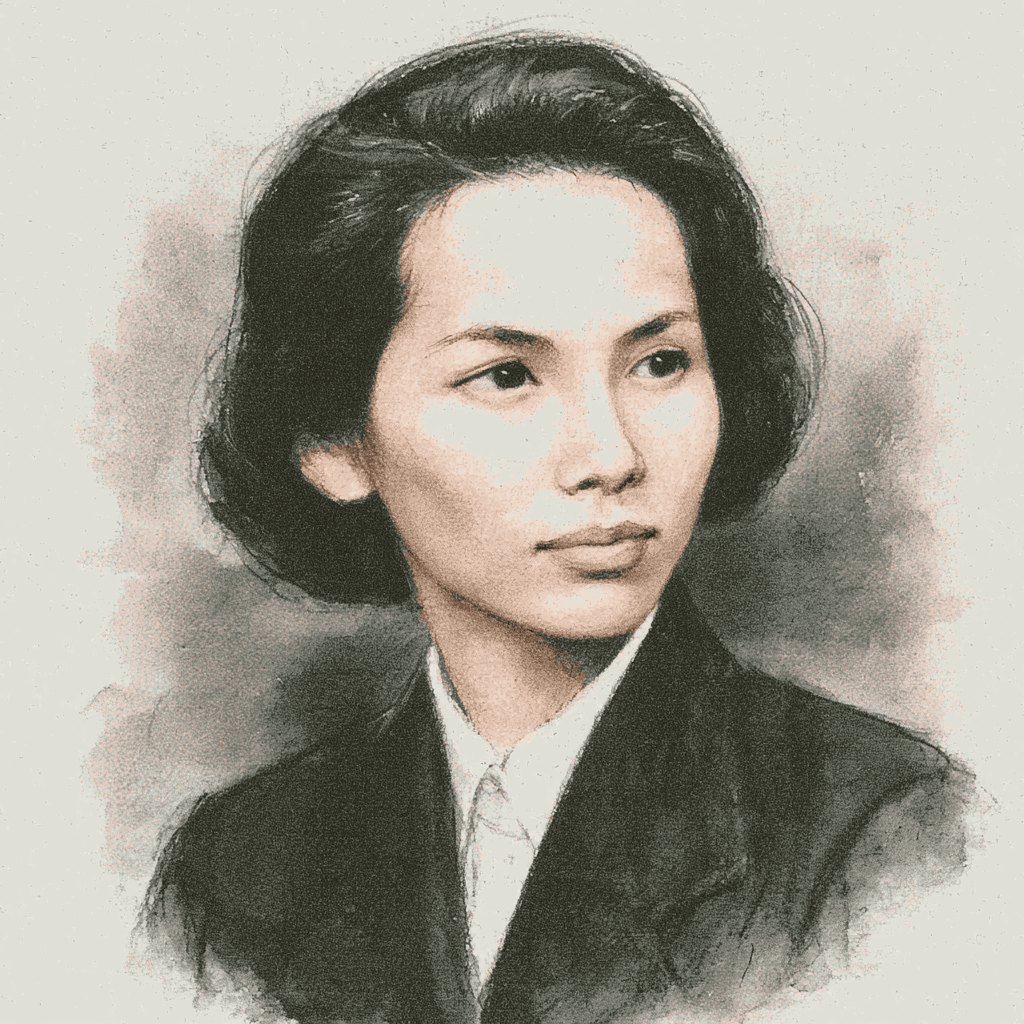
Hsieh Hsueh-hung
Communist Leader & 27 Brigade Commander
Post-War Taiwan
1901–1970
Hsieh Hsueh-hung, born in 1901 into a poor family in Changhua, was sold in childhood as a child-bride and servant, making her the most humbly born yet far-reaching woman revolutionary in modern Taiwanese history. Breaking past the limits of her status through self-education, she encountered socialist ideas in her youth and threw herself into the leftist movement. She studied in Shanghai and Moscow, receiving training from the Communist International and becoming one of the few Taiwanese women of her time with an international outlook. In 1928 she took part in founding the Taiwanese Communist Party in Shanghai, advocating national liberation and class revolution as one of its core leaders. Under Japanese rule she was repeatedly arrested and imprisoned for her political activity, yet held fast to her convictions. After World War II she organized popular forces in Taichung, attentive to the injustices of post-war society. When the February 28 Incident broke out in 1947, she led the "27 Brigade" in Taichung — one of the largest armed resistances on the island — and for a time controlled the Taichung area. After the resistance failed she fled by stages to Hong Kong and then to mainland China. There she founded the Taiwan Democratic Self-Government League, a leading organization for Taiwanese on the mainland. Yet in China's successive political campaigns she was branded a rightist and subjected to struggle sessions, ending her life in bleak circumstances and dying in Beijing in 1970. Hsieh's life was full of controversy, but her overlapping identities as a woman leader, leftist revolutionary, and commander of February 28 armed resistance make her a weighty and complex figure in modern Taiwanese history.
Led the 27 Brigade in armed resistance during February 28 (1947)
Co-founded the Taiwanese Communist Party (1928)
Communist Leader & 27 Brigade Commander
Hsieh Hsueh-hung
Era
Post-War Taiwan
Lifespan
1901–1970
Hsieh Hsueh-hung, born in 1901 into a poor family in Changhua, was sold in childhood as a child-bride and servant, making her the most humbly born yet far-reaching woman revolutionary in modern Taiwanese history. Breaking past the limits of her status through self-education, she encountered socialist ideas in her youth and threw herself into the leftist movement. She studied in Shanghai and Moscow, receiving training from the Communist International and becoming one of the few Taiwanese women of her time with an international outlook. In 1928 she took part in founding the Taiwanese Communist Party in Shanghai, advocating national liberation and class revolution as one of its core leaders. Under Japanese rule she was repeatedly arrested and imprisoned for her political activity, yet held fast to her convictions. After World War II she organized popular forces in Taichung, attentive to the injustices of post-war society. When the February 28 Incident broke out in 1947, she led the "27 Brigade" in Taichung — one of the largest armed resistances on the island — and for a time controlled the Taichung area. After the resistance failed she fled by stages to Hong Kong and then to mainland China. There she founded the Taiwan Democratic Self-Government League, a leading organization for Taiwanese on the mainland. Yet in China's successive political campaigns she was branded a rightist and subjected to struggle sessions, ending her life in bleak circumstances and dying in Beijing in 1970. Hsieh's life was full of controversy, but her overlapping identities as a woman leader, leftist revolutionary, and commander of February 28 armed resistance make her a weighty and complex figure in modern Taiwanese history.
Led the 27 Brigade in armed resistance during February 28 (1947)
Co-founded the Taiwanese Communist Party (1928)