

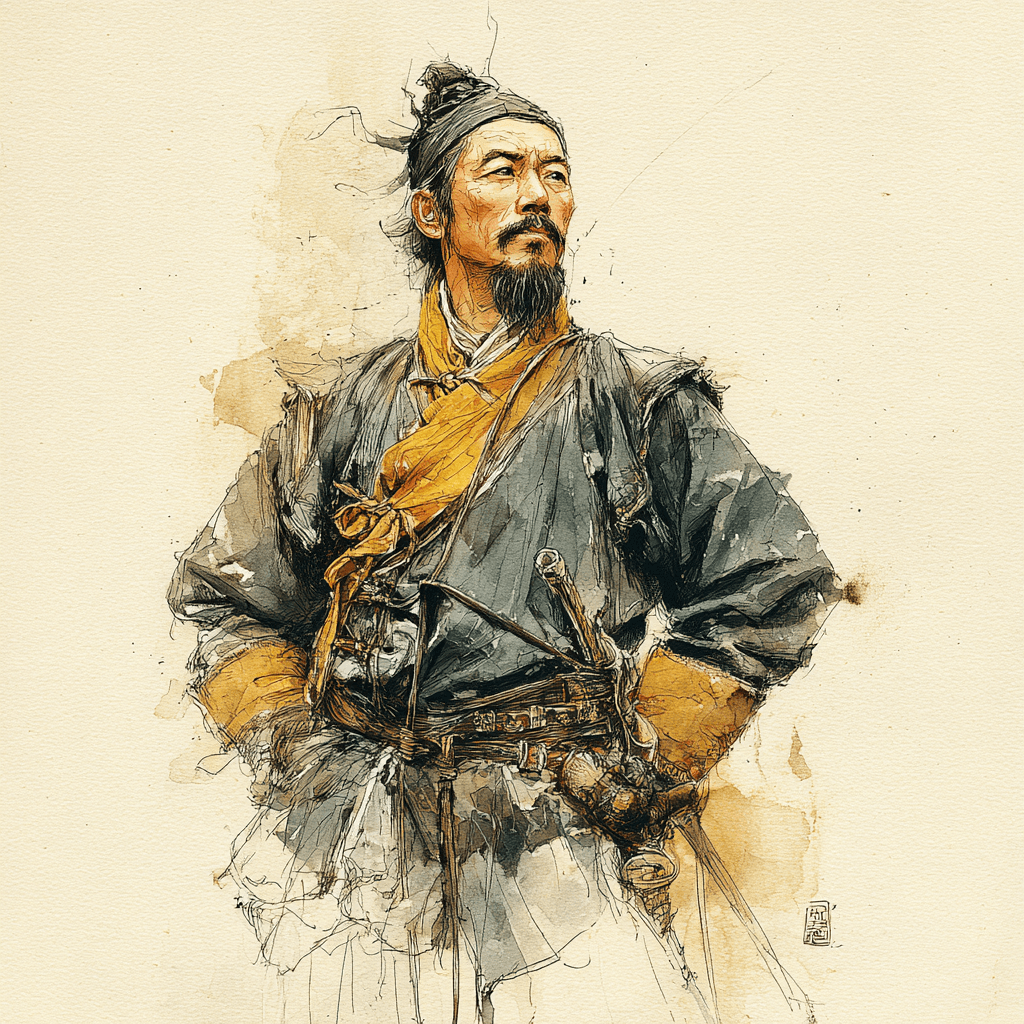
Yan Siqi
Pioneer of Taiwan
Age of Discovery
1589–1625
Yan Siqi, born in 1589 in Haicheng, Zhangzhou Prefecture, Fujian, was a Fujianese maritime trader and corsair traditionally honored in Taiwan as the Pioneer King who Opened Taiwan (開臺王) for his role in leading one of the earliest organized Han Chinese settlements on Formosa. According to traditional accounts, he killed a local official in a dispute as a young man and fled across the sea to Hirado, Japan, where a large community of overseas Hokkien merchants operated under the toleration of the Tokugawa bakufu. He prospered as a textile and rice merchant in Hirado, joined the regional Hokkien-Japanese trading network, and became a prominent figure among the émigré Chinese commercial community on the southern Japanese coast. Tradition records that he and twenty-seven sworn brothers — including a young Zheng Zhilong — plotted in 1624 to seize power in Japan, an undertaking that failed and forced their flight from the archipelago. He led the fleet across the Taiwan Strait and made landfall at Penkang (笨港), in the lowlands of modern Beigang in Yunlin County, where he established a coastal base from which to organize Han settlement. He built ten stockades along the coastal plain and dispatched recruiters back to Zhangzhou and Quanzhou to draw landless Hokkien farmers across the strait, accelerating Han immigration well before the formal Dutch and Spanish arrivals. He maintained an independent trading and raiding operation across the South China and East China Seas, operating outside Ming jurisdiction and competing with the rising Dutch East India Company. His settlement at Penkang antedated the formal Dutch occupation at Tayouan in 1624 and the Spanish settlement at Keelung in 1626, making it one of the earliest mass Han colonization efforts on Taiwan. He died unexpectedly in 1625, traditionally said to have succumbed to illness contracted on a hunting expedition in the lowland forests, at the age of 36. His following — fleet, settlement networks, and trading partners — passed to his lieutenant Zheng Zhilong, who within a few years built the larger maritime power that defined East Asian seas in the mid-seventeenth century. He is commemorated by shrines at Beigang and elsewhere in Yunlin and remains an officially recognized historical figure in Taiwanese local memory, though academic scholarship debates the documentary basis and the precise dates of his career. Yan is widely remembered as the principal organizer of the first large-scale Han settlement on Taiwan and the prologue to the maritime empire that his successor Zheng Zhilong, and ultimately Koxinga, would forge across the strait.
Led the first major Hokkien settlement at Penkang, becoming known as the 'Pioneer of Taiwan'
Pioneer of Taiwan
Yan Siqi
Era
Age of Discovery
Lifespan
1589–1625
Yan Siqi, born in 1589 in Haicheng, Zhangzhou Prefecture, Fujian, was a Fujianese maritime trader and corsair traditionally honored in Taiwan as the Pioneer King who Opened Taiwan (開臺王) for his role in leading one of the earliest organized Han Chinese settlements on Formosa. According to traditional accounts, he killed a local official in a dispute as a young man and fled across the sea to Hirado, Japan, where a large community of overseas Hokkien merchants operated under the toleration of the Tokugawa bakufu. He prospered as a textile and rice merchant in Hirado, joined the regional Hokkien-Japanese trading network, and became a prominent figure among the émigré Chinese commercial community on the southern Japanese coast. Tradition records that he and twenty-seven sworn brothers — including a young Zheng Zhilong — plotted in 1624 to seize power in Japan, an undertaking that failed and forced their flight from the archipelago. He led the fleet across the Taiwan Strait and made landfall at Penkang (笨港), in the lowlands of modern Beigang in Yunlin County, where he established a coastal base from which to organize Han settlement. He built ten stockades along the coastal plain and dispatched recruiters back to Zhangzhou and Quanzhou to draw landless Hokkien farmers across the strait, accelerating Han immigration well before the formal Dutch and Spanish arrivals. He maintained an independent trading and raiding operation across the South China and East China Seas, operating outside Ming jurisdiction and competing with the rising Dutch East India Company. His settlement at Penkang antedated the formal Dutch occupation at Tayouan in 1624 and the Spanish settlement at Keelung in 1626, making it one of the earliest mass Han colonization efforts on Taiwan. He died unexpectedly in 1625, traditionally said to have succumbed to illness contracted on a hunting expedition in the lowland forests, at the age of 36. His following — fleet, settlement networks, and trading partners — passed to his lieutenant Zheng Zhilong, who within a few years built the larger maritime power that defined East Asian seas in the mid-seventeenth century. He is commemorated by shrines at Beigang and elsewhere in Yunlin and remains an officially recognized historical figure in Taiwanese local memory, though academic scholarship debates the documentary basis and the precise dates of his career. Yan is widely remembered as the principal organizer of the first large-scale Han settlement on Taiwan and the prologue to the maritime empire that his successor Zheng Zhilong, and ultimately Koxinga, would forge across the strait.
Led the first major Hokkien settlement at Penkang, becoming known as the 'Pioneer of Taiwan'