

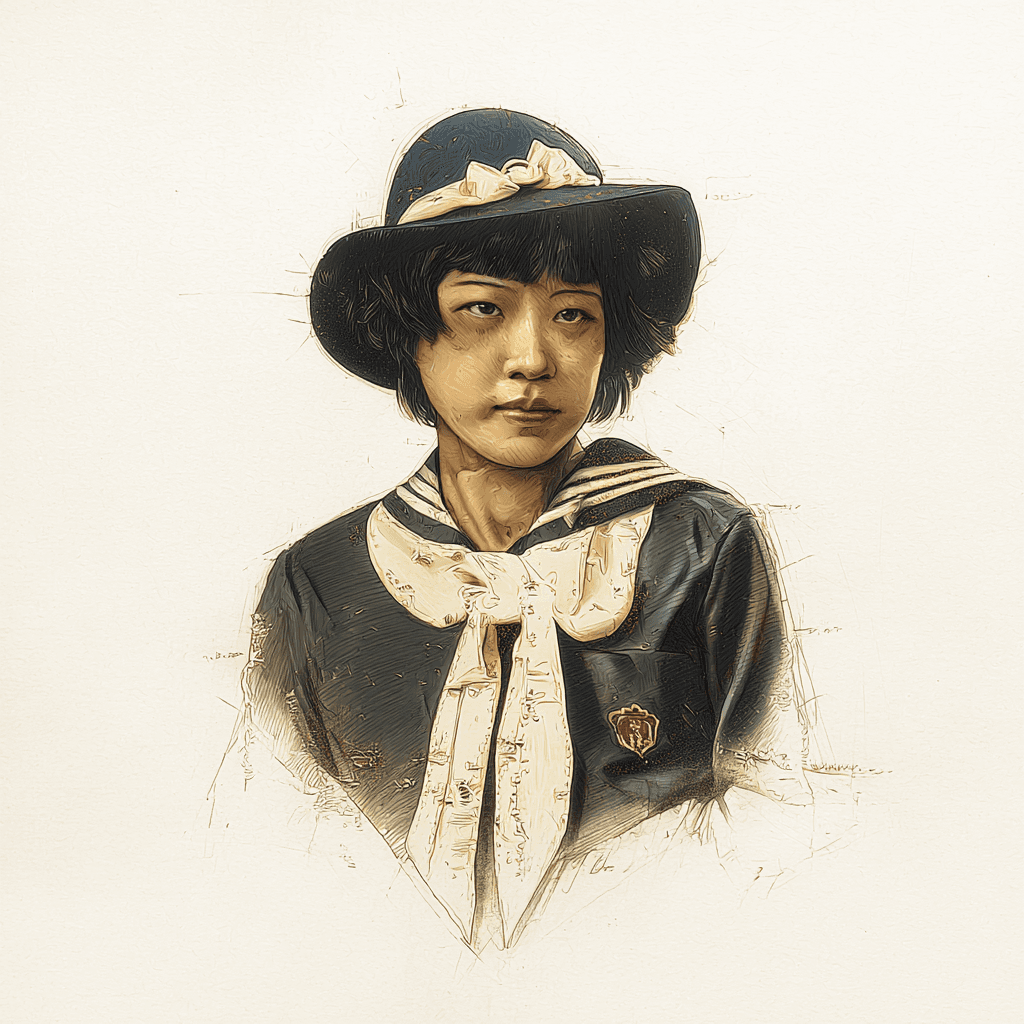
Yang Chian-ho
Reporter and Writer
Japanese Colonial / Post-War
1921–2011
Yang Chian-ho was born in 1921 near the south gate of Taipei, the youngest child of the family and a daughter. At one point the household meant to send her to another home as an adopted daughter; her mother fought to keep her, and died when Yang was fifteen. She finished Seishu Girls' High School and then argued her way into Taihoku Women's Higher College, the highest schooling open to Taiwanese women at the time and the only one of its kind on the island. She graduated in March 1940, the year matchmakers began calling on her classmates. The next year the Taiwan Nichinichi Shinpō advertised for a woman reporter. Nishikawa Mitsuru, who ran the interview, handed her a copy of Bungei Taiwan, the magazine he edited; she found in it a piece mocking Taiwanese funeral processions, wrote a reply called 'The Wailing Woman,' and sent it back. That reply got her the job. In June 1941, at twenty, she joined the home and culture page — the first Taiwanese woman reporter on the island, the only woman among the paper's three Taiwanese staff, and paid the same as her Japanese colleagues. She interviewed every day and wrote a piece every day: Lai Ho, the painter Kuo Hsueh-hu, the physician Li Teng-yueh. She resigned in April 1942, after ten months. That July the magazine Taiwan Bungaku carried her short story 'Season of Blossom,' about a girl fresh out of girls' school watching her classmates marry one after another. She was twenty-one, the youngest Taiwanese writer then active. She married the following year and spent the rest of the war carrying an infant through the evacuations, her writing set aside. In October 1946 the Japanese-language pages of newspapers and magazines were abolished by order — and Japanese was the only language she could write in. August 1950, Taitung. In Taiwan's first direct election for county councillors she stood with no party behind her and won; one plank of her platform was a public nursery. Three years later, an inspection of the granary at the food office found a sack of rice swapped for chaff, and the charge of corruption fell on her husband, Lin Chia-hsiung, who ran it. Her political life ended there. She settled in the United States in 1977. Her husband died in 1989, and at sixty-eight she began to write again, publishing the Japanese memoir The Prism of Life in Tokyo in 1993, with a preface by Nishikawa Mitsuru; the Chinese translation two years later was co-translated by her daughter. She never switched to writing in Chinese. She died in the United States in 2011.
First Taiwanese woman reporter on the island, at the Taiwan Nichinichi Shinpō (1941)
'Season of Blossom' published in Taiwan Bungaku (1942)
Reporter and Writer
Yang Chian-ho
Era
Japanese Colonial / Post-War
Lifespan
1921–2011
Yang Chian-ho was born in 1921 near the south gate of Taipei, the youngest child of the family and a daughter. At one point the household meant to send her to another home as an adopted daughter; her mother fought to keep her, and died when Yang was fifteen. She finished Seishu Girls' High School and then argued her way into Taihoku Women's Higher College, the highest schooling open to Taiwanese women at the time and the only one of its kind on the island. She graduated in March 1940, the year matchmakers began calling on her classmates. The next year the Taiwan Nichinichi Shinpō advertised for a woman reporter. Nishikawa Mitsuru, who ran the interview, handed her a copy of Bungei Taiwan, the magazine he edited; she found in it a piece mocking Taiwanese funeral processions, wrote a reply called 'The Wailing Woman,' and sent it back. That reply got her the job. In June 1941, at twenty, she joined the home and culture page — the first Taiwanese woman reporter on the island, the only woman among the paper's three Taiwanese staff, and paid the same as her Japanese colleagues. She interviewed every day and wrote a piece every day: Lai Ho, the painter Kuo Hsueh-hu, the physician Li Teng-yueh. She resigned in April 1942, after ten months. That July the magazine Taiwan Bungaku carried her short story 'Season of Blossom,' about a girl fresh out of girls' school watching her classmates marry one after another. She was twenty-one, the youngest Taiwanese writer then active. She married the following year and spent the rest of the war carrying an infant through the evacuations, her writing set aside. In October 1946 the Japanese-language pages of newspapers and magazines were abolished by order — and Japanese was the only language she could write in. August 1950, Taitung. In Taiwan's first direct election for county councillors she stood with no party behind her and won; one plank of her platform was a public nursery. Three years later, an inspection of the granary at the food office found a sack of rice swapped for chaff, and the charge of corruption fell on her husband, Lin Chia-hsiung, who ran it. Her political life ended there. She settled in the United States in 1977. Her husband died in 1989, and at sixty-eight she began to write again, publishing the Japanese memoir The Prism of Life in Tokyo in 1993, with a preface by Nishikawa Mitsuru; the Chinese translation two years later was co-translated by her daughter. She never switched to writing in Chinese. She died in the United States in 2011.
First Taiwanese woman reporter on the island, at the Taiwan Nichinichi Shinpō (1941)
'Season of Blossom' published in Taiwan Bungaku (1942)