


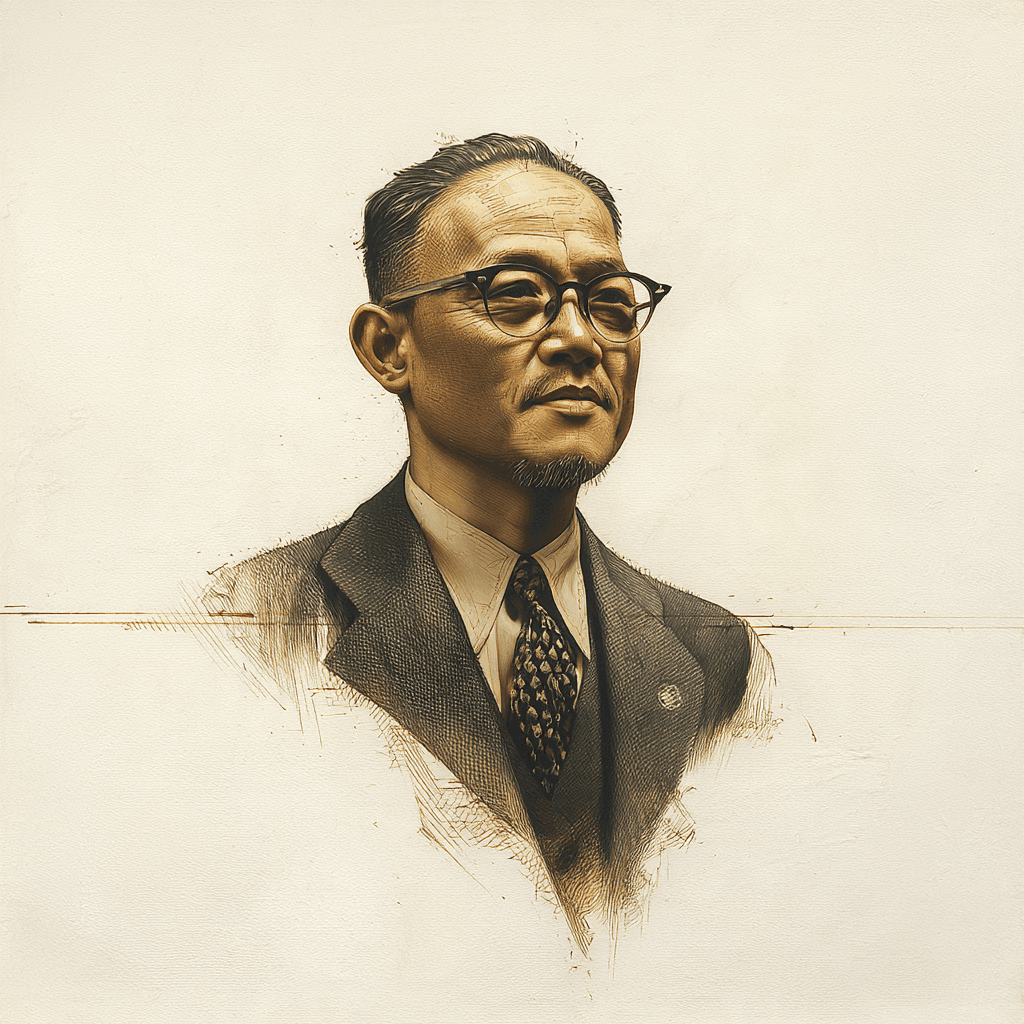
Yin Chung-jung
Minister of Economic Affairs and Architect of the Exchange Reform
Authoritarian Era
1903–1963
Yin Chung-jung was born in 1903 in Shaoyang, Hunan, and trained as an electrical engineer at Nanyang University. During the war he purchased supplies in the United States for the National Resources Commission. In 1949 he came to Taiwan and effectively ran industrial recovery at the Taiwan Production Board.
The thing most often remembered from those years is the cotton-for-cloth scheme: the government handed US-aid cotton to private mills to spin and weave on commission, then bought back the finished goods. Mill owners did not need to find raw material or worry about selling. Taiwan's textile industry started that way; his critics called it a blurring of state and business.
He became Minister of Economic Affairs in 1954 and resigned the next year after being indicted over a loan to the Yangtze Timber Company; a court later acquitted him. In 1957 he returned to the Economic Stabilization Board, and in 1958 took over the Foreign Exchange and Trade Control Commission, collapsing the parallel exchange rates step by step into a single rate, devaluing the New Taiwan dollar sharply and loosening import controls. The approach matched what American advisers wanted, and inside the government he was accused of yielding to Washington.
In 1960 he also became chairman of the Bank of Taiwan and helped draft the nineteen-point economic reform program and the Statute for the Encouragement of Investment. He died in Taipei in January 1963, aged fifty-nine. The statute stayed in force for thirty years, replaced only in 1990 by the Statute for Upgrading Industries.
1958 Led the foreign-exchange reform that unified Taiwan's multiple exchange rates
1960 Helped draft the Statute for the Encouragement of Investment
Yin Chung-jung
Minister of Economic Affairs and Architect of the Exchange Reform
Era
Authoritarian Era
Lifespan
1903–1963
Yin Chung-jung was born in 1903 in Shaoyang, Hunan, and trained as an electrical engineer at Nanyang University. During the war he purchased supplies in the United States for the National Resources Commission. In 1949 he came to Taiwan and effectively ran industrial recovery at the Taiwan Production Board.
The thing most often remembered from those years is the cotton-for-cloth scheme: the government handed US-aid cotton to private mills to spin and weave on commission, then bought back the finished goods. Mill owners did not need to find raw material or worry about selling. Taiwan's textile industry started that way; his critics called it a blurring of state and business.
He became Minister of Economic Affairs in 1954 and resigned the next year after being indicted over a loan to the Yangtze Timber Company; a court later acquitted him. In 1957 he returned to the Economic Stabilization Board, and in 1958 took over the Foreign Exchange and Trade Control Commission, collapsing the parallel exchange rates step by step into a single rate, devaluing the New Taiwan dollar sharply and loosening import controls. The approach matched what American advisers wanted, and inside the government he was accused of yielding to Washington.
In 1960 he also became chairman of the Bank of Taiwan and helped draft the nineteen-point economic reform program and the Statute for the Encouragement of Investment. He died in Taipei in January 1963, aged fifty-nine. The statute stayed in force for thirty years, replaced only in 1990 by the Statute for Upgrading Industries.
1958 Led the foreign-exchange reform that unified Taiwan's multiple exchange rates
1960 Helped draft the Statute for the Encouragement of Investment