

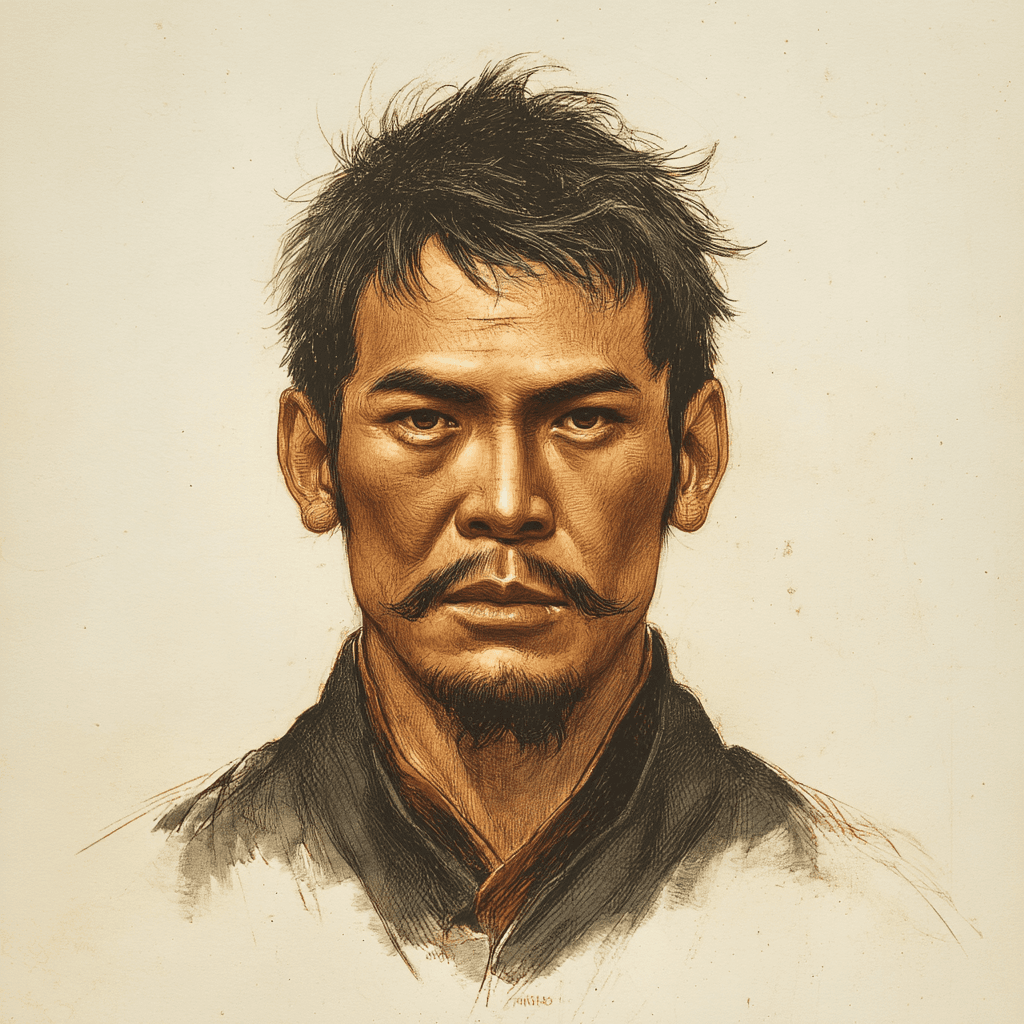
Yu Qingfang
Leader of the Tapani Incident
Armed Resistance / 1896–1915
1879–1915
Yu Qingfang, born in 1879 in what is today Luzhu in Kaohsiung, was the principal leader of the Tapani Incident, also known as the Xilai Temple Incident or the Jiaobani Incident, the largest armed anti-Japanese uprising of the mid-colonial period. In his early years he served as a junior police assistant, gaining first-hand familiarity with the workings of the colonial system. He later resigned in dissatisfaction with Japanese policy and gravitated toward popular religious circles. Combining Zhaijiao Buddhism with folk beliefs, he used the Xilai Temple in Tainan as his base and proclaimed a divine mandate to establish a so-called Great Ming Compassionate Kingdom on Taiwanese soil, drawing on religious appeal to mobilize anti-Japanese followers. In early 1915 he, together with Jiang Ding and Luo Jun, planned a coordinated island-wide uprising and distributed talismans through the religious network with the claim that believers would be impervious to blades and bullets. The uprising broke out in haste in June and July of that year, attacking Japanese police substations and stations in the Jiaobani area (modern Yujing in Tainan) and inflicting Japanese casualties. The Government-General quickly transferred troops from across the island to the south and launched a major military operation in the mountains of Yujing and Nanxi. In addition to battlefield deaths, Japanese forces carried out large-scale executions in several settlements, causing heavy civilian losses among the people of Jiaobani — one of the most controversial repressive episodes of the colonial era. Yu Qingfang withdrew into the mountains with the remnants of his force, was captured at Nanxi in August, and was sentenced to death in September and executed at Tainan. The Tapani Incident was the last large-scale armed uprising launched by the Han Chinese population of Taiwan. It was also the largest and most costly in human terms, and is widely regarded as the closing chapter of the Han armed resistance tradition. He is widely credited as the figure after whom Taiwanese opposition shifted into modern political channels such as the Taiwanese Cultural Association.
1915 Mobilized resistance through religious networks
1915 Defeated at Jiaobani, captured and executed
Leader of the Tapani Incident
Yu Qingfang
Era
Armed Resistance / 1896–1915
Lifespan
1879–1915
Yu Qingfang, born in 1879 in what is today Luzhu in Kaohsiung, was the principal leader of the Tapani Incident, also known as the Xilai Temple Incident or the Jiaobani Incident, the largest armed anti-Japanese uprising of the mid-colonial period. In his early years he served as a junior police assistant, gaining first-hand familiarity with the workings of the colonial system. He later resigned in dissatisfaction with Japanese policy and gravitated toward popular religious circles. Combining Zhaijiao Buddhism with folk beliefs, he used the Xilai Temple in Tainan as his base and proclaimed a divine mandate to establish a so-called Great Ming Compassionate Kingdom on Taiwanese soil, drawing on religious appeal to mobilize anti-Japanese followers. In early 1915 he, together with Jiang Ding and Luo Jun, planned a coordinated island-wide uprising and distributed talismans through the religious network with the claim that believers would be impervious to blades and bullets. The uprising broke out in haste in June and July of that year, attacking Japanese police substations and stations in the Jiaobani area (modern Yujing in Tainan) and inflicting Japanese casualties. The Government-General quickly transferred troops from across the island to the south and launched a major military operation in the mountains of Yujing and Nanxi. In addition to battlefield deaths, Japanese forces carried out large-scale executions in several settlements, causing heavy civilian losses among the people of Jiaobani — one of the most controversial repressive episodes of the colonial era. Yu Qingfang withdrew into the mountains with the remnants of his force, was captured at Nanxi in August, and was sentenced to death in September and executed at Tainan. The Tapani Incident was the last large-scale armed uprising launched by the Han Chinese population of Taiwan. It was also the largest and most costly in human terms, and is widely regarded as the closing chapter of the Han armed resistance tradition. He is widely credited as the figure after whom Taiwanese opposition shifted into modern political channels such as the Taiwanese Cultural Association.
1915 Mobilized resistance through religious networks
1915 Defeated at Jiaobani, captured and executed