

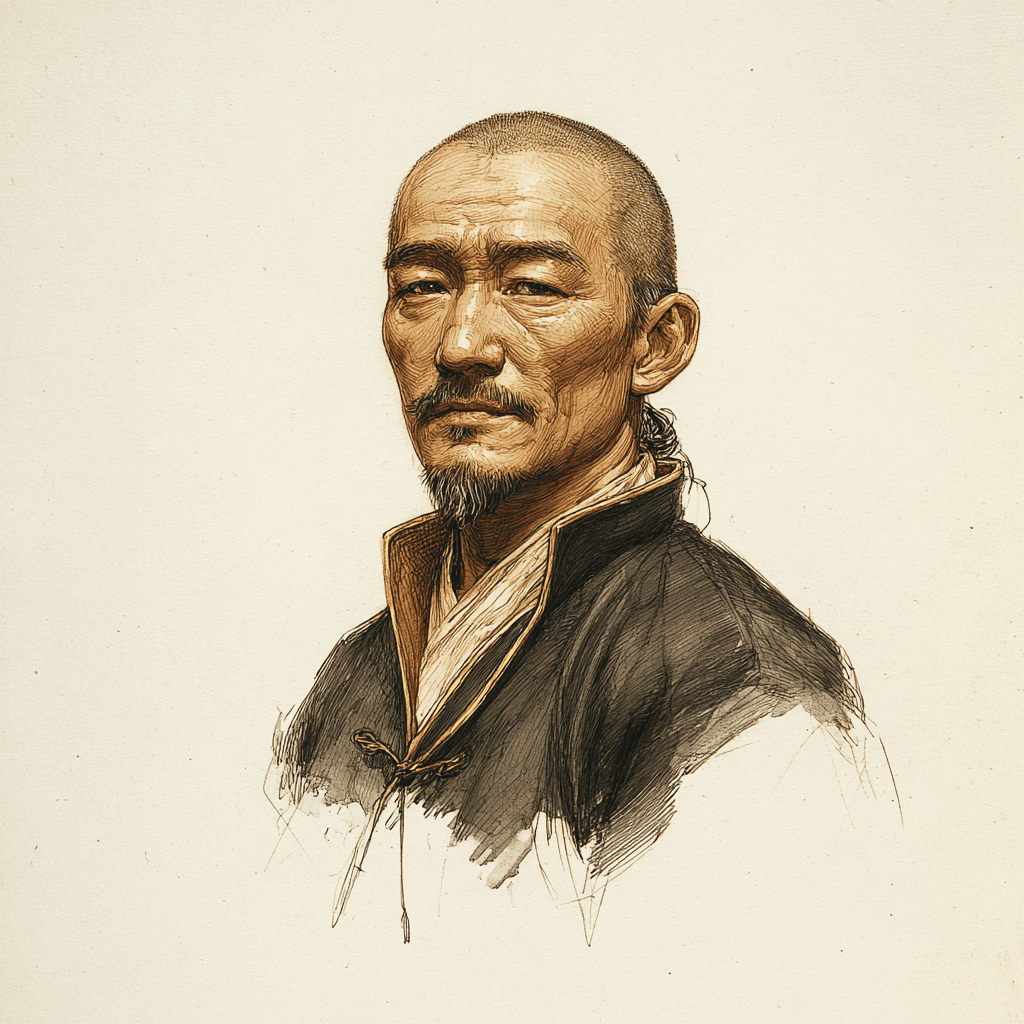
Zhang Dajing
Interpreter Between Han Settlers and the Anli Indigenous Society
Qing Dynasty
1690–1773
Zhang Dajing, born around 1690 in Guangdong Province, came to Taiwan in the early eighteenth century and rose to become the most powerful interpreter (通事) mediating between Han Chinese settlers and the Pazeh indigenous group of the Anli Society (岸裡社) in the Taichung basin, accumulating in the process one of the largest landholdings in central Taiwan. He first established himself as a trader and broker in the settlements along the edge of indigenous territory, learning the Pazeh language and gaining the trust of Anli Society leaders at a time when Qing authorities relied heavily on such intermediaries to manage the volatile frontier between Han immigration and indigenous land. Zhang's decisive rise came through his promotion of the so-called 'land-for-water' arrangements (割地換水), in which he organized Han settler capital to fund the construction of irrigation channels on land controlled by the Anli Society, with indigenous communities granting long-term land rights to the investors in exchange for access to the new water infrastructure. Over several decades of such transactions, Zhang Dajing accumulated vast tracts of the fertile Taichung plain, transforming what had been the core territory of the Anli Society into Han farmland while the Pazeh people were progressively confined to smaller and more marginal areas. He simultaneously cultivated his position as the essential broker for the Anli Society in its dealings with Qing officials, helping the group obtain military commissions, land patents, and legal recognition that gave them a degree of formal protection — though critics have noted that this protection came at the cost of their land base. By the middle of the eighteenth century, Zhang Dajing and his associates had brought under cultivation a large portion of present-day Taichung and Changhua counties, a transformation of the landscape that made central Taiwan one of the most productive agricultural regions in the island. He accumulated official rank through donations to the Qing treasury and became a recognized patron of local temples and community institutions, embedding his family name in the social fabric of the Taichung region. Zhang died in 1773, leaving behind a legacy that has been interpreted in sharply divergent ways: celebrated by later Han settler communities as a visionary developer who opened central Taiwan to agriculture, and condemned by indigenous rights scholars as the architect of a systematic dispossession that destroyed the land base of the Pazeh people within a century. His story is now recognized as the archetypal case study of how Qing frontier land relations produced wealth for Han intermediaries while structurally impoverishing the indigenous societies with whom they nominally cooperated. Zhang Dajing is generally regarded as the foundational figure in the settlement history of the Taichung basin — a man whose commercial genius and political skill reshaped central Taiwan's human geography, at an irreversible cost to those who had lived there first.
Organized the 'land-for-water' (割地換水) arrangements with the Anli Society, trading irrigation infrastructure for indigenous land rights
Accumulated vast landholdings across the Taichung basin, transforming Anli Society territory into the most productive agricultural region in central Taiwan
Interpreter Between Han Settlers and the Anli Indigenous Society
Zhang Dajing
Era
Qing Dynasty
Lifespan
1690–1773
Zhang Dajing, born around 1690 in Guangdong Province, came to Taiwan in the early eighteenth century and rose to become the most powerful interpreter (通事) mediating between Han Chinese settlers and the Pazeh indigenous group of the Anli Society (岸裡社) in the Taichung basin, accumulating in the process one of the largest landholdings in central Taiwan. He first established himself as a trader and broker in the settlements along the edge of indigenous territory, learning the Pazeh language and gaining the trust of Anli Society leaders at a time when Qing authorities relied heavily on such intermediaries to manage the volatile frontier between Han immigration and indigenous land. Zhang's decisive rise came through his promotion of the so-called 'land-for-water' arrangements (割地換水), in which he organized Han settler capital to fund the construction of irrigation channels on land controlled by the Anli Society, with indigenous communities granting long-term land rights to the investors in exchange for access to the new water infrastructure. Over several decades of such transactions, Zhang Dajing accumulated vast tracts of the fertile Taichung plain, transforming what had been the core territory of the Anli Society into Han farmland while the Pazeh people were progressively confined to smaller and more marginal areas. He simultaneously cultivated his position as the essential broker for the Anli Society in its dealings with Qing officials, helping the group obtain military commissions, land patents, and legal recognition that gave them a degree of formal protection — though critics have noted that this protection came at the cost of their land base. By the middle of the eighteenth century, Zhang Dajing and his associates had brought under cultivation a large portion of present-day Taichung and Changhua counties, a transformation of the landscape that made central Taiwan one of the most productive agricultural regions in the island. He accumulated official rank through donations to the Qing treasury and became a recognized patron of local temples and community institutions, embedding his family name in the social fabric of the Taichung region. Zhang died in 1773, leaving behind a legacy that has been interpreted in sharply divergent ways: celebrated by later Han settler communities as a visionary developer who opened central Taiwan to agriculture, and condemned by indigenous rights scholars as the architect of a systematic dispossession that destroyed the land base of the Pazeh people within a century. His story is now recognized as the archetypal case study of how Qing frontier land relations produced wealth for Han intermediaries while structurally impoverishing the indigenous societies with whom they nominally cooperated. Zhang Dajing is generally regarded as the foundational figure in the settlement history of the Taichung basin — a man whose commercial genius and political skill reshaped central Taiwan's human geography, at an irreversible cost to those who had lived there first.
Organized the 'land-for-water' (割地換水) arrangements with the Anli Society, trading irrigation infrastructure for indigenous land rights
Accumulated vast landholdings across the Taichung basin, transforming Anli Society territory into the most productive agricultural region in central Taiwan