

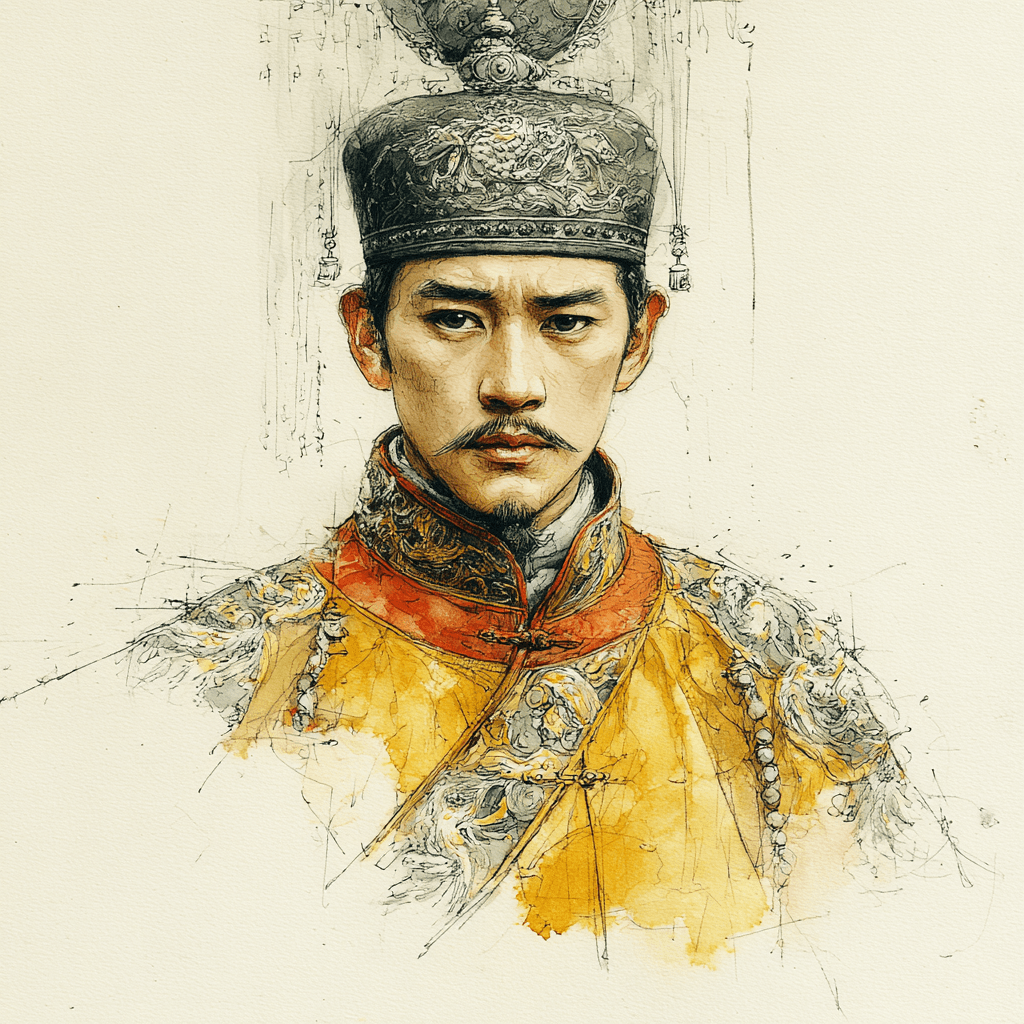
Zheng Kezang
Regent & Designated Heir of Tungning
Kingdom of Tungning
1664–1681
Zheng Kezang, born in 1664, was the eldest son of Zheng Jing and the recognized heir apparent of the Kingdom of Tungning, despite a controversial birth that initially provoked the rage of his grandfather Koxinga. His mother was the wet nurse of Zheng Jing's younger brother, and the affair that produced him was the cause of Koxinga's near-execution order against his own son, an order ultimately never carried out. Brought up at the Tungning court, he received a thorough classical education under the personal supervision of the chief minister Chen Yong-hua, who later betrothed his own daughter to the young prince. He was praised in contemporary records as resolute, demanding of his officials, and intolerant of corruption — traits that earned the loyalty of the civilian bureaucracy but the resentment of his father's brothers and the royal kinsmen. From 1673 onward, while Zheng Jing was campaigning on the mainland in alliance with the Three Feudatories revolt, the teenage Kezang served as Regent (監國), assisted by Chen Yong-hua, and effectively ran the civilian government of Taiwan for seven years. His firm management included punishment of corrupt clansmen, creating powerful enemies within the royal family, including his own uncles and the senior officer Feng Xifan. When the western campaign collapsed in 1680, Chen Yong-hua's death later that year removed his most experienced protector and weakened his political base. Zheng Jing died in January 1681 after a prolonged illness, and Zheng Kezang formally assumed the throne as heir at the age of seventeen. Within days, Feng Xifan and a coalition of royal clansmen, including Zheng Jing's brothers, denounced his legitimacy by reviving the old scandal of his parentage. They lured him into the Beiyuan Garden, where he was strangled to death, and installed his younger brother Zheng Keshuang in his place — an event later remembered as the Tungning Coup (東寧之變). His wife, denied permission to retrieve his body, refused food and committed suicide rather than survive him, a story that became a celebrated tale of marital loyalty. The coup that killed Zheng Kezang shattered the Tungning court's political cohesion and is widely regarded as the proximate cause of the kingdom's surrender to the Qing two years later.
Murdered in the palace coup of 1681 led by Feng Xifan
Regent & Designated Heir of Tungning
Zheng Kezang
Era
Kingdom of Tungning
Lifespan
1664–1681
Zheng Kezang, born in 1664, was the eldest son of Zheng Jing and the recognized heir apparent of the Kingdom of Tungning, despite a controversial birth that initially provoked the rage of his grandfather Koxinga. His mother was the wet nurse of Zheng Jing's younger brother, and the affair that produced him was the cause of Koxinga's near-execution order against his own son, an order ultimately never carried out. Brought up at the Tungning court, he received a thorough classical education under the personal supervision of the chief minister Chen Yong-hua, who later betrothed his own daughter to the young prince. He was praised in contemporary records as resolute, demanding of his officials, and intolerant of corruption — traits that earned the loyalty of the civilian bureaucracy but the resentment of his father's brothers and the royal kinsmen. From 1673 onward, while Zheng Jing was campaigning on the mainland in alliance with the Three Feudatories revolt, the teenage Kezang served as Regent (監國), assisted by Chen Yong-hua, and effectively ran the civilian government of Taiwan for seven years. His firm management included punishment of corrupt clansmen, creating powerful enemies within the royal family, including his own uncles and the senior officer Feng Xifan. When the western campaign collapsed in 1680, Chen Yong-hua's death later that year removed his most experienced protector and weakened his political base. Zheng Jing died in January 1681 after a prolonged illness, and Zheng Kezang formally assumed the throne as heir at the age of seventeen. Within days, Feng Xifan and a coalition of royal clansmen, including Zheng Jing's brothers, denounced his legitimacy by reviving the old scandal of his parentage. They lured him into the Beiyuan Garden, where he was strangled to death, and installed his younger brother Zheng Keshuang in his place — an event later remembered as the Tungning Coup (東寧之變). His wife, denied permission to retrieve his body, refused food and committed suicide rather than survive him, a story that became a celebrated tale of marital loyalty. The coup that killed Zheng Kezang shattered the Tungning court's political cohesion and is widely regarded as the proximate cause of the kingdom's surrender to the Qing two years later.
Murdered in the palace coup of 1681 led by Feng Xifan