

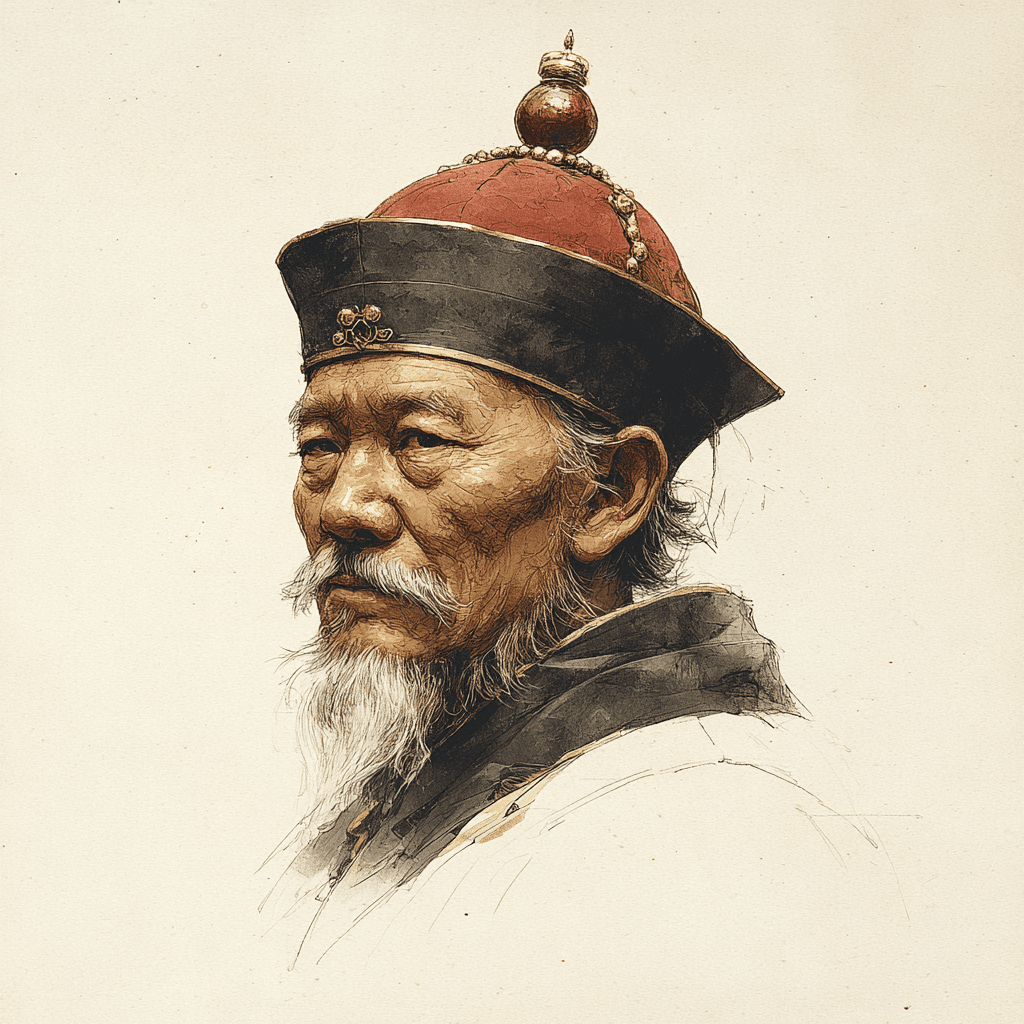
Zheng Yongxi
First Native-Born Taiwanese Jinshi
Qing Dynasty
1788–1858
Zheng Yongxi, born in 1788 in Zhubei (竹北) in what is today Hsinchu County, became the first person born and raised on Taiwan to pass the highest level of the imperial civil service examination, earning the degree of jinshi (進士) in 1823 and winning the honorific title 'First Graduate of Taiwan' (開臺黃甲). He was of Hakka descent, raised in a family that had been in Taiwan for several generations, and his success in the notoriously competitive metropolitan examinations in Beijing — which required mastery of classical literature, history, and statecraft composition — demonstrated that the island's scholarly community had matured to a level comparable with the mainland heartland. After receiving his jinshi degree, Zheng was appointed to a series of positions in northern China, serving as a county magistrate in Hebei, where he gained practical experience in the daily administration of a heavily populated agricultural region far removed from the frontier conditions of his homeland. He returned to Taiwan after completing his mainland service and became the leading literati figure in northern Taiwan during the mid-nineteenth century, hosting examination preparation gatherings, sponsoring the construction of academies, and acting as a patron of local Confucian culture. In 1853, during the severe Zhangzhou-Quanzhou settler violence that swept northern Taiwan, Zheng composed the influential essay Persuasion to Harmony (勸和論), urging rival communities to lay down arms and restore order through Confucian moral suasion rather than continued bloodshed — a text widely circulated and credited with contributing to the eventual pacification. He also participated actively in public infrastructure projects, including the repair of irrigation channels and the maintenance of educational facilities in the Hsinchu and Zhubei region, applying the administrative skills he had acquired on the mainland to the problems of a still-developing colonial frontier. Zheng's scholarly residence in Zhubei, known as the North Gate House (北門屋), became a center of literary and intellectual life in northern Taiwan and attracted students and officials throughout the region. His poetry and prose compositions were collected and circulated, establishing him as a recognized literary figure whose work engaged themes of frontier life, Confucian ethics, and the hopes and hardships of immigrant society. He died in 1858 at the age of seventy, having spent the latter part of his life in retirement devoted to scholarship, community service, and the cultivation of a new generation of educated Taiwanese men. His jinshi examination success in 1823 is commemorated on a stone stele that still stands in Zhubei, marking the spot where news of his achievement was announced to the community. Zheng Yongxi is widely regarded as the founding figure of Taiwanese literati culture — the man whose examination success proved that Taiwan-born scholars could compete at the highest levels of the imperial system and demonstrated that the island had developed an indigenous educated class worthy of the mainland's intellectual traditions.
Passed the metropolitan jinshi examination in Beijing (1823), becoming the first Taiwan-born holder of the degree — honored as 'First Graduate of Taiwan' (開臺黃甲)
Composed Persuasion to Harmony (勸和論, 1853) during the Zhangzhou-Quanzhou settler conflicts, credited with helping restore peace in northern Taiwan
First Native-Born Taiwanese Jinshi
Zheng Yongxi
Era
Qing Dynasty
Lifespan
1788–1858
Zheng Yongxi, born in 1788 in Zhubei (竹北) in what is today Hsinchu County, became the first person born and raised on Taiwan to pass the highest level of the imperial civil service examination, earning the degree of jinshi (進士) in 1823 and winning the honorific title 'First Graduate of Taiwan' (開臺黃甲). He was of Hakka descent, raised in a family that had been in Taiwan for several generations, and his success in the notoriously competitive metropolitan examinations in Beijing — which required mastery of classical literature, history, and statecraft composition — demonstrated that the island's scholarly community had matured to a level comparable with the mainland heartland. After receiving his jinshi degree, Zheng was appointed to a series of positions in northern China, serving as a county magistrate in Hebei, where he gained practical experience in the daily administration of a heavily populated agricultural region far removed from the frontier conditions of his homeland. He returned to Taiwan after completing his mainland service and became the leading literati figure in northern Taiwan during the mid-nineteenth century, hosting examination preparation gatherings, sponsoring the construction of academies, and acting as a patron of local Confucian culture. In 1853, during the severe Zhangzhou-Quanzhou settler violence that swept northern Taiwan, Zheng composed the influential essay Persuasion to Harmony (勸和論), urging rival communities to lay down arms and restore order through Confucian moral suasion rather than continued bloodshed — a text widely circulated and credited with contributing to the eventual pacification. He also participated actively in public infrastructure projects, including the repair of irrigation channels and the maintenance of educational facilities in the Hsinchu and Zhubei region, applying the administrative skills he had acquired on the mainland to the problems of a still-developing colonial frontier. Zheng's scholarly residence in Zhubei, known as the North Gate House (北門屋), became a center of literary and intellectual life in northern Taiwan and attracted students and officials throughout the region. His poetry and prose compositions were collected and circulated, establishing him as a recognized literary figure whose work engaged themes of frontier life, Confucian ethics, and the hopes and hardships of immigrant society. He died in 1858 at the age of seventy, having spent the latter part of his life in retirement devoted to scholarship, community service, and the cultivation of a new generation of educated Taiwanese men. His jinshi examination success in 1823 is commemorated on a stone stele that still stands in Zhubei, marking the spot where news of his achievement was announced to the community. Zheng Yongxi is widely regarded as the founding figure of Taiwanese literati culture — the man whose examination success proved that Taiwan-born scholars could compete at the highest levels of the imperial system and demonstrated that the island had developed an indigenous educated class worthy of the mainland's intellectual traditions.
Passed the metropolitan jinshi examination in Beijing (1823), becoming the first Taiwan-born holder of the degree — honored as 'First Graduate of Taiwan' (開臺黃甲)
Composed Persuasion to Harmony (勸和論, 1853) during the Zhangzhou-Quanzhou settler conflicts, credited with helping restore peace in northern Taiwan