


Authoritarian Era
1915–1950
Zhong Haodong, born Zhong Heming on 24 December 1915 into a Hakka village in Gaoshu, Pingtung, was the half-brother of the writer Zhong Lihe. He grew up under Japanese education, and his resentment of its discrimination pushed him toward the mainland: in 1940 he broke off his studies at Meiji University in Japan and went to Guangdong to join the Eastern District Service Corps led by Qiu Niantai, with his wife Jiang Biyu going with him.
When the war ended he returned to Taiwan and became principal of the provincial Keelung Middle School. What he saw of corruption after the handover moved him to the left. After the February 28 Incident he joined the Chinese Communist Party's Taiwan Provincial Work Committee, set up its Keelung city committee as secretary, and began publishing the Kuangming Pao.
He was arrested as soon as the Kuangming Pao case broke. On 5 October 1950 he was sentenced to death for sedition, and on 14 October he was shot at the Machangting execution ground in Taipei. He was thirty-four.
As he was taken from his cell, the other prisoners sang the Song of the Covered Wagon to see him off, a Japanese song that he and Jiang Biyu had both loved. Forty years later Lan Bozhou took the song's title for the book that told his story, and its echo runs through Hou Hsiao-hsien's A City of Sadness. A Taiwanese headmaster raised under Japanese schooling, who had gone to China to fight the Japanese, was shot in the end by the government he had welcomed back.
Left his studies in 1940 for Guangdong, joining Qiu Niantai's Eastern District Service Corps in the war against Japan
Became principal of Keelung Middle School, founded the Kuangming Pao, and was executed at Machangting on 14 October 1950
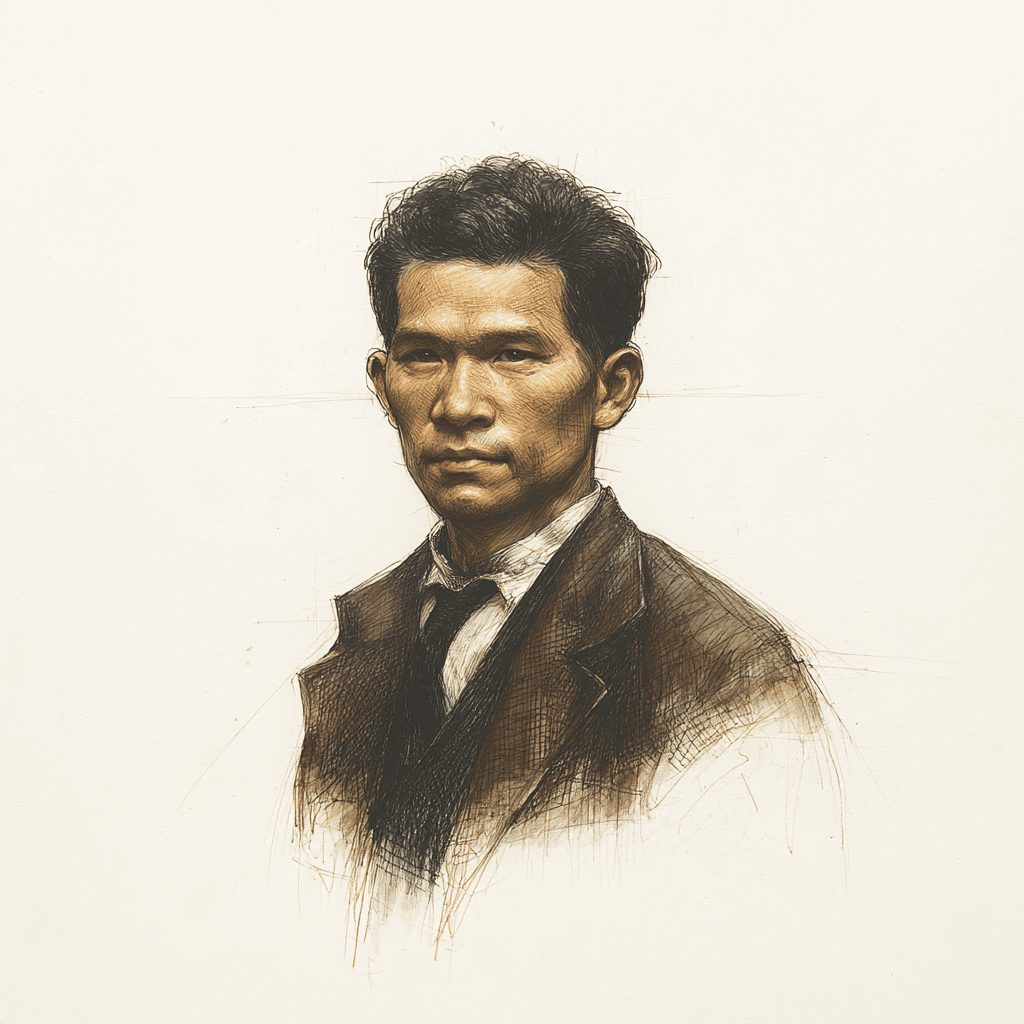
Zhong Haodong
Principal of Keelung Middle School
Era
Authoritarian Era
Lifespan
1915–1950
Zhong Haodong, born Zhong Heming on 24 December 1915 into a Hakka village in Gaoshu, Pingtung, was the half-brother of the writer Zhong Lihe. He grew up under Japanese education, and his resentment of its discrimination pushed him toward the mainland: in 1940 he broke off his studies at Meiji University in Japan and went to Guangdong to join the Eastern District Service Corps led by Qiu Niantai, with his wife Jiang Biyu going with him.
When the war ended he returned to Taiwan and became principal of the provincial Keelung Middle School. What he saw of corruption after the handover moved him to the left. After the February 28 Incident he joined the Chinese Communist Party's Taiwan Provincial Work Committee, set up its Keelung city committee as secretary, and began publishing the Kuangming Pao.
He was arrested as soon as the Kuangming Pao case broke. On 5 October 1950 he was sentenced to death for sedition, and on 14 October he was shot at the Machangting execution ground in Taipei. He was thirty-four.
As he was taken from his cell, the other prisoners sang the Song of the Covered Wagon to see him off, a Japanese song that he and Jiang Biyu had both loved. Forty years later Lan Bozhou took the song's title for the book that told his story, and its echo runs through Hou Hsiao-hsien's A City of Sadness. A Taiwanese headmaster raised under Japanese schooling, who had gone to China to fight the Japanese, was shot in the end by the government he had welcomed back.
Left his studies in 1940 for Guangdong, joining Qiu Niantai's Eastern District Service Corps in the war against Japan
Became principal of Keelung Middle School, founded the Kuangming Pao, and was executed at Machangting on 14 October 1950