

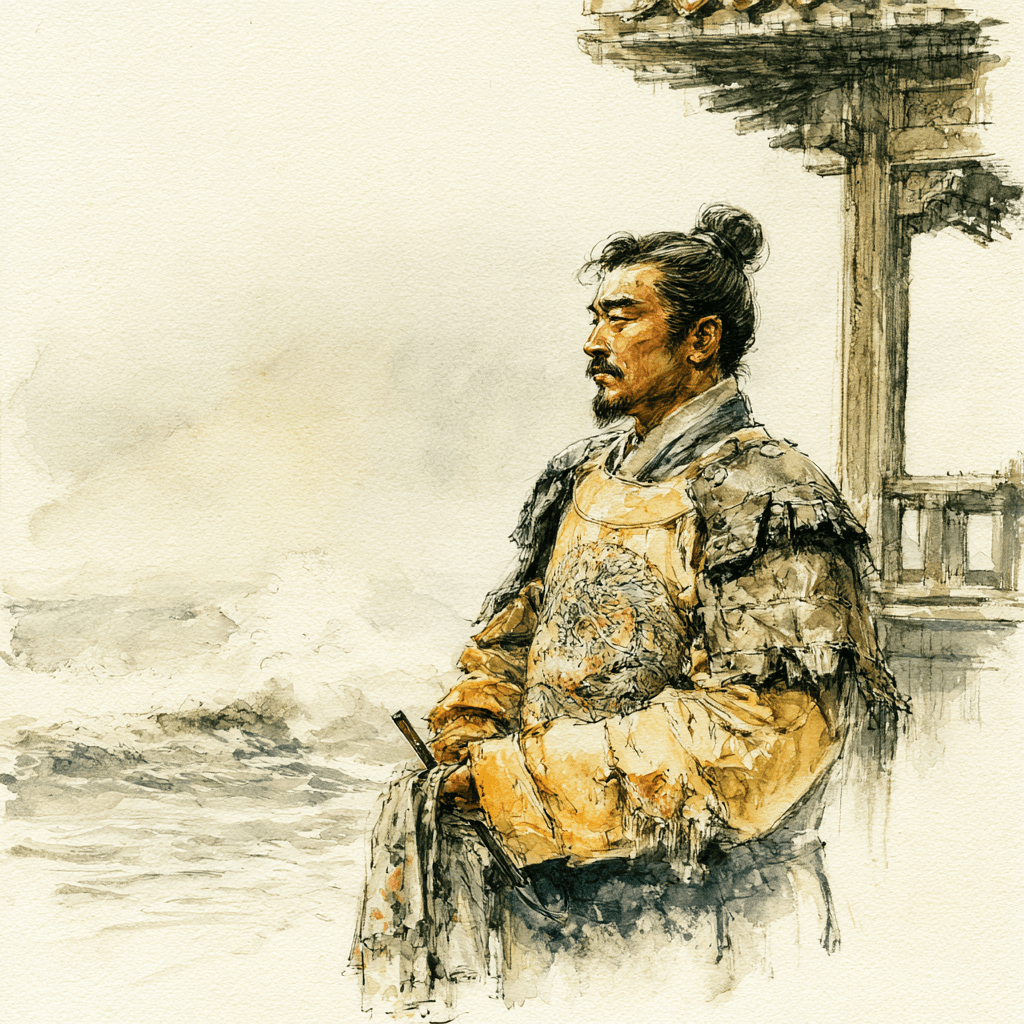
Zhu Shugui
Ming Imperial Prince of Ningjing
Tungning Kingdom
1617–1683
Zhu Shugui was a late-Ming imperial prince enfeoffed as Prince of Ningjing, born in 1617 into a branch of the Liao royal line that traced its descent from the founding emperor of the Ming, Zhu Yuanzhang. After the fall of Beijing to Qing forces, he followed the Southern Ming court into exile across southern China, attaching himself to a succession of loyalist regimes and accepting an honorary military supervisorship at the Fuzhou court. In 1648 he joined Koxinga's maritime forces during the southern Ming retreat and from then on lived under the protection of the Zheng resistance along the southeast China coast. He crossed to Taiwan with Koxinga's expedition in the 1660s and was provided with royal fields, tenant farmers, and a princely household by the Zheng administration, becoming the highest-ranking Ming nobleman within the Tungning Kingdom. He established the Ningjing Princely Mansion in the Xiding ward of Tainan and represented Ming ritual and cultural legitimacy in the ceremonies and ancestral sacrifices of the Zheng regime. Koxinga and his son Zheng Jing both treated him with the deference due to a senior Ming relative, making him the living embodiment of the Tungning Kingdom's claim to Ming legitimacy. After Zheng Jing's death in 1681 he witnessed the Tungning coup that installed the boy king Zheng Keshuang and watched the loyalist banner grow increasingly hollow as the court fell under factional rule. Following the catastrophic defeat at the Battle of Penghu in July 1683 and the Tungning court's decision to surrender to the Qing, he refused to shave his head and adopt Manchu dress, regarding such an act as a betrayal of his Ming ancestors. On the eve of the surrender he summoned his five consorts — Lady Yuan, Lady Wang, Xiujie, Meijie, and Hejie — and informed them of his decision to die for the dynasty; the five women hanged themselves before him. He then distributed his lands to the local peasantry, burned the deeds to his property, dressed in full Ming court attire, and hanged himself at the Ningjing Mansion at the age of sixty-six. After taking the city, the Qing admiral Shi Lang respectfully preserved the mansion by converting it into the Grand Mazu Temple, and the burial site of the five consorts came to be venerated as the Temple of the Five Concubines, which remains an active place of worship in Tainan today. Zhu Shugui is generally remembered as the last representative of the Ming imperial house to die in exile for the dynasty, and as an emblematic figure in early Taiwanese history through whom the personal honor of dying with the fallen state was given visible form.
Hanged himself on the eve of Tungning's surrender in 1683, accompanied in death by his five consorts
Ming Imperial Prince of Ningjing
Zhu Shugui
Era
Tungning Kingdom
Lifespan
1617–1683
Zhu Shugui was a late-Ming imperial prince enfeoffed as Prince of Ningjing, born in 1617 into a branch of the Liao royal line that traced its descent from the founding emperor of the Ming, Zhu Yuanzhang. After the fall of Beijing to Qing forces, he followed the Southern Ming court into exile across southern China, attaching himself to a succession of loyalist regimes and accepting an honorary military supervisorship at the Fuzhou court. In 1648 he joined Koxinga's maritime forces during the southern Ming retreat and from then on lived under the protection of the Zheng resistance along the southeast China coast. He crossed to Taiwan with Koxinga's expedition in the 1660s and was provided with royal fields, tenant farmers, and a princely household by the Zheng administration, becoming the highest-ranking Ming nobleman within the Tungning Kingdom. He established the Ningjing Princely Mansion in the Xiding ward of Tainan and represented Ming ritual and cultural legitimacy in the ceremonies and ancestral sacrifices of the Zheng regime. Koxinga and his son Zheng Jing both treated him with the deference due to a senior Ming relative, making him the living embodiment of the Tungning Kingdom's claim to Ming legitimacy. After Zheng Jing's death in 1681 he witnessed the Tungning coup that installed the boy king Zheng Keshuang and watched the loyalist banner grow increasingly hollow as the court fell under factional rule. Following the catastrophic defeat at the Battle of Penghu in July 1683 and the Tungning court's decision to surrender to the Qing, he refused to shave his head and adopt Manchu dress, regarding such an act as a betrayal of his Ming ancestors. On the eve of the surrender he summoned his five consorts — Lady Yuan, Lady Wang, Xiujie, Meijie, and Hejie — and informed them of his decision to die for the dynasty; the five women hanged themselves before him. He then distributed his lands to the local peasantry, burned the deeds to his property, dressed in full Ming court attire, and hanged himself at the Ningjing Mansion at the age of sixty-six. After taking the city, the Qing admiral Shi Lang respectfully preserved the mansion by converting it into the Grand Mazu Temple, and the burial site of the five consorts came to be venerated as the Temple of the Five Concubines, which remains an active place of worship in Tainan today. Zhu Shugui is generally remembered as the last representative of the Ming imperial house to die in exile for the dynasty, and as an emblematic figure in early Taiwanese history through whom the personal honor of dying with the fallen state was given visible form.
Hanged himself on the eve of Tungning's surrender in 1683, accompanied in death by his five consorts