

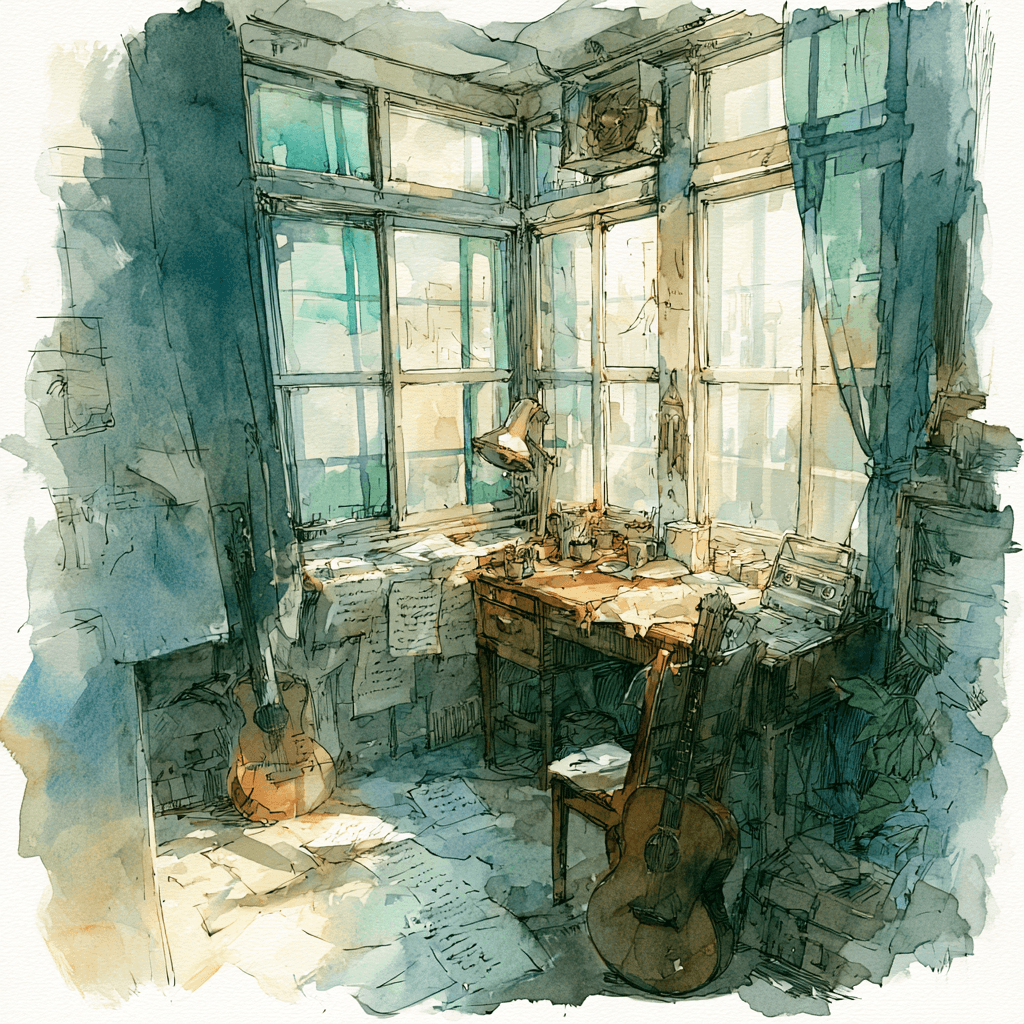
Sing Our Own Songs
Beginning in the mid-1970s, a generation of college students, singer-songwriters, and campus musicians asked a deceptively simple question — "Why don't we sing our own songs?" — and set in motion a movement that would reshape the soundscape of Taiwan for the next two decades. Responding to a music market dominated by translated Japanese hits and licensed Western pop, figures such as Yang Hsien, Li Shuang-tse, Hu Teh-fu, and Lee Chien-fu began performing original Mandarin-language compositions in university auditoriums, folk cafés, and the living rooms of Taipei, blending acoustic guitar idioms drawn from American folk revival with Chinese lyrical sensibilities and a distinctly local student ethos.
The movement's cultural impact extended far beyond its campus origins. Independent labels such as New Formosa Records an…
The movement's cultural impact extended far beyond its campus origins. Independent labels such as New Formosa Records and Rock Records emerged to record and distribute this new music, professionalizing what had begun as an amateur movement and laying the commercial infrastructure that would support Taiwan's rise as the production capital of Mandarin-language pop. The Golden Melody Awards, established in 1990, institutionalized quality standards and critical recognition. Folk singers crossed over into mainstream pop — Jonathan Lee became one of Asia's most influential producers, while Teresa Teng's recordings conquered markets from Tokyo to Southeast Asia. By the mid-1980s, campus folk had evolved into a sophisticated Mandopop industry centered in Taipei, and the question 'Why don't we sing our own songs?' had been answered with a catalog that defined Chinese-language popular music for a generation.
Isle of Time