


Morakot and the Village of Xiaolin
Typhoon Morakot made landfall in Hualien on August 7, 2009. Its winds were not exceptional; it moved very slowly, and it emptied itself onto the mountains of southern Taiwan. The Alishan station recorded more than three thousand millimeters over three days, close to a full year's rainfall there. On August 8 the rainfall maps for Pingtung, Kaohsiung and Chiayi went past their upper bounds.
Before dawn on August 9 the slope of Xiandu Mountain came down behind Xiaolin village, in Jiaxian. The debris buried the settlement whole; 474 people died, and the rescue teams who arrived found no landform left to begin a search from. The Jinshuai Hotel beside the Zhiben River collapsed in the same days, the whole building leaning into the water live on television. That footage became the cover image of the disaster, and there were no cameras where the people actually died. The final count was 681 dead and 18 missing, with 19.5 billion NT dollars in agricultural and fishery losses.
The rescue problem was not the one from 1999. That time the roads had broken; this time whole sections of mountain road had gone along with the mountain. Bridge piers were washed out, access routes were recorded as absent rather than damaged, and everything had to move by helicopter. On August 11 a National Airborne Service Corps helicopter crashed in the mountains of Wutai, Pingtung, killing its three crew.
The government's response became the second part of the disaster. On August 12 the Ministry of Foreign Affairs cabled mi…
The government's response became the second part of the disaster. On August 12 the Ministry of Foreign Affairs cabled missions abroad asking foreign governments to hold off on rescue teams and donations; the cable surfaced two days later and the minister apologized in public. The Executive Yuan did not issue an emergency decree as it had in 1999, working instead through the Morakot Post-Disaster Reconstruction Special Act, promulgated on August 28, with a reconstruction budget of 120 billion NT dollars. On September 7, Premier Liu Chao-shiuan announced the resignation of his cabinet.
Permanent housing was the center of the reconstruction policy. Tzu Chi built the Great Love community at Shanlin; Rinari, on the Majia farm in Pingtung, took in three communities — Kucapungane, Paridrayan and Makazayazaya. The houses went up quickly, usually occupied within a year, a speed rarely seen in post-disaster reconstruction anywhere. The condition of occupancy was that the original settlements were designated special zones and could not be lived in again, and the fields, hunting grounds and ancestral sites on the mountain did not move down with the houses. There are people who have lived in permanent housing for ten years and still go back up every year to plant a plot.
After Morakot, Taiwan rewrote its debris-flow warnings and its rules on compulsory evacuation, and from 2010 clearing a village before heavy rain became routine. That is what the disaster bought. One other thing was never written into any regulation: a memorial park stands on the site of Xiaolin, and the survivors were resettled in three separate places, where they each built a village of their own.
Around six in the morning on August 9 the mountain made a sound. People who happened to be outside the village turned around and saw a slope with no houses on it. Most of those who survived had left the night before, or worked out of town, or lived on the small piece of ground beyond where the flow cut across — the line between living and dying was not who ran faster. It was where a person happened to be that day. What came afterward was lists: who had been identified, who was still on the register, whose family had ended up in three different shelters. The survivors argued for a long time over whether to be resettled together, and in the end rebuilt in three separate places, each holding its own ceremonies at its own shrine. Since 2010 they have returned to the original site every August 9, where there is now grass and a memorial. Some say the hardest part was not that morning. It was every later occasion that required them to write a place of origin on a form.
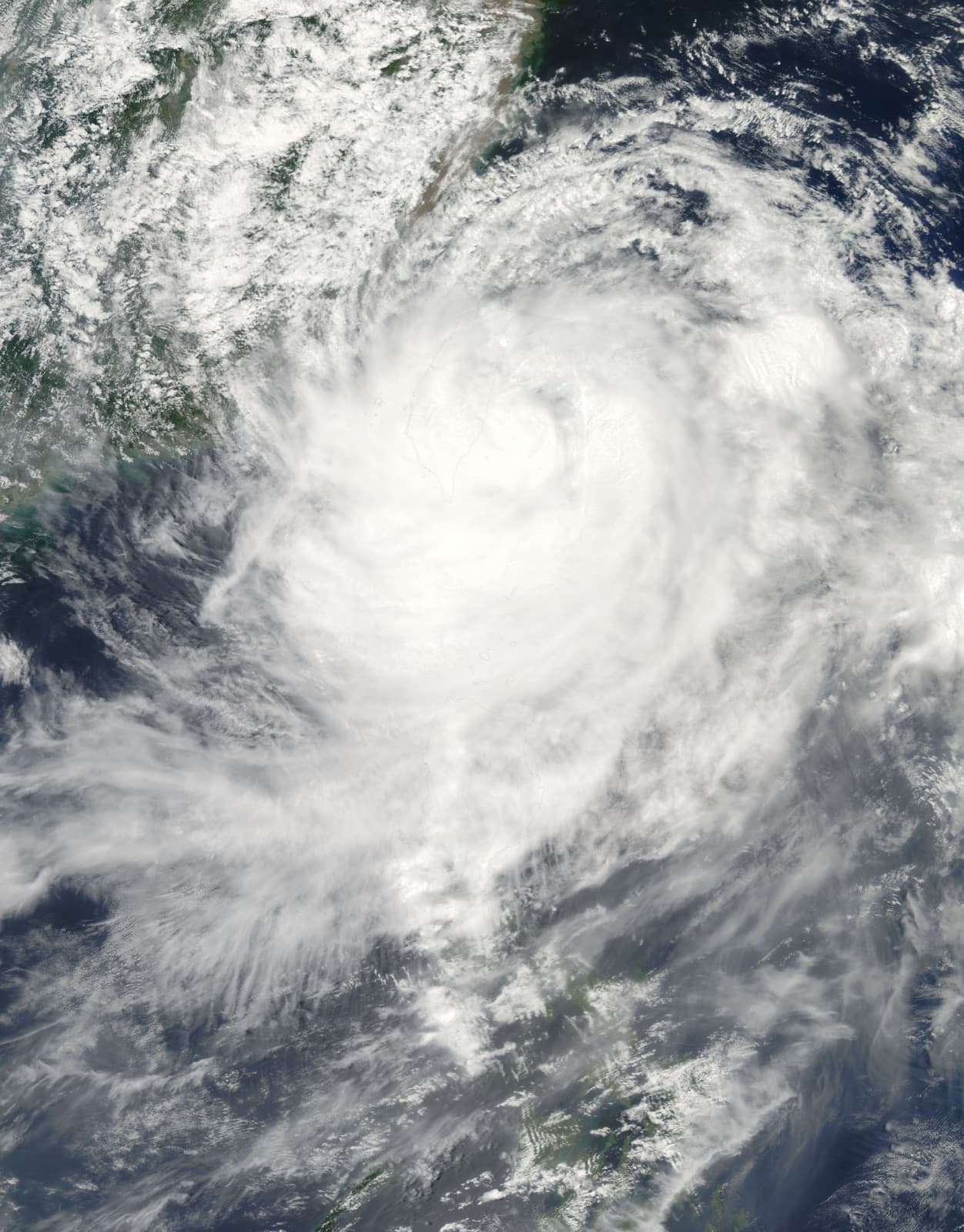
Typhoon Morakot on 7 August 2009, its cloud mass over the whole island. The winds were unremarkable; the rain was not — nearly 3,000 millimetres fell on the southern mountains in three days.
NASA
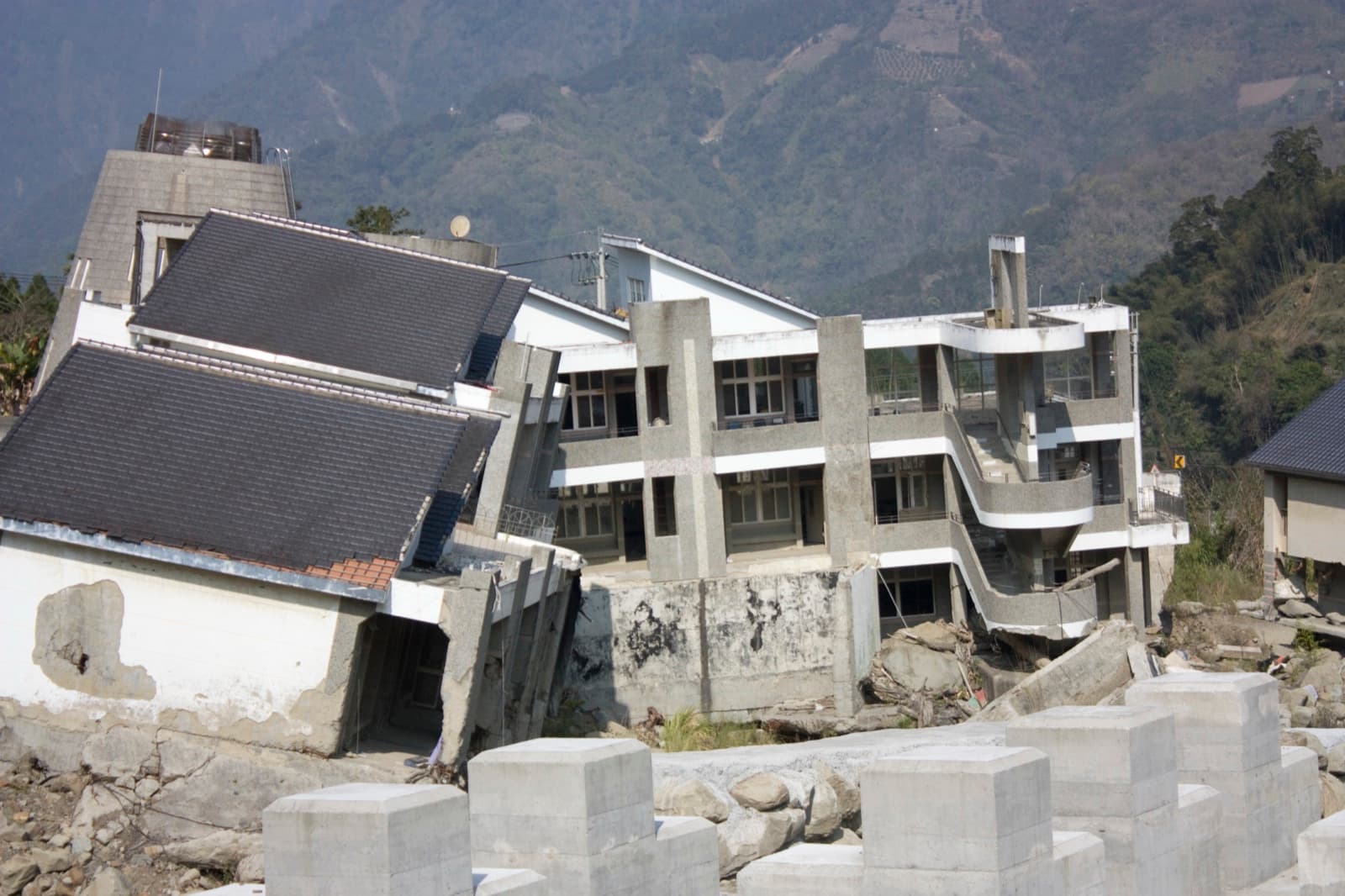
The old buildings of Longhua Elementary, left where the landslide shoved them. Morakot took out roads, bridges and whole villages in the southern mountains; Xiaolin was buried by a single collapse before dawn on 9 August.
Hsin-ying / CC BY-SA 2.0 via Wikimedia Commons
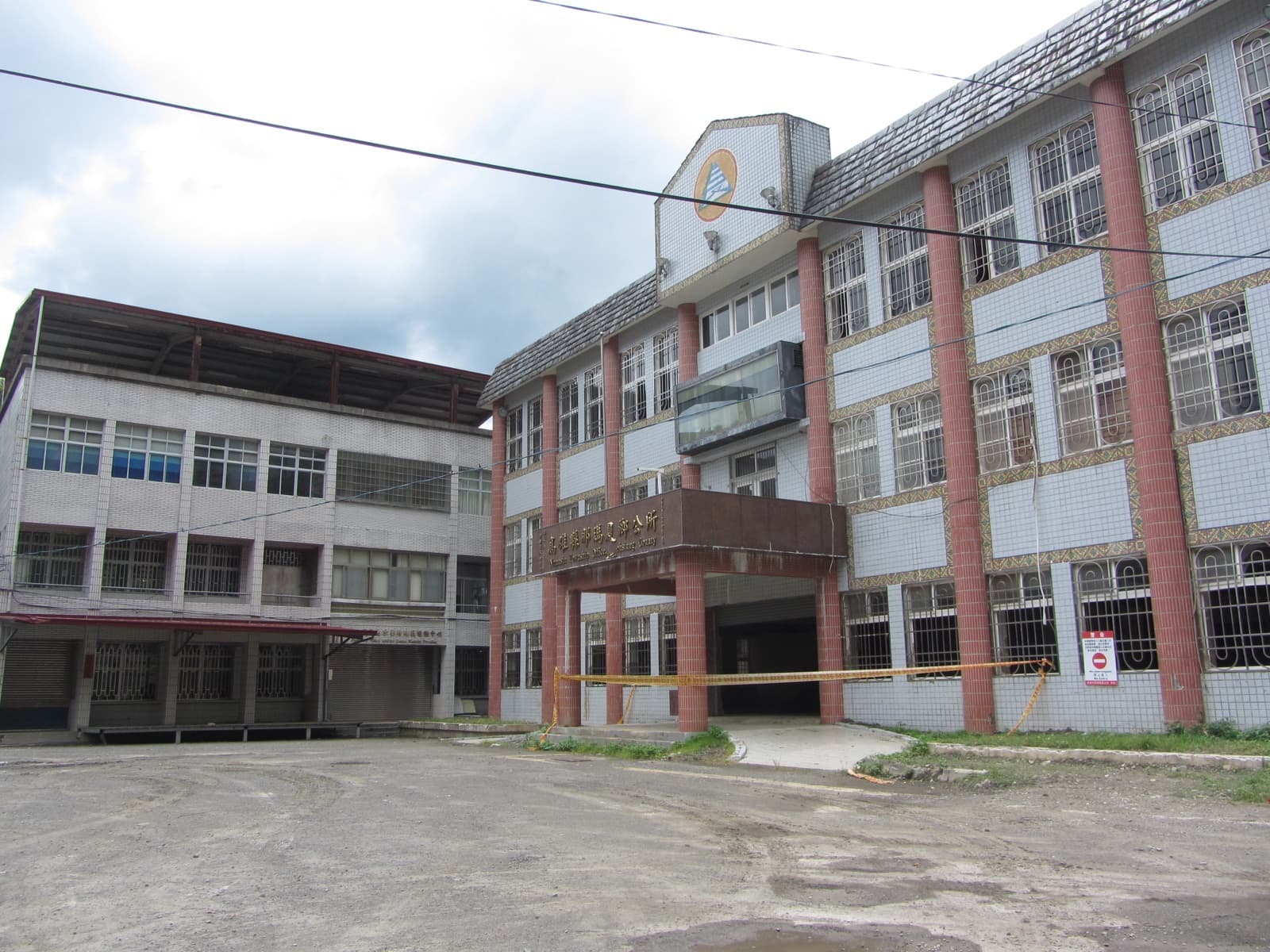
The Namasia township office after the flood. Reconstruction moved several communities down to permanent housing on the plain, and left a question nobody has settled: once you are off the mountain, is it still the same community.
SSR2000 / CC BY-SA 3.0 via Wikimedia Commons
Isle of Time