

Variations Under Wartime Fire
In July 1937 the Marco Polo Bridge Incident broke out, pulling Japan into all-out war and sweeping colonial Taiwan into the same orbit of total mobilization. The Government-General launched the Kōminka campaign, abolishing the Chinese-language columns of newspapers, scrapping Chinese-language classes in the public schools, restricting gezaixi and glove-puppet theatre performances, and subjecting the record market to strict censorship. Releases of Taiwanese-Hokkien songs by Columbia, Victor, and Taihei collapsed; many pre-war works were placed on the list of banned songs for being "decadent" or "defeatist," and within only two years the nascent Taiwanese-Hokkien pop industry had nearly come to a standstill.
The demands of war, however, unexpectedly allowed some Taiwanese-Hokkien songs to survive in transfigured form. In 1938, Hō-iā-hoe, composed by Teng Yu-hsien, was given new Japanese lyrics by the songwriter Kurihara Hakuya and reworked into the martial song Homare no Gumpu (The Glorious Conscript Laborer), which was used to encourage Taiwanese youth to enlist; Bāng Chhun-hong was rewritten as Daichi wa Maneku (The Land Beckons) as a propaganda song for colonial settlement; Moon Night Sorrow was reshaped into The Conscript's Wife. The melodies of the original songs were thus preserved in the air, but the emotions they carried were completely replaced — a young woman's private longings became a loyal lament for a husband sent off to war. This predicament, in which "the tune survived while the lyrics were colonized," became the shared, voiceless condition of Taiwanese cultural workers in wartime.
Even as official release channels were blocked, underground listening life did not entirely die out. Old records were re…
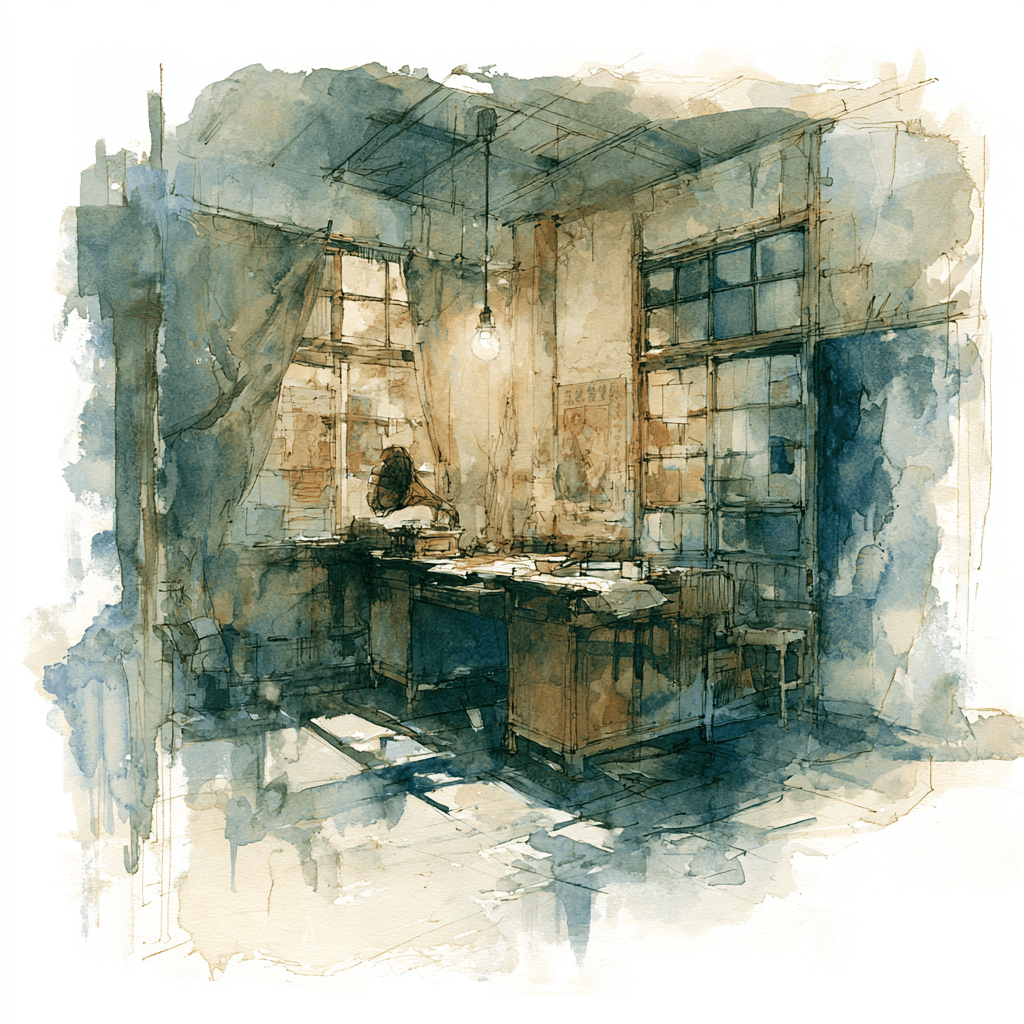
Even as official release channels were blocked, underground listening life did not entirely die out. Old records were replayed endlessly in private homes; taverns and cafés played pre-war standards at low volume late at night; some lyricists turned to gezaixi discs, radio dramas, or children's singing games to avoid censorship. Teng Yu-hsien himself left the record industry in 1940 to take a post as a training officer at Hsinchu's Chiung-lin Public School, and died of illness in 1944 at the age of only thirty-eight. Lee Lin-chiu and Chou Tien-wang struggled on through the rationing and air raids of the late war years, hiding a batch of unreleased works in their desk drawers to await the light of the post-war world.
This volume records the dormancy and transfiguration of Taiwanese-Hokkien popular song during the war years: from the systematic suppression of the culture industry by Kōminka policies, to the strange fate of hit songs being rewritten as military anthems, to the figures of lyricists and composers who kept the spark of creation alive in silence. Although these eight years appear on the surface to be an "interruption" in the history of Taiwanese-Hokkien pop, they were in fact a period of enforced underground resilience — so that when the war ended in 1945 and the bans were loosened, the melodies that had been rewritten would resurface laden with even more complex emotions, becoming one of the keys by which the next generation would understand where it came from.
Isle of Time