


In December 1966 the export processing zone at Qianzhen in Kaohsiung began operating. It was the first export processing zone in the world, 68.36 hectares built on Zhongdao beside Kaohsiung harbour. Its factories made electronics, clothing, leather goods and all kinds of small things for export, and they needed large numbers of young, nimble, low-paid workers. Most of those they recruited were women: in the zone's first year, more than seventy percent of the workers who came in were women.
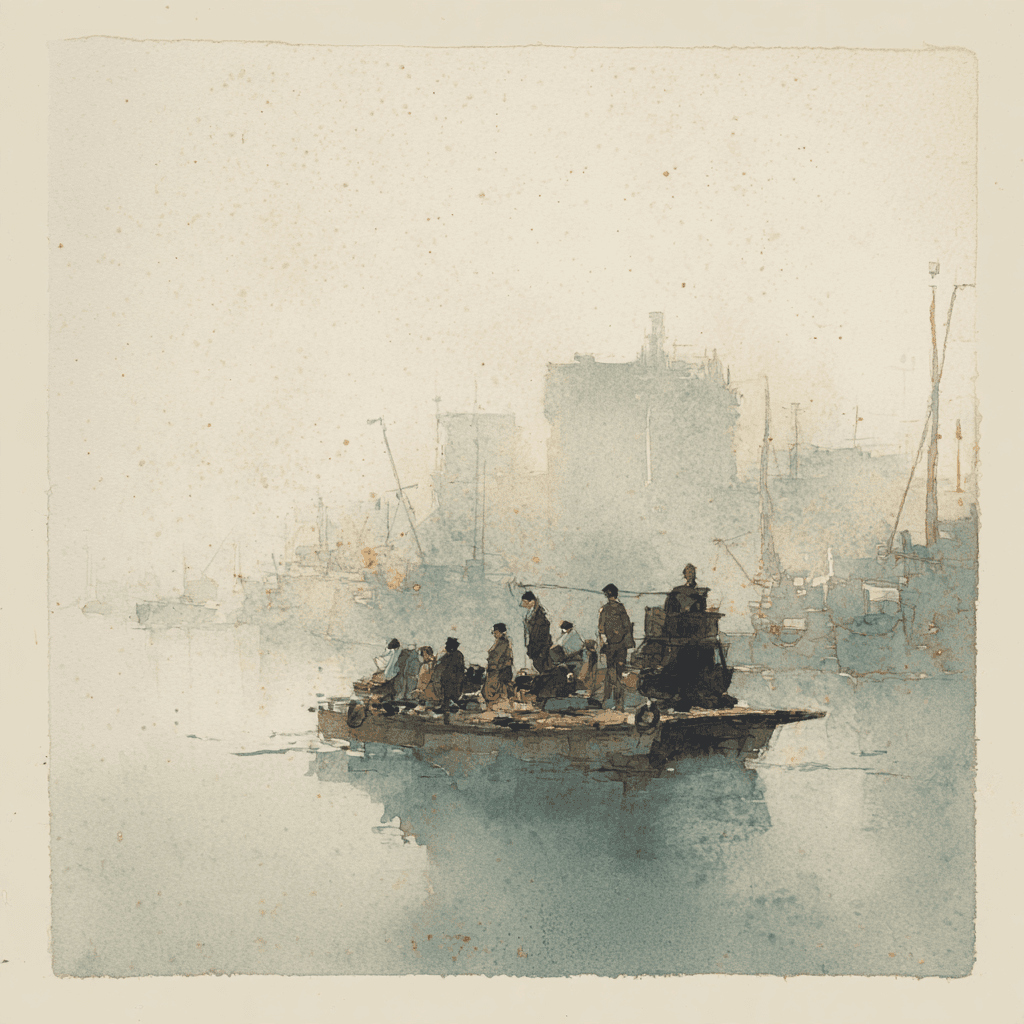
Young women living across the harbour in Zhongzhou, on Cijin, had to cross by boat every morning to get to work. Some ferries were public and some were small private boats. At ten to seven on the morning of 3 September 1973, a private wooden ferry, the Gaozhong No. 6, set out from Zhongzhou for the mouth of the river at Qianzhen. Its licensed capacity is given in different records as thirteen, fifteen or twenty passengers. That morning more than seventy people crowded on board, some say eighty or ninety, along with a motorbike and four bicycles. Almost all of them were women workers hurrying to the zone.
Not long after it set out, the boat began to take in water. It was old and badly overloaded, and when the people on board panicked it lost its balance. It capsized and sank a little over twenty metres from Pier 61.
Forty-six people were pulled out, thirty-five of them injured. Twenty-five women drowned. All lived in Zhongzhou, all were unmarried, and most worked in the export processing zone. Several were under sixteen, below the legal minimum working age at the time, and the youngest were only thirteen or fourteen. Later reports said that many of them had to catch that boat because they were afraid of being late and losing a two-hundred-dollar attendance bonus.
The funerals raised another problem. By Taiwanese folk custom, a daughter who died unmarried could not be buried in the family tomb or placed among the ancestral tablets. After talks with the families and local notables, the Kaohsiung city government buried the twenty-five together between Zhongxing and Zhonghe wards, and the grave was named the Tomb of the Twenty-Five Maidens. Later, when Kaohsiung harbour built its Fourth Container Centre, the grave was moved to its present site beside Cijin Junior High School.
On 18 May 1984 the Kaohsiung Cross-Harbour Tunnel opened, running 1,670 metres from Qianzhen to Cijin. It was Taiwan's first undersea tunnel and is still its only one. From then on, people on Cijin could get to work without a boat.
On 28 April 2008, International Workers' Memorial Day, the Kaohsiung city government renamed the Tomb of the Twenty-Five Maidens the Memorial Park for Women Workers and put up a pink memorial in the shape of a lotus. Every spring the city's labour bureau now holds a ceremony there. In 2023, fifty years after the sinking, a documentary about the women was screened in Kaohsiung, with a message about workplace safety.
The export processing zone later moved into optical equipment, musical instruments and integrated circuits and was renamed a technology industrial park. The women who took the boat to work in their teens and early twenties are now mostly past sixty-five.
The export processing zone was designed around exports. Raw materials entered duty-free, finished goods went straight out, customs clearance shrank from days to hours, and foreign firms came in with orders, drawn by a large pool of young, cheap, nimble workers. The zone sat on Zhongdao beside the harbour, convenient for containers. Where the workers came from and how they got there was not a question the design had to answer.
Women workers living on Cijin had to cross the harbour before work. The boat that sank on 3 September 1973 was privately run, licensed for somewhere between thirteen and twenty passengers, and that day carried more than seventy. In the zone's accounts it was a traffic accident outside the zone. The two-hundred-dollar attendance bonus was written into factory rules. Being late meant losing it.
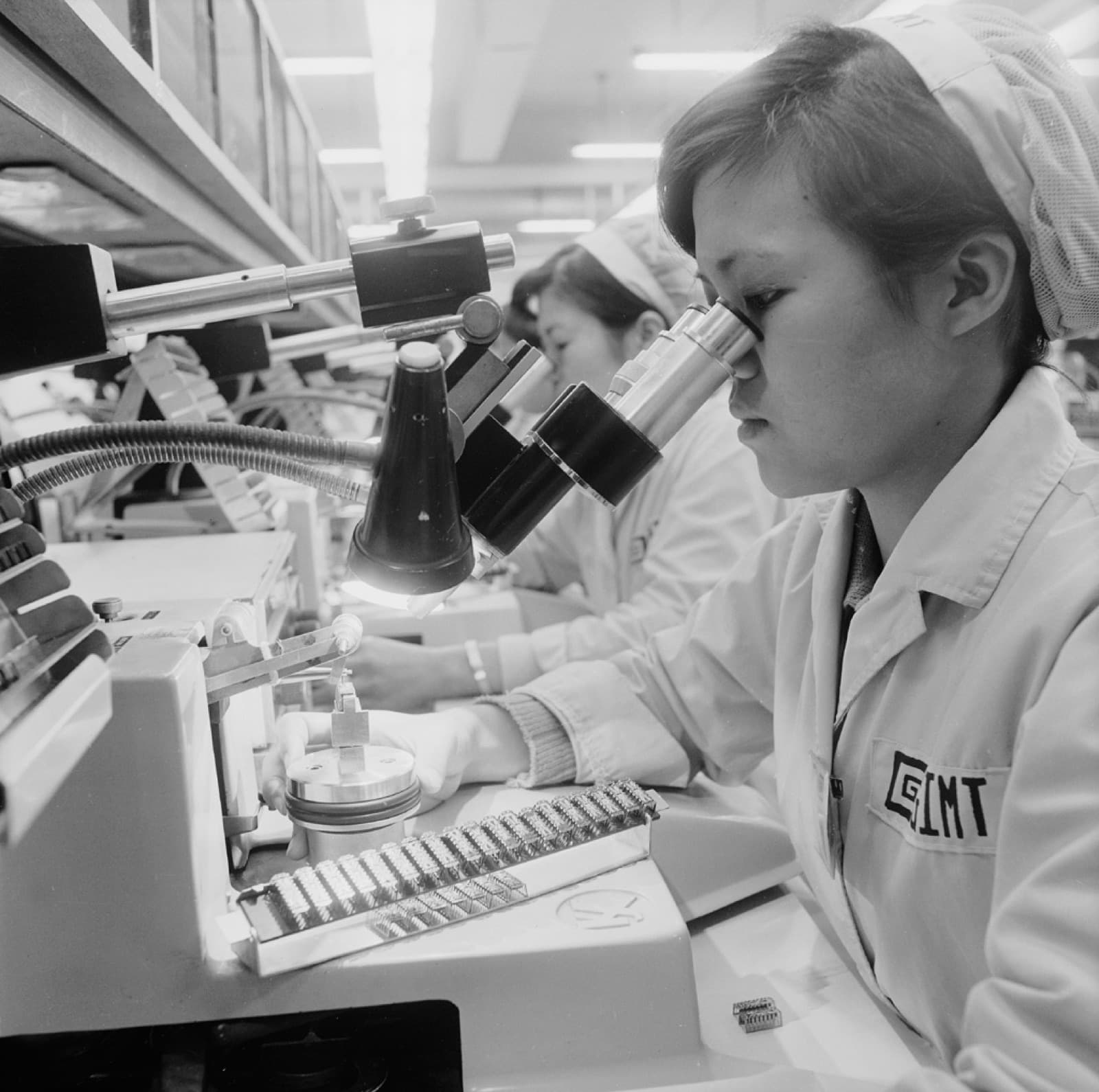
A woman technician works under a microscope in a factory at the Tanzi export processing zone, 1971. In the zones' electronics plants the same movement was repeated thousands of times a day at the eyepiece.
Joint Commission on Rural Reconstruction, 1971
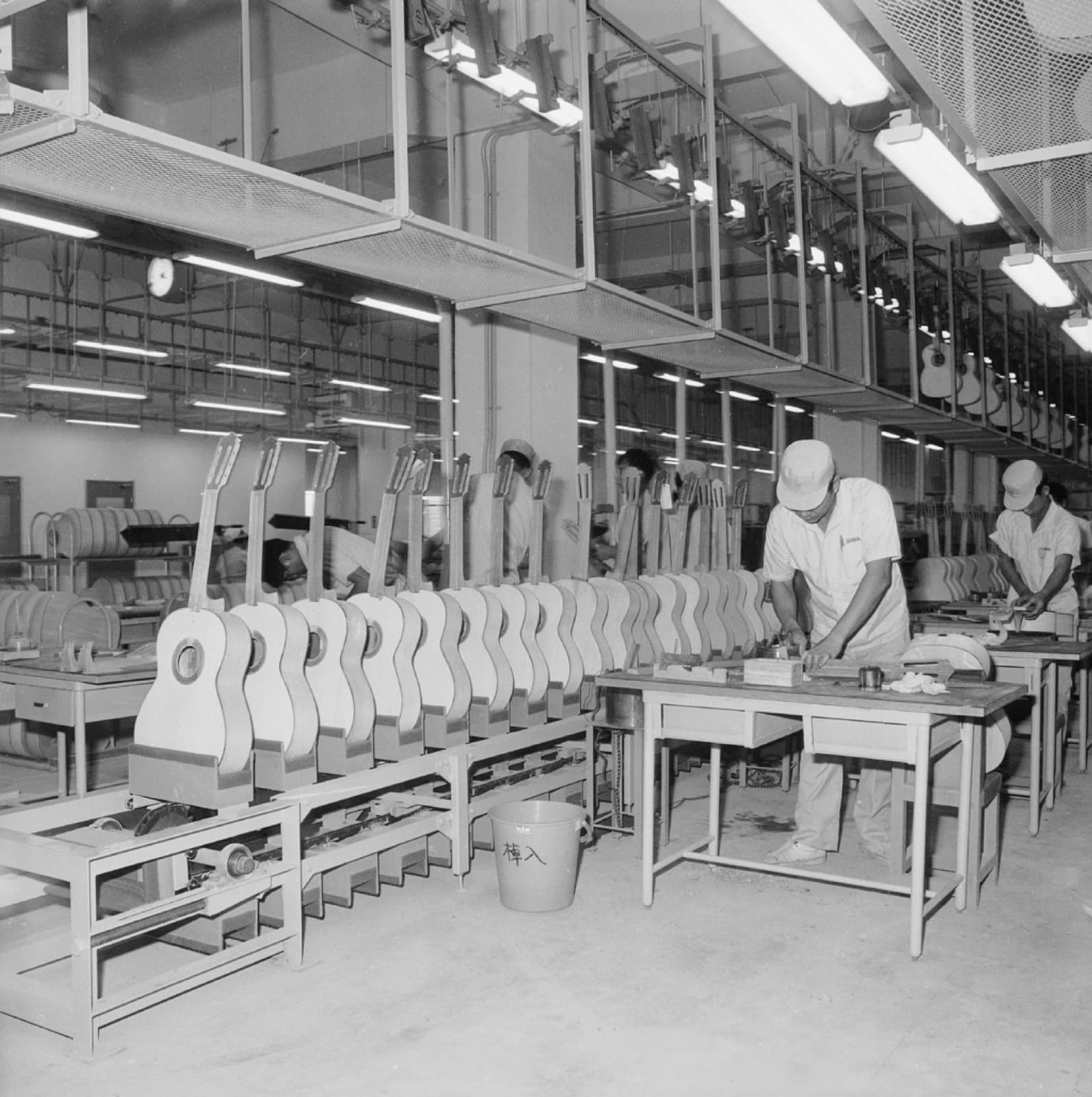
Workers making guitars at the Yamaha instrument factory in the Nanzi export processing zone, 1971. In the early 1970s the zones mostly made clothing, leather goods, handicrafts and consumer electronics.
Joint Commission on Rural Reconstruction, 1971