Taiwan Under Martial Law: White Terror, Cold War, and Economic Takeoff (1950–1979)
23 volumes
Vol. 1
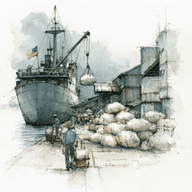
After the Korean War erupted in June 1950, the United States reversed the Truman administration's earlier position of strategic abandonment and reincorporated Taiwan into its Asia-Pacific anti-communist defense line. Within days, President Truman ordered the Seventh Fleet to neutralize the Taiwan Strait, simultaneously protecting the Chiang Kai-shek regime from a PLA invasion it could not have repelled and restraining KMT counter-attacks against the mainland. The 1954 Sino-American Mutual Defense Treaty institutionalized this commitment, stationing U.S. advisors, signals-intelligence facilities, and fighter squadrons on Taiwanese soil, and the massive American aid that accompanied it poured into Taiwan, stabilizing the embattled KMT regime and laying the foundation for Taiwan's economic development.
Vol. 2
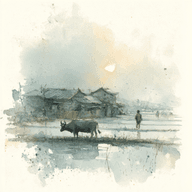
Before 1949, Taiwan's tenant farmers handed fifty to seventy percent of their harvest to the landlord as rent. On 14 April 1949 the Taiwan Provincial Government issued its regulations on the leasing of private farmland: rent could be no more than 37.5 percent of the main crop's annual yield. Rents above that had to come down, and those below it could not be raised. This was the 37.5 percent rent reduction. It was pushed through by the provincial chairman, Chen Cheng, with the backing of Chiang Monlin.
Vol. 3
During the martial law era, Taiwan's party-state-military trinity permeated every corner of society. The KMT controlled economic lifelines through party-owned enterprises such as Central Investment Holding, Central Trading and Development, the Broadcasting Corporation of China, and Central Motion Picture — conglomerates whose revenues funded party operations, patronage networks, and cadre training, and whose existence blurred every line between public policy and party interest. It monitored social dynamics through overlapping intelligence agencies that reported back to Chiang Ching-kuo in the 1950s and 1960s, and instilled party-state ideology through a centralized education system in which every classroom displayed the Generalissimo's portrait, every textbook framed Taiwan as a province of China, and every schoolchild recited the KMT-authored "National Anthem" before morning assembly.
Vol. 4
The soldiers and dependants who crossed the strait around 1949 numbered somewhere near six hundred thousand. The people arrived; the housing did not. The first expedient was requisition. Quarters, barracks, schools and temple courtyards left by the Japanese were occupied as they stood, one household to a room, the corridor serving as a kitchen.
Vol. 5
On May 20, 1949, the Taiwan Provincial Government declared martial law, initiating thirty-eight years of authoritarian rule that would bracket the island's post-war history and define the political reflexes of three generations. Within weeks of the declaration, the Taiwan Garrison Command assumed sweeping jurisdiction over civilians through military courts; a month later, the enactment of the "Statute for the Punishment of Sedition" and the "Statute for the Detection and Eradication of Communist Spies" provided the legal scaffolding that would justify four decades of extrajudicial detention, summary trial, and capital punishment, all under the legal framework of the "Period of National Mobilization for Suppression of Communist Rebellion."
Vol. 6
At the historical crossroads of the mid-twentieth century — as the Second World War had only just ended and the iron curtain of the Cold War rapidly descended across the globe — Taiwanese society experienced a devastating emotional rupture, moving from the euphoria of liberation from Japanese colonial rule to the profound disillusionment of the February 28 Incident. The “Chung Hao-tung and The Enlightenment Newspaper Case” of 1949–1950 became not only one of the earliest and most representative political purges of Taiwan’s White Terror era after the imposition of martial law, but also a tragic requiem for an entire generation of passionate intellectuals whose idealism led them toward destruction and martyrdom amid the chaos of a divided world.
Vol. 7
At one of the harshest moments of Cold War confrontation in the 1950s — while the smoke of the Chinese Civil War had not yet fully cleared — Taiwan’s authoritarian government launched the largest anti-communist purge of the martial law era in an effort to eradicate underground armed networks affiliated with the Chinese Communist Party. The “Luku Incident” of late 1952 became not only the largest military suppression campaign and mass arrest operation of Taiwan’s White Terror period, but also one of the bloodiest political tragedies to devastate ordinary rural communities, destroying countless farming and mining families who had little understanding of the ideological conflict consuming the island around them.
Vol. 8
Beneath the shadow of Cold War confrontation and martial law in the mid-twentieth century, Taiwan’s authoritarian government launched sweeping campaigns to consolidate control over the island’s mountainous regions, natural resources, and indigenous communities. Determined to eliminate all potential local autonomy movements and prevent any perceived communist infiltration, the regime carried out systematic political purges across every level of society.
Vol. 9
On 18 January 1955 four to five thousand PLA troops landed on Yijiangshan, an island off the coast of Zhejiang, backed by more than two hundred vessels and over 180 aircraft. It was the first time their army, navy and air force had fought as one. The Nationalist garrison numbered about 1,030, and its commander, Colonel Wang Sheng-ming, was killed. The Nationalist account says 720 died. The PLA account says 519 died and 567 were captured. Yijiangshan was only twelve nautical miles from the Dachen Islands.
Vol. 10
In the turbulent historical crossroads of the 1950s Cold War escalation, after the Nationalist government retreated to Taiwan, Chiang Kai-shek’s regime moved swiftly to establish absolute personal authoritarian control over the island. Beyond the large-scale suppression of civilian dissent, the purge also turned inward toward the military itself. The 1955 “Sun Li-jen Coup Plot Case” — also known as the “Kuo Ting-liang Rebellion Case” — became not only the largest and highest-level military purge during Taiwan’s authoritarian era, but also a historical turning point in which the party-state dismantled potential American influence within Taiwan’s armed forces and transformed the military into a fully politicized instrument of personal and party rule.
Vol. 11
At 6:30 in the evening on August 23, 1958, the artillery emplacements along the Fujian coast opened fire simultaneously. Within two hours, more than fifty-seven thousand shells fell on the Kinmen archipelago — an area of less than 150 square kilometers — a density that led contemporary observers to describe it as the heaviest concentration of shellfire per unit of ground since the Second World War. The opening salvo struck Cuigu, the valley housing the Kinmen Defense Command, killing three deputy commanders — Chi Hsing-wen, Chao Chia-hsiang, and Chang Chieh — where they stood, and wounding Defense Minister Yu Ta-wei, who happened to be inspecting the front. Over the forty-four days that followed, what became known as the 823 Artillery Battle, or the Second Taiwan Strait Crisis, poured close to 470,000 shells onto the island.
Vol. 12
On 7 August 1959 a tropical depression came ashore at Budai in Chiayi. Drawn by Typhoon Ellen out at sea, it pulled in a powerful southwesterly airflow, and the rain fell from the seventh to the ninth. On the seventh alone, central and southern Taiwan received five hundred to a thousand millimetres, and fifteen stations recorded more than five hundred millimetres in a single day. The heaviest rain fell on Miaoli, Fengyuan, Fenyuan, the upper Wu River, Douliu and Alishan. Around Douliu, about 1,100 millimetres fell in half a day.
Vol. 13
On 16 July 1956 the Matsu War Zone Administration Committee was established. Its chairman was the commander of the defence zone, and the county magistrate was appointed by the Ministry of National Defense from among serving officers. From that day until 1992, a resident of the islands who broke the law was tried by the military law office, and there was no defence lawyer in the room. The islands' newspaper was first called the Tengpu Daily, after the battle of Tengpu Island. On 3 September 1957 it was renamed the Matsu Daily News under the army's Matsu garrison command, and from 1964 it was published by the War Zone Administration Committee.
Vol. 14
Amid the intensifying Cold War confrontation between the United States and the Soviet Union during the 1950s, Chiang Kai-shek’s regime, isolated in Taiwan after retreating from mainland China, upheld the slogan of “retaking the mainland” as the unquestionable supreme national policy. Yet as political realities gradually shifted by the end of the decade, a group of far-sighted intellectuals within Taiwan began attempting to challenge the one-party authoritarian system imposed under martial law. The 1960 “Lei Chen and Free China Magazine Case” became not only one of the most shocking political purges of Taiwan’s authoritarian era, but also the first tragic attempt in postwar Taiwanese history to forge a cross-ethnic democratic alliance between mainlander and native Taiwanese elites within the existing political framework.
Vol. 15
In the early autumn of 1964, the nights in Taipei felt suffocatingly still, as if even the wind had vanished beneath the weight of fear. Taiwan at the time lay buried beneath the iron curtain of martial law. Across the island, walls and alleyways were plastered with grim anti-espionage slogans, while newspapers and radio stations endlessly broadcast the regime’s political mythology of “retaking the mainland.” It was an era in which even private conversations about politics could invite imprisonment — or worse, the destruction of one’s entire family.
Vol. 16
On August 25, 1968, Taipei Municipal Baseball Stadium was packed. On one side stood the Red Leaf Elementary School team from Yanping Township in Taitung County — a dozen or so Bunun children from a mountain village that did not yet have running water. On the other stood a visiting Kansai all-star youth team from Japan. The final score was seven to nothing.
Vol. 17
On June 27, 1967, at a memorial assembly in the Presidential Office, Chiang Kai-shek directed that compulsory education be extended from six years to nine. The instruction moved through the system with unusual speed: legislation was completed before the end of the year, the Statute for the Implementation of Nine-Year National Education was promulgated in January 1968, and the new system took effect at the start of the autumn term that same year. From announcement to operation took less than fifteen months.
Vol. 18
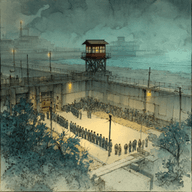
February 8, 1970 — the third day of the Lunar New Year. Inside Taiyuan Reformatory Prison in Donghe Township, Taitung County, several hundred of Taiwan's political prisoners were being held, most of them young men serving heavy sentences handed down in the 1950s and 1960s for sedition or advocacy of Taiwanese independence. On that day, five of them — Cheng Chin-ho, Chan Tien-tseng, Hsieh Tung-jung, Chen Liang, and Chiang Ping-hsing — launched the only organized armed action ever attempted inside a prison in postwar Taiwan.
Vol. 19
Late in the evening of October 25, 1971, the United Nations General Assembly voted on Resolution 2758, tabled by Albania and others. Beforehand, the United States had introduced an "important question" motion requiring a two-thirds majority to expel the Republic of China; it was defeated fifty-five to fifty-nine. Once that line broke, the outcome was settled. Foreign Minister Chow Shu-kai rose before the formal vote was completed to announce that the Republic of China was withdrawing from the United Nations, and the delegation walked out. The resolution passed seventy-six to thirty-five, recognizing the People's Republic of China as the sole legitimate representative of China at the UN.
Vol. 20
In December 1966 the export processing zone at Qianzhen in Kaohsiung began operating. It was the first export processing zone in the world, 68.36 hectares built on Zhongdao beside Kaohsiung harbour. Its factories made electronics, clothing, leather goods and all kinds of small things for export, and they needed large numbers of young, nimble, low-paid workers. Most of those they recruited were women: in the zone's first year, more than seventy percent of the workers who came in were women.
Vol. 21
The land reforms of the 1950s — the 37.5% rent reduction of 1949 that capped tenant rent at 37.5 percent of the annual main-crop yield, the release of public land originally seized from the Japanese sugar industry to cultivating tenants, and the Land-to-the-Tiller program of 1953 that compulsorily purchased landlord holdings in exchange for government bonds and shares in state enterprises — were among the most profoundly impactful socioeconomic policies in post-war Taiwan. Executed with U.S. technical advice and underwritten by the political reality that the KMT leadership had no local constituency among Taiwan's landowning class, these reforms dismantled the landlord system dating from the Japanese era, redirected agricultural surplus capital toward industrialization, and simultaneously weakened the economic and political power of the native Taiwanese landlord class in a way the regime could never have achieved on the mainland.
Vol. 22
During the martial law era, cultural production in Taiwan was subject to tight state control exercised through an interlocking grid of institutions: the Taiwan Garrison Command's publication review boards, the Government Information Office's licensing of newspapers, the Ministry of Education's textbook committees, and the Chinese Cultural Renaissance Movement's directives on "healthy" literature and film. Publication censorship, book banning that eventually indexed over three thousand titles — including Lu Xun, Shen Congwen, Ba Jin, and any author suspected of "remaining on the mainland" — and press restrictions that capped the number of licensed newspapers at thirty-one from 1951 to 1988, curtailed the free circulation of speech and ideas to a degree comparable to contemporary Soviet bloc societies.
Vol. 23
On November 19, 1977, Taiwan held local elections for five categories of public office. The race for Taoyuan county magistrate was unusually tense. Hsu Hsin-liang, a provincial assemblyman from the Kuomintang, had run without the party's nomination and been expelled for it; his opponent was the party's endorsed candidate, Ou Hsien-yu. It was a direct confrontation between a dangwai challenger and the ruling party — and everyone understood that what happened at the counting table often mattered more than what happened at the ballot box.