

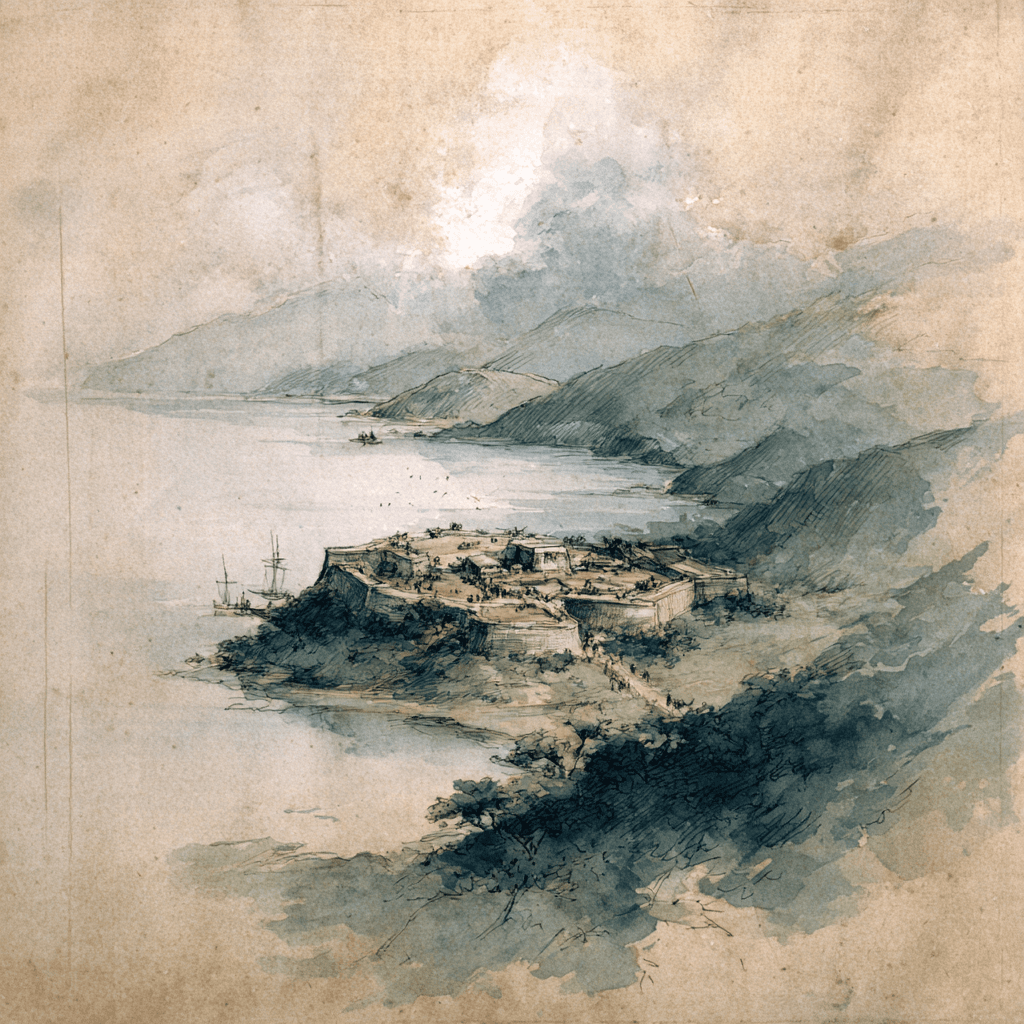
The Last Bastion of San Salvador
In 1626 the Spanish came north from Manila and raised the fortress of San Salvador on Sheliao Island off Keelung. What they wanted was a sea route that went around the Dutch, and a stepping stone for missions into Japan and China. Northern Taiwan now held two foreign powers, one in the south and one in the north, with the whole island between them.
Sixteen years later the fortress was abandoned by its own headquarters before any enemy took it. In 1637 Governor Corcuera of the Philippines cut the garrison in the north, ordered the demolition of Fort San Domingo at Tamsui, and pulled all the troops back to the single position at Keelung. The reason was that the place cost far more than it returned, and the wars south of Manila were more urgent.
In August 1642 the Dutch moved under the command of Johannes Lamotius, with Hendrik Harouse landing first with three hundred and ninety-six soldiers. The defenders no longer had the means to hold. After the bombardment only the western bastion was still standing.
The assault closed in around 26 August and the Spanish surrendered on the twenty-eighth. The commander and what was left…
The assault closed in around 26 August and the Spanish surrendered on the twenty-eighth. The commander and what was left of his troops were shipped off the island, and sixteen years of Spanish rule ended after a few days of fighting. The Dutch took the fortress, rebuilt on the existing footings and renamed it Fort Noord-Holland.
For the Basay of Keelung what changed that year was the flag and the person collecting. Under the Dutch the labour service continued and the payments continued, entered now in a different set of books. Over the next two centuries this would happen to them several times more.
Northern Taiwan passed under the governor at Tayouan, and for the first time the whole island answered to a single authority — though the reach of it stayed narrow, and most villages in the mountains and along the east coast had no dealings with the system at all.
On Heping Island today there is an excavation. The stone footings lifted out of the ground say something no document says as plainly: at the northern end of this island a plan that set out from Manila once came ashore, and was then closed down by an accountant. The fortress carried three names in turn: San Salvador, Noord-Holland, and then nothing at all.
After 1637 the garrison knew it was a line item being written down. The fort at Tamsui was pulled down, the men fell back on Keelung, and the ships bringing supplies and relief came at longer intervals. When the fighting actually came in 1642, the number of men who could stand on the bastions bore no relation to the force that had landed sixteen years before. The surrender was negotiated as a repatriation, not a last stand. On paper it is an orderly handover. For men who had been posted there more than a decade, it was being written off by their own headquarters and then collected by the other side.
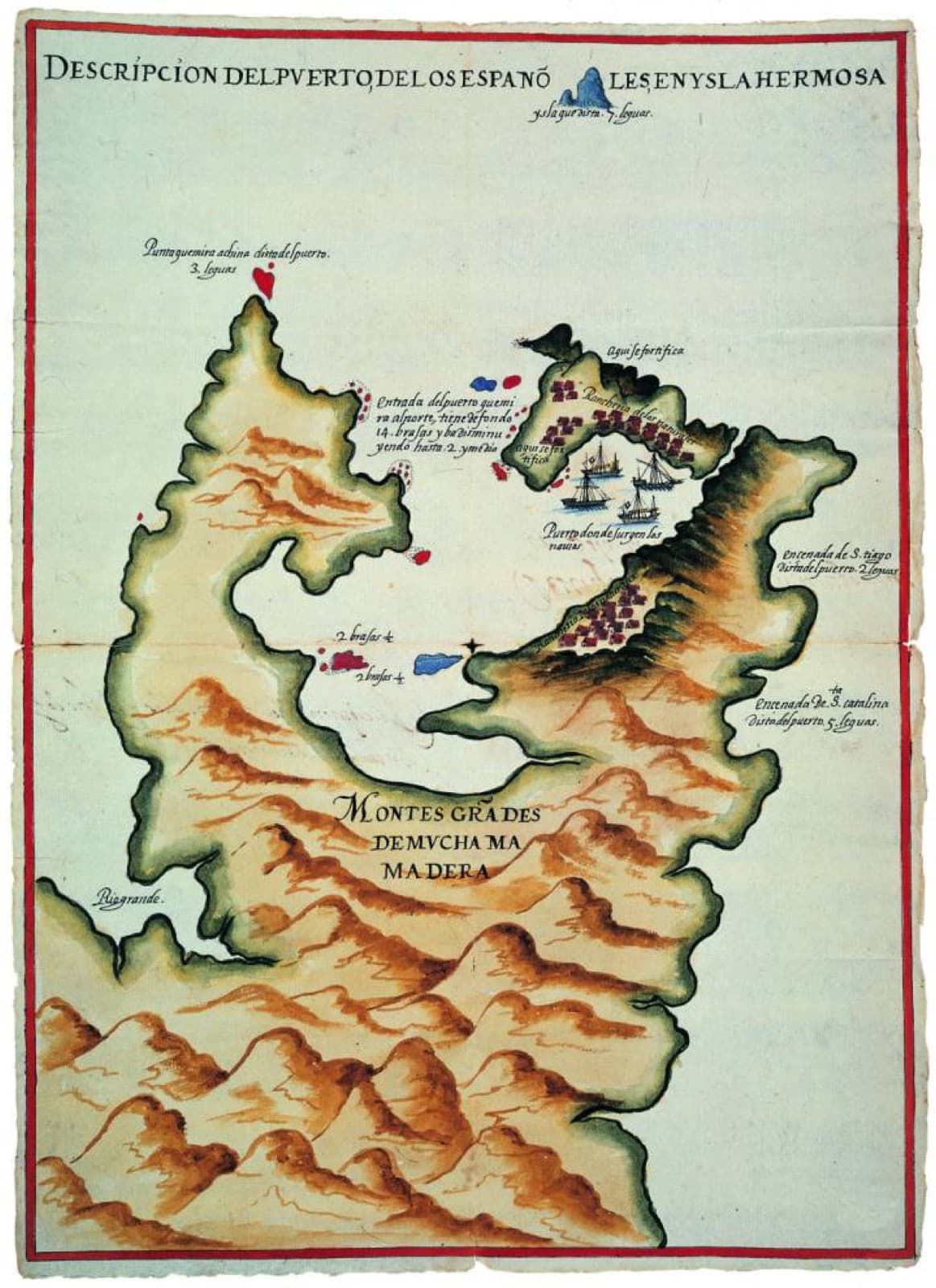
Map of northern Formosa drawn between 1626 and 1642, covering the two Spanish positions at Quelang and Tamsui. Quelang, on this sheet, is what the Dutch took in 1642.
Unknown author (public domain)
Isle of Time