

Forty Years Behind the Bamboo Fence
The soldiers and dependants who crossed the strait around 1949 numbered somewhere near six hundred thousand. The people arrived; the housing did not. The first expedient was requisition. Quarters, barracks, schools and temple courtyards left by the Japanese were occupied as they stood, one household to a room, the corridor serving as a kitchen.
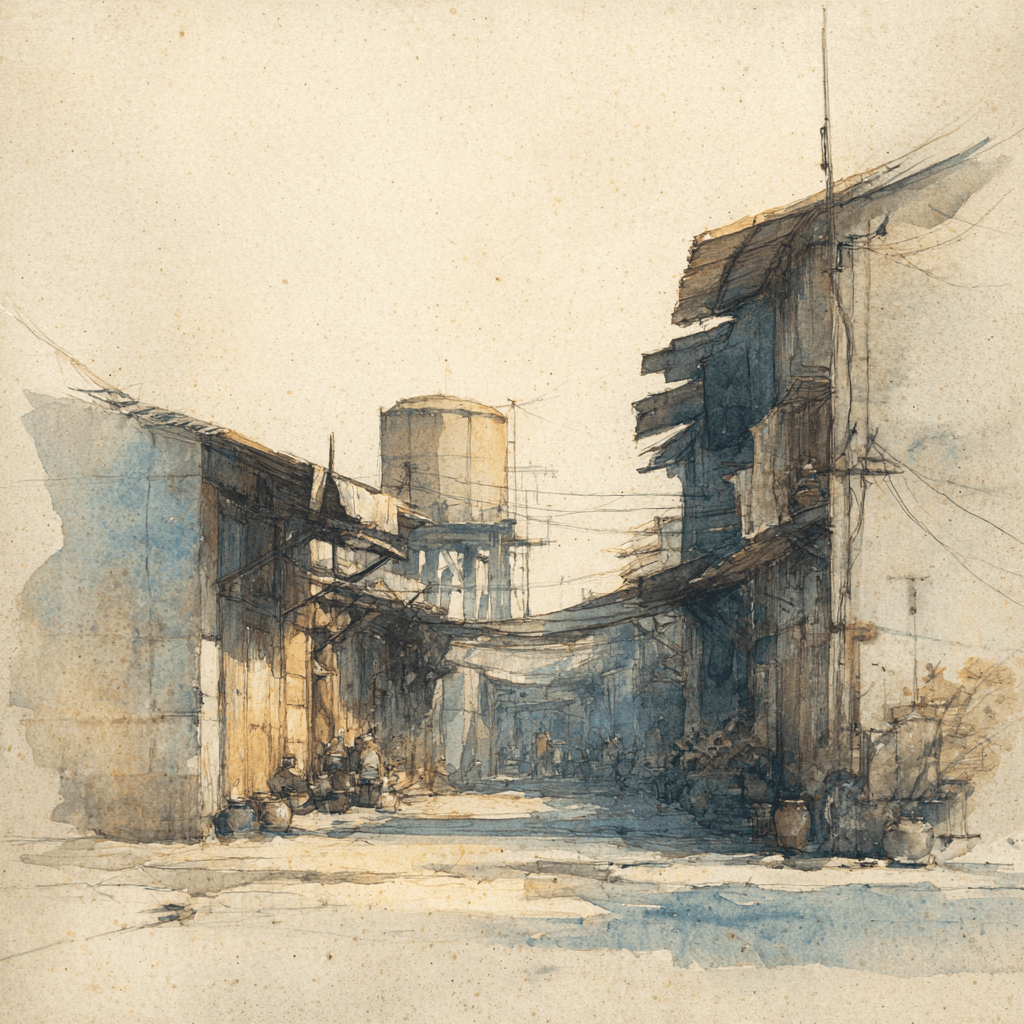
Then came building. Bamboo for the frame, woven bamboo daubed with mud for the walls, tarred felt for the roof, put up in rows beside the compounds. In the files this housing is called makeshift quarters. In life it was called the bamboo fence. There were in time over eight hundred such settlements across the island, mostly pressed against military installations, and Taoyuan had a particular concentration of them because of its airfields and its garrisons.
After 1956 the women's league raised subscriptions to build dependants' housing, funded out of forces' levies and assorted surcharges, and brick began to replace bamboo. The houses acquired numbers and the villages acquired names — Loyal and True, Success, Constabulary Light, Devoted Loyalty. You can hear who did the naming.
Everyone took it to be temporary. A map of the mainland hung on the wall, children were given names carrying the place n…
Everyone took it to be temporary. A map of the mainland hung on the wall, children were given names carrying the place names of home, and furniture was deliberately bought cheap because they might leave at any time. The years went by and no one left. The children were born here, went to school here, did their service, married, and pronounced their parents' place names as the name of somewhere they had never been.
There were two worlds on either side of the bamboo. Inside, a mandarin of every accent, and food from every province at new year. Outside, villages of Hokkien and Hakka, farming and labouring. The two sides intermarried, traded, brawled, and borrowed things from each other. Children of the villages later turned up in numbers in entertainment, in sport and in the officer corps, which was no accident: the settlements were small, the resources thin, and the routes out were narrow and very clearly marked.
The 1996 act for rebuilding the old forces' villages ended all of it. The houses were too old, the land too valuable, the population already dispersed, and the eight hundred settlements came down one after another into apartment blocks. A few were kept as cultural parks, with interpretive signs and planted flowers.
When the demolition came, some went back to fetch their things and found the houses unbelievably small — a space that had held a family of seven measured out at under thirty square metres. What they remembered was not the measurement, of course. It was that the wall was thin enough to hear everything said next door, and that what was said next door was in a home dialect their parents could not follow.
The luggage had been packed for three months away. What came was photographs, a name seal, a few clothes; the land deeds stayed behind, because those would be needed there. In Taiwan they were allotted a room, and measuring it out, the width took two beds exactly. They did not buy good furniture, or mend the roof, or plant a tree that takes three years to fruit. This was not idleness but judgement — about the situation, and about themselves. By the time the judgement was certainly wrong, twenty years had gone and it was too late to begin again. Many of the first generation never acquired property in their lives; home remained the room the army had assigned. They used the word home in a sense that did not match how it was used in the village next door.
Isle of Time