


Prince Ningjing's Martyrdom
In the sweltering midsummer of 1683, a suffocating aura of despair hung over the city of Tainan. Ominous news had traveled across the black waters of the strait—the main naval forces of the Zheng regime had been utterly obliterated at the Battle of Penghu, and the twelve-year-old puppet king, Zheng Keshuang, along with his ministers, had already resolved to tender their submission to the Qing Empire.
The history of this island as the final bastion of Ming loyalism was rushing toward its end. Inside the Ningjing Royal Palace in Tainan, an elder stood quietly, dressed in the grand crimson ceremonial robes of a Ming prince. He was Zhu Shugui, Prince of Ningjing, a ninth-generation descendant of the Ming Dynasty’s founding emperor, Zhu Yuanhang.
Exiled overseas for over twenty years, his royal blood had borne witness to the collapse of his empire. Now, facing an inescapable defeat, a final, unyielding flame of dignity ignited within his heart—give me liberty, or give me death.
When Zhu Shugui gathered his five concubines—Lady Yuan, Lady Wang, and his attendants Xiujie, Meijie, and Hejie—to break the news of his impending martyrdom, he braced himself for a scene of agonizing weeping and sorrowful farewells. Yet, these five women, ordinary in origin but extraordinary in spirit, merely exchanged a quiet glance before bowing gracefully to the prince.
With profound serenity, they spoke in unison: "Since Your Highness has resolved to die for the Ming Dynasty, we will absolutely not live to suffer dishonor. We wish to precede you into the afterlife and hold your horse's reins on the road to the Yellow Springs."
Stepping into the grand hall of the palace dressed in immaculate traditional Han garments, the five women took their own lives one by one, hanging themselves from the wooden rafters in a fierce, poetic declaration of loyalty to their love and their fallen dynasty. Stifling his immense grief, the prince personally arranged their remains and buried them together at Kuandou Hill, just outside the city walls.
The following morning, the gates of the Ningjing Royal Palace were thrown wide open. Zhu Shugui laid out a grand feast, …
The following morning, the gates of the Ningjing Royal Palace were thrown wide open. Zhu Shugui laid out a grand feast, summoning the civil officials, military officers, and local tenant farmers who had followed him for years. He brought out every single land deed and property title registered in his name and set them ablaze before the astonished crowd, announcing to the farmers: "From this day forth, these lands belong entirely to you. When the Qing forces arrive, live peacefully as law-abiding citizens."
With everything settled, he walked into his private chambers, lifted his brush, and inscribed his final poem upon the wall, a verse that would be passed down through centuries: “Since the rebel armies captured the capital in 1644, we have held onto the Ming realm for thirty-nine years. Today, all is lost. How can I live in disgrace?
Let them shave my head and change my garments, for I would have no face to meet my ancestors in the world below!” Finishing his writing, he unbuckled his jade belt, placed his royal crown upon his head, and hanged himself, drawing a noble, heartbreaking curtain over the blood and tears of the exiled Ming royalty.
The tragic farewell of the Prince of Ningjing and his five concubines remains one of the most poignant pages in Taiwanese history. This tragedy was not merely the end of a royal house, but the final stand of Han dynastic pride on the island.
Following the Qing takeover, Admiral Shi Lang, deeply moved by their uncompromising loyalty, ordered the Ningjing Royal Palace to be converted into the Grand Matsu Temple to preserve the historic architecture. Meanwhile, the burial site of the five courageous women became revered as the "Temple of the Five Concubines," where incense still burns to this very day.
Located amidst the shaded greenery of modern Tainan, this ancient shrine holds no overbearing divine majesty; instead, it softly whispers to every passerby of a Ming prince and five women who, in a desperate bid to preserve their freedom against mandatory submission, demonstrated a level of dignity and resolve that shook their era to its core.
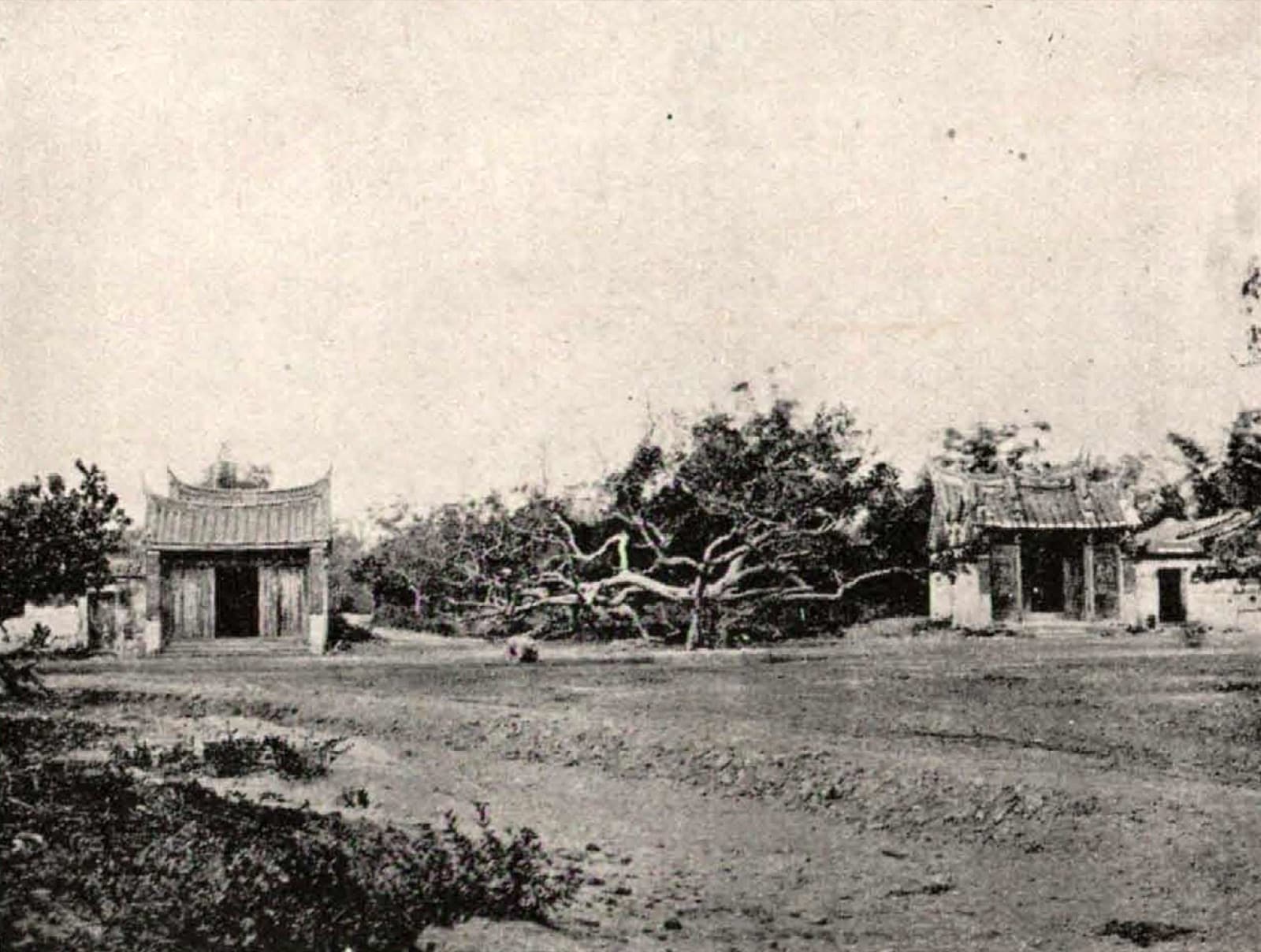
The shrine to the Prince of Ningjing, photographed around 1915. Zhu Shugui, a Ming prince, learned of the defeat at Penghu in 1683, divided his land among his tenants and hanged himself. Five of his consorts had died before him.
Yamada Takashi, *History of the Kaizan Shrine*, 1915
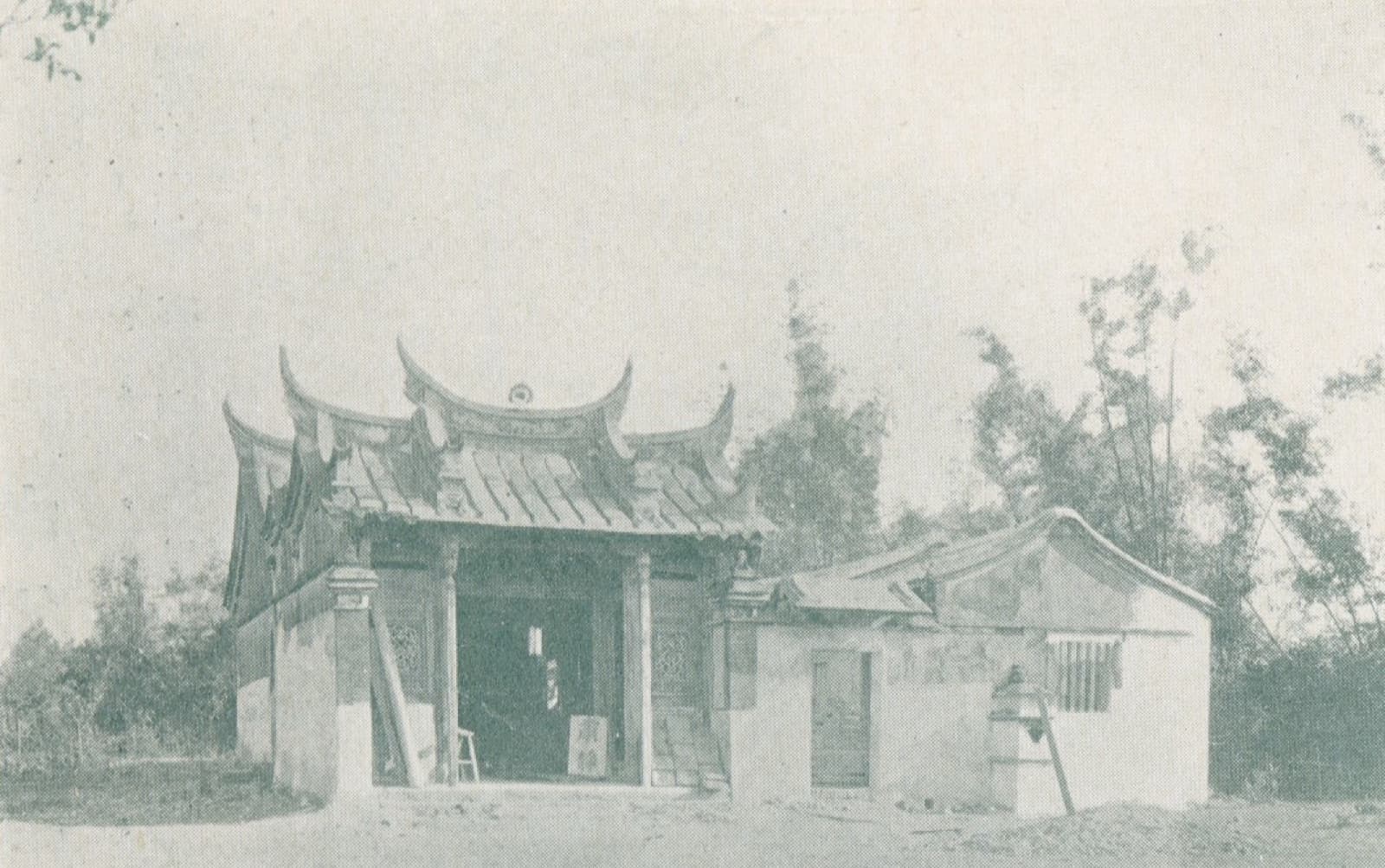
The Ningjing shrine in a 1912 railway guidebook. The Japanese wrote Ming-Zheng sites into their tourist routes — restoring them, and at the same time rewriting how such places were to be remembered.
*Guide to the Taiwan Railway*, Railway Bureau, Government-General of Taiwan, 1912
Isle of Time