

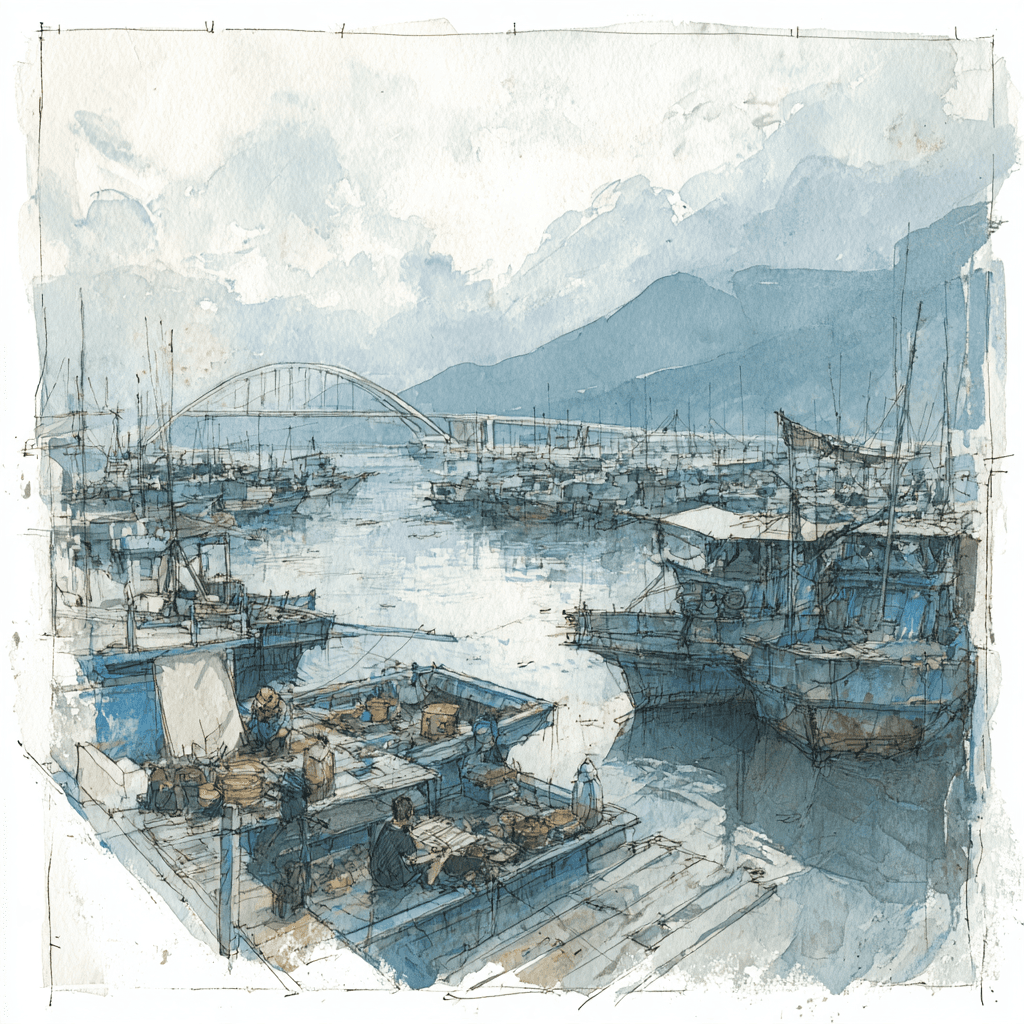
At half past nine on the morning of 1 October 2019, the bridge across the harbour at Nanfang'ao in Yilan broke in the middle and came down. A tanker truck that was just coming off the bridge fell with the deck, was pinned under a steel girder and caught fire. Three fishing boats were moored below, the Hsin Tai Sheng 33, 266 and 366, and all three were crushed under the fallen deck.
The six people killed were three Indonesians and three Filipinos, and all of them were fishermen. Twelve people were injured. The last body was found shortly after eleven on the morning of 3 October, and only then did the search end.
Afterwards someone asked why, at half past nine on an ordinary morning, fishermen had been on boats tied up in port. The answer was simple. They lived on the boats. About three hundred foreign fishermen in Nanfang'ao made their homes on board. Injured fishermen discharged from hospital had no beds to go to, and some slept on floors laid with cardboard. John Vincente Royo, a thirty-seven-year-old Filipino fisherman, lost his passport, his wedding ring and the ten thousand Taiwan dollars he had saved. A Filipino priest who worked with the fishermen said that fishermen should not live on boats, because a boat is where they work.
How these men came to be there follows a clear timeline. In October 1989 the government brought in three thousand foreign workers for its Fourteen Major Construction Projects, the first formal opening of Taiwan to foreign blue-collar labour. On 8 May 1992 the Employment Service Act was promulgated, and that same year fishing boats of twenty tonnes or more were allowed to apply to hire foreign crew. Those who boarded in a Taiwanese port and were paid in Taiwan were domestically hired and covered by the Labor Standards Act. Those who boarded in foreign ports and went out with the distant-water fleet were hired overseas and came under fisheries regulations.
What happened on the overseas side was later dragged into the open from abroad. In August 2015 an Indonesian fisherman named Supriyanto died aboard a Taiwanese distant-water fishing vessel. The Pingtung District Prosecutors Office closed the case within two months as death from an infected wound, and three videos secretly recorded by his crewmates were never translated. On 1 October 2015 the European Union gave Taiwan's distant-water fisheries a yellow card. On 20 January 2017 the Regulations on the Authorisation and Management of Overseas Employment of Foreign Crew Members took effect, setting a minimum monthly wage of four hundred and fifty US dollars. On 27 June 2019 the yellow card was lifted, three years and nine months after it was issued. In 2020 the US Department of Labor put fish caught by Taiwan's distant-water fleet on its list of goods produced by forced labour for the first time.
The Nanfang'ao bridge opened to traffic on 20 June 1998. The investigation found that the main cause of the collapse was corrosion in the suspender cable system, which had left it without enough load capacity. The galvanising on the steel strands was of uneven thickness, water collected in the anchorages, which had no drainage holes, and the bridge had not been inspected for more than three years before the accident. In May 2020 the Ministry of Transportation disciplined forty-eight people, including five former chairmen of the port company. On 29 August 2022 the Yilan District Prosecutors Office indicted six people from the contractors and the port company. On 30 April 2026 the Taiwan High Court found the port company's two managers not guilty, on the grounds that the bridge was a port road rather than a highway as defined by the Highway Act, and that the port company had no rule at the time requiring special bridge inspections.
A week after the accident, the Yilan County labour department said it would find housing on land for fishermen in three stages, the first taking about two years and providing around three hundred beds. The new bridge opened on 18 December 2022. It cost nine hundred and fifty-seven million Taiwan dollars.
In Nanfang'ao a foreign fisherman's day began on a boat and ended on a boat. About three hundred of them lived aboard. At sea the boat was where they worked, and in port the boat was still where they lived. On the morning of 1 October 2019 the men on the three Hsin Tai Sheng boats were not on watch. They were at home. Of the six who died, three came from Indonesia and three from the Philippines. The survivors could not go back to the boats when they left hospital, and some slept on floors laid with cardboard, relying on churches and community groups to get by.
Their circumstances depended on an administrative category. A man who boarded in a Taiwanese port was domestically hired and came under the Labor Standards Act, with a minimum wage. A man who boarded in a foreign port and went out with the distant-water fleet was hired overseas; from 2017 his minimum monthly pay was four hundred and fifty US dollars. Men of the same nationality doing the same work could be paid very differently depending on which port they signed on in. John Vincente Royo lost his passport, his wedding ring and ten thousand Taiwan dollars in savings on the day the bridge fell, and he said his Taiwanese employer had kept paying his wages.
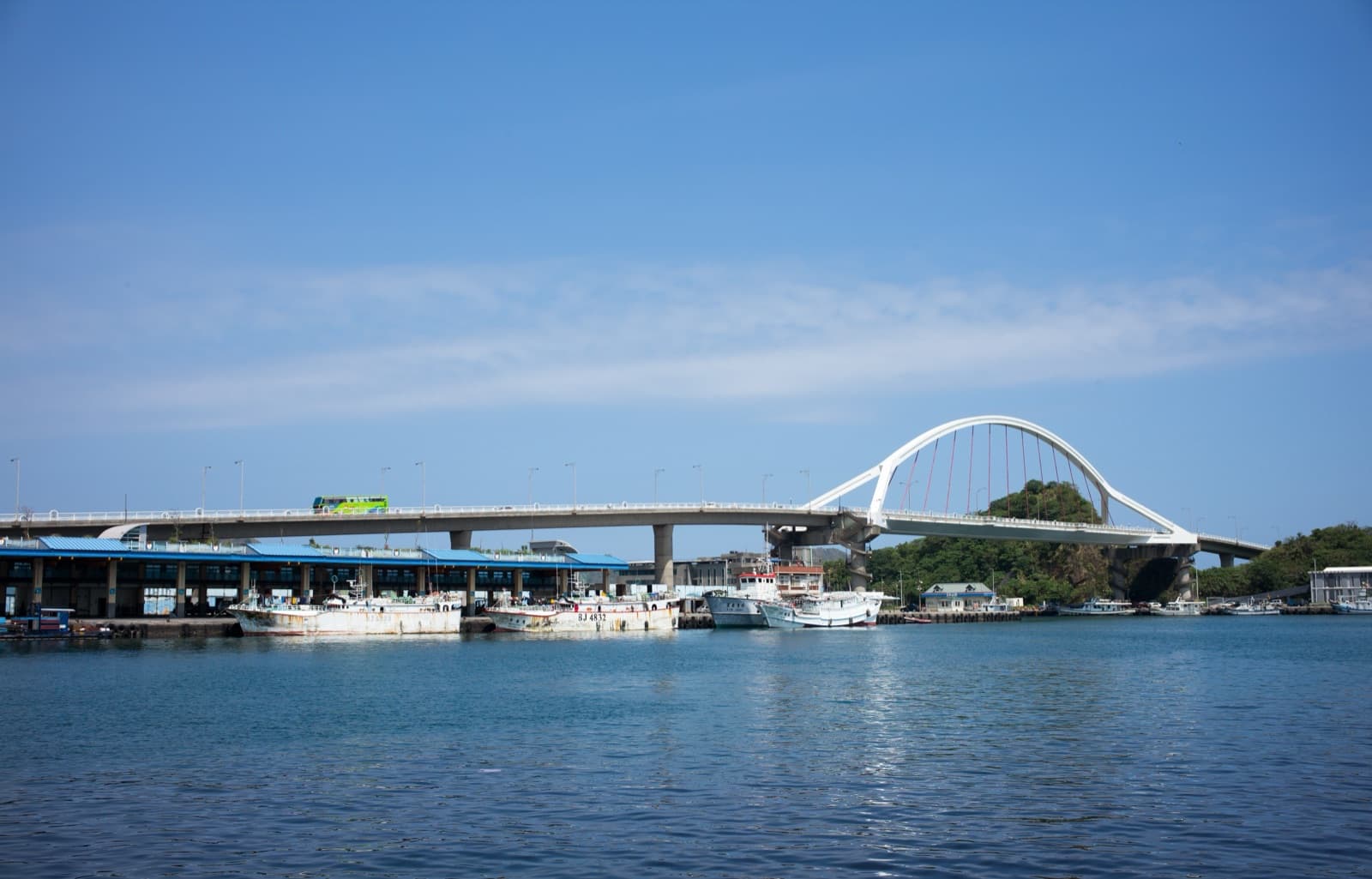
The Nanfang'ao harbour bridge in September 2014. The single steel arch had opened in 1998, and the quay where the fishing boats tied up ran right beneath it.
Michael Rehfeldt / CC BY 2.0, Wikimedia Commons
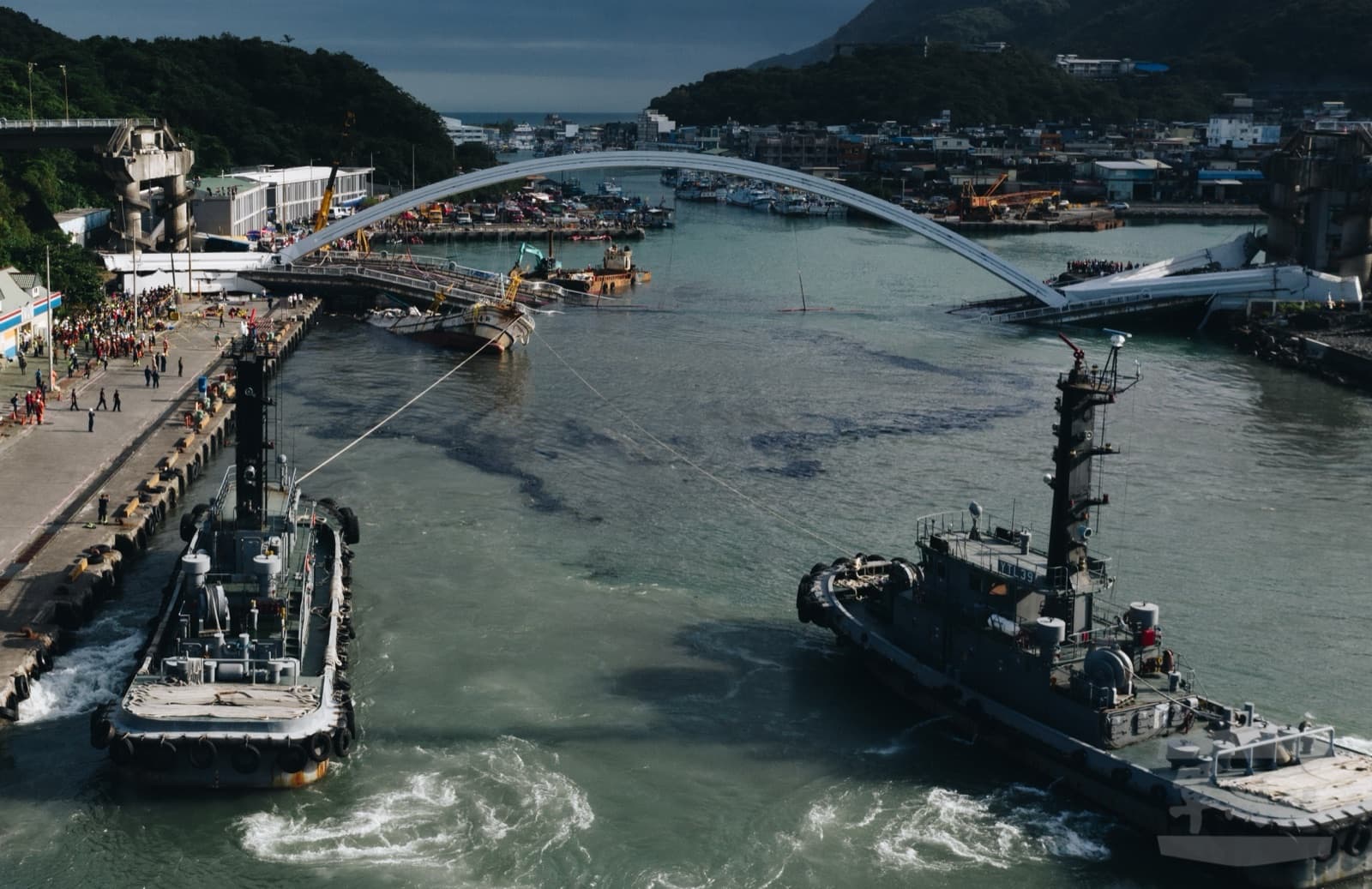
1 October 2019, the day the bridge fell. The navy sent tugs to drag the fishing boats out from under the collapsed deck so that rescuers could get in to search. The quayside is lined with people.
Lin Tse-ting, Military News Agency, Ministry of National Defense / Attribution, Wikimedia Commons
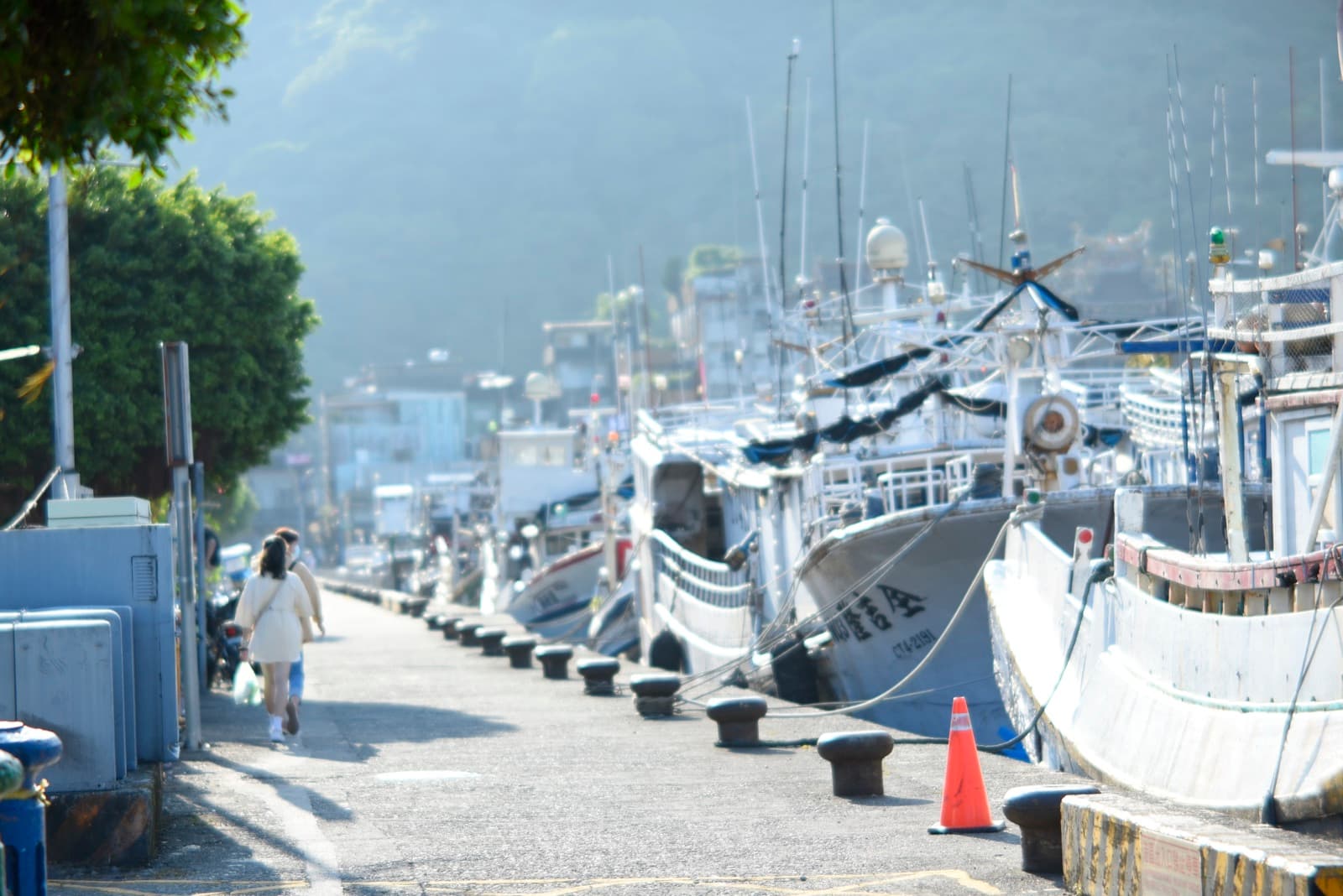
Nanfang'ao fishing port on 1 October 2022, three years to the day after the bridge fell. The boats are moored hull against hull along the quay, and for many foreign fishermen the bunks aboard were where they lived.
Taiwankengo / CC BY-SA 4.0, Wikimedia Commons