


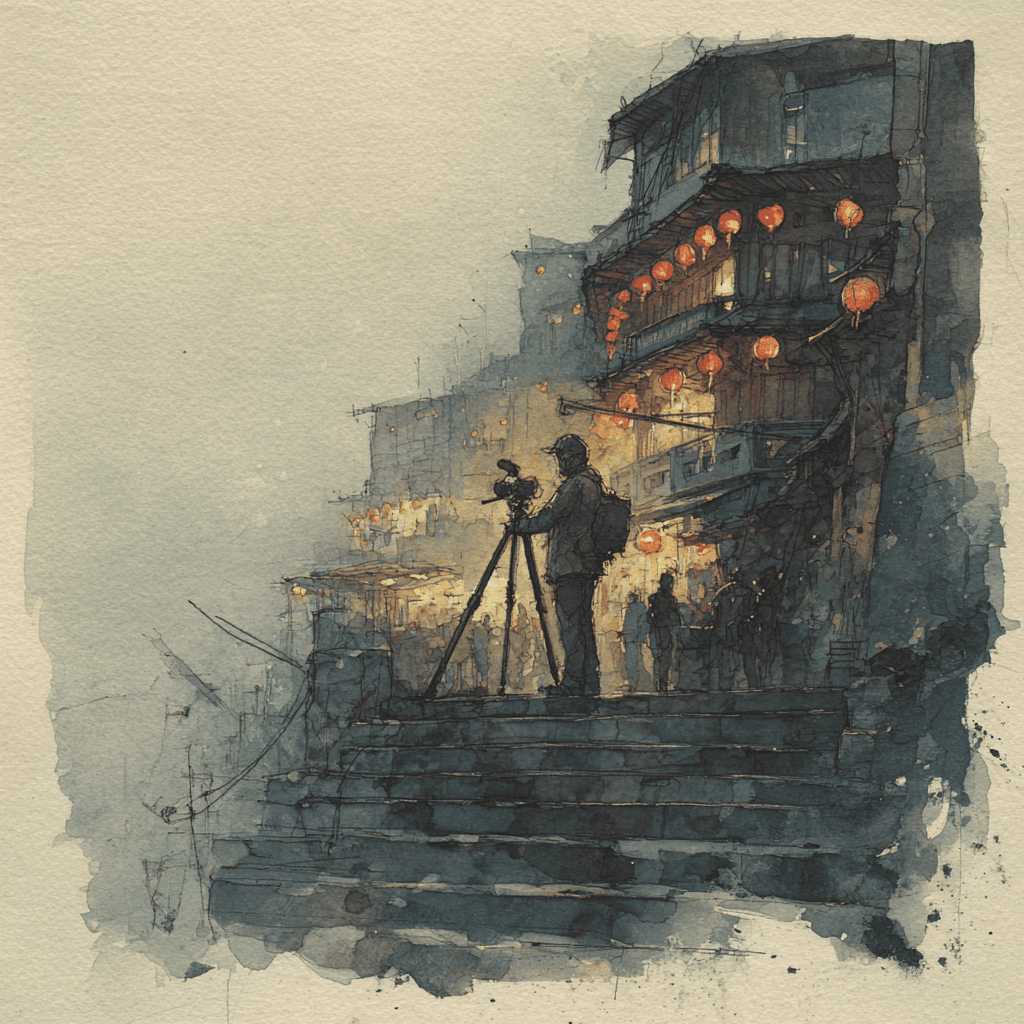
In the early 1980s, Taiwan's cinemas mostly showed Hong Kong films, martial arts pictures and romantic melodramas, and box office for local films fell year after year. At the party-owned Central Motion Picture Corporation, general manager Ming Chi put two young screenwriters, Hsiao Yeh and Wu Nien-jen, in charge of planning. They decided to find a group of new directors who had never made a feature and try them out on low budgets.
In 1982 the studio released In Our Time, four segments by four directors, Tao Te-chen, Edward Yang, Ko I-chen and Chang Yi, running from a child's early years to a young couple's life in the city. The film came to be treated as the starting point of Taiwan New Cinema.
The next year the studio adapted three stories by Huang Chun-ming as The Sandwich Man, directed by Hou Hsiao-hsien, Tseng Chuang-hsiang and Wan Jen. The Government Information Office had already approved its release, but someone writing in the name of the China Film Critics Association sent anonymous letters to the Kuomintang's Central Cultural Affairs Committee, saying the poverty, backwardness and illegal housing on screen damaged the nation's image. The studio then cut part of Wan Jen's segment, The Taste of Apples.
Wan Jen told Yang Shih-chi, a reporter at the United Daily News. On 15 August 1983 she laid out, on page nine, the scenes that had been cut, one by one. Once the story ran, public opinion turned on the studio's bureaucracy, and it had to abandon the cuts. The film was released complete. The affair became known as the Apple Peeling Incident.
To avoid censorship at home, the rushes were sent straight to Japan for post-production and then on to Venice.
Over the next few years the new directors made a body of work. Hou Hsiao-hsien made The Boys from Fengkuei, A Time to Live and a Time to Die and Dust in the Wind. Edward Yang made That Day, on the Beach, Taipei Story and The Terrorizers. With long takes, non-professional actors and the details of everyday life, they filmed Taiwanese people's own growing up, villages and cities, often with actors speaking Taiwanese rather than the standard Mandarin films usually used. Box office was uneven, but critics and festivals took notice.
On 24 January 1987 about fifty filmmakers and cultural figures jointly published the Taiwan Cinema Manifesto of 1987, criticising film policy, the media and the system of film criticism, and seeking room for "another kind of cinema" to exist. Six months later, martial law was lifted.
On 12 September 1989 Hou Hsiao-hsien's A City of Sadness premiered at the Venice Film Festival and won the Golden Lion, the first time a Taiwanese film had taken the top prize at a major international festival. It tells the story of a family in Keelung between 1945 and 1949. Tony Leung plays Lin Wen-ching, a deaf-mute photographer, and the characters speak Taiwanese, Japanese, Cantonese, Shanghainese and Mandarin. It was also the first feature film to show the February 28 Incident.
To avoid censorship at home, the rushes were sent straight to Japan for post-production and then on to Venice. A City of Sadness opened in Taiwan on 21 October and took about eighty million New Taiwan dollars. Jiufen and Jinguashi, where it was filmed, had been declining mining towns. After it, tourists began to come up the hill.
CMPC was a studio run by the Kuomintang, responsible for policy films and also expected to make money. In the early 1980s Hong Kong films had taken the audience and big productions were losing money. Ming Chi was willing to let Hsiao Yeh and Wu Nien-jen look for newcomers because newcomers were cheap, and failure would cost little. In Our Time was made on that calculation.
But CMPC was also a party institution. In 1983, when anonymous letters reached the Central Cultural Affairs Committee saying The Sandwich Man showed illegal housing and poor people, the studio's first reaction was to make the cuts itself. Only when Yang Shih-chi's report ran and public opinion turned was The Taste of Apples put back as it was. The same company was the starting point of the New Cinema and the first pair of scissors.
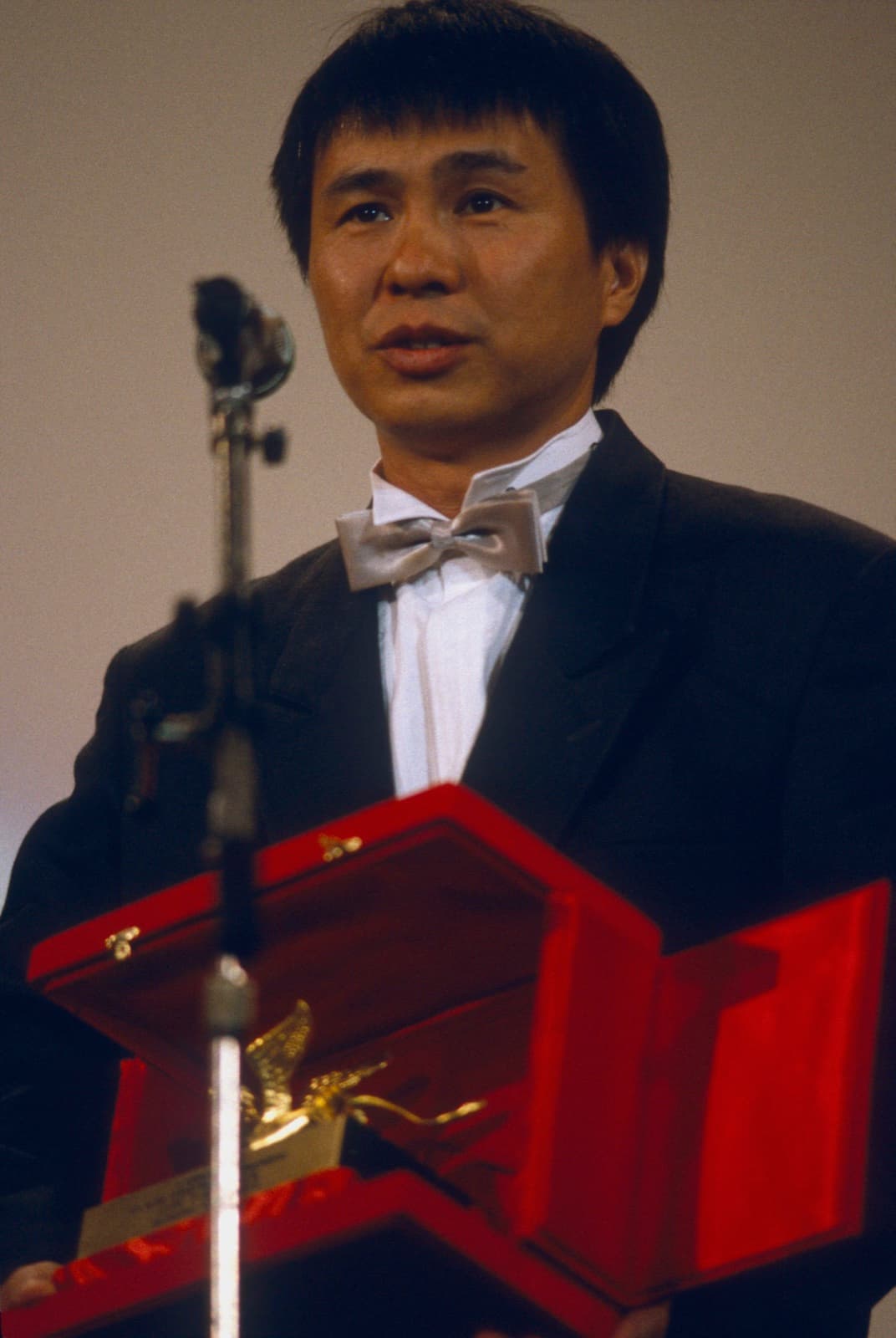
Hou Hsiao-hsien at the Venice Film Festival in 1989, winner of the Golden Lion for A City of Sadness, the first time a Taiwanese film had taken the top prize at a major international festival.
Gorup de Besanez / CC BY-SA 4.0 via Wikimedia Commons