Archives

Breaking the Silence

Taiwan at the End of Martial Law: The Dangwai Movement, Street Protest, and Direct Presidential Elections (1980–1999)

23 volumes

Vol. 1

The Dangwai Movement

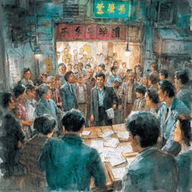
Under one-party authoritarian rule, a group of courageous Taiwanese chose to seek political participation outside the KMT system. "Dangwai" (literally "outside the party") — originally a neutral administrative term describing non-KMT candidates permitted to contest limited local offices — gradually evolved into a sweeping democratic movement that coordinated lawyers, professors, journalists, shopkeepers, and former political prisoners into something approaching a shadow opposition without the legal right to call itself one.

2 images

Vol. 2

The Kaohsiung Incident

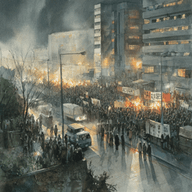
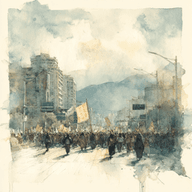
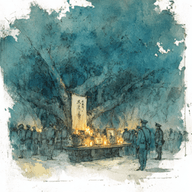
On December 10, 1979 — International Human Rights Day — Formosa Magazine organized a massive public rally in Kaohsiung demanding democracy, an end to martial law, and the release of political prisoners. What began as a procession of torches down Chungshan Road escalated when authorities encircled the marchers with armored vehicles and tear gas, deploying riot police to forcefully disperse the crowd before launching mass arrests across the island over the following three weeks.

3 images

Vol. 3

The Lin Family Massacre

On February 28, 1980 — the thirty-third anniversary of the 228 Incident — the late-winter chill still cut through the streets of Taipei. While the entire city remained shrouded in the grim atmosphere of the Kaohsiung Incident military trials, an ordinary residence on Hsinyi Road became the site of a massacre that would shake the whole island and remain unsolved to this day. The victims were the family of Lin Yi-hsiung, the gentle Dangwai leader who at that very moment sat in a military detention center awaiting trial.

Vol. 4

The Chen Wen-cheng Incident

At dawn on July 3, 1981, the cicadas had not yet begun their song on the campus of National Taiwan University, and the morning mist had not yet lifted. A janitor discovered a cold male corpse on the lawn beside the graduate library. The body lay face down, limbs twisted — it was Chen Wen-cheng, the U.S.-based scholar who had been taken away for questioning by the Taiwan Garrison Command only the day before. This body, appearing suddenly within the nation's highest seat of learning, struck like a thunderclap that split open the seemingly tranquil halls of academia under martial law and sent shockwaves through communities at home and abroad.

Vol. 5

A Hundred Thousand Drums on Orchid Island

In 1974 the atomic energy council placed the storage site for low-level radioactive waste at Longmen, on the south-eastern corner of Orchid Island. The island then had a population of about three thousand, all of them Tao, lay some forty-odd nautical miles off Taitung, had no electricity supply, and had no document that would have let anyone living there read the decision.

Vol. 6

In Our Time

In the early 1980s, Taiwan's cinemas mostly showed Hong Kong films, martial arts pictures and romantic melodramas, and box office for local films fell year after year. At the party-owned Central Motion Picture Corporation, general manager Ming Chi put two young screenwriters, Hsiao Yeh and Wu Nien-jen, in charge of planning. They decided to find a group of new directors who had never made a feature and try them out on low budgets.

1 image

Vol. 7

The Henry Liu Murder and the Tenth Credit Collapse

On the morning of October 15, 1984, in Daly City, California, the writer Liu Yi-liang — who published under the pen name Chiang Nan and was known in the United States as Henry Liu — was shot dead in the garage of his own home. He was fifty-two. He had been a Taiwanese newspaper's US correspondent before taking American citizenship, but what made him a target was his biography of Chiang Ching-kuo, serialized from 1975 and published in the United States in 1984. The book was not especially savage. Its offense was to treat a sitting head of state as a man who could be written about at all. That the killing happened on American soil, and that the victim held an American passport, determined everything that followed.

Vol. 8

Birth of the Opposition

On the morning of September 28, 1986, one hundred and thirty-five Dangwai activists gathered under the banner of a "campaign assistance committee" in the second-floor Ming Room of the Yuanshan Grand Hotel in Taipei. The announced agenda was to coordinate candidate nominations for the year-end supplementary elections to the central legislature; midway through, however, the participants overturned the planned program, moved and voted on the spot, and announced the founding of the Democratic Progressive Party (DPP) — a direct challenge to more than three decades of KMT one-party rule. With the ban on new parties still in force and martial law still in effect, it was a decision of enormous political risk: many in the room had steeled themselves for the possibility that everyone present would be arrested before the session adjourned, and some had brought a toothbrush and toiletries with them.

3 images

Vol. 9

Lifting Martial Law

On July 15, 1987, President Chiang Ching-kuo announced the lifting of Taiwan's thirty-eight-year martial law — one of the longest continuous periods of military-backed emergency rule in world history. In a single stroke the Taiwan Garrison Command lost its jurisdiction over civilian courts, tens of thousands of blacklisted overseas Taiwanese could begin the long process of returning home, and the restraints that had governed every public gathering since 1949 were formally rolled back, replaced by a new Assembly and Parade Act whose loopholes the courts and the opposition would spend the next decade testing.

3 images

Vol. 10

A Hundred Flowers Bloom

Around the time of martial law's lifting, long-suppressed social energy erupted like a volcano. Labor movements pushed back against the state-controlled Chinese Federation of Labor and founded autonomous unions in shipyards, railways, and electronics plants; farmers' movements organized island-wide road blockades against agricultural liberalization; environmental protection movements stopped the construction of petrochemical complexes and documented industrial pollution with amateur cameras; women's movements built the first rape crisis hotlines and campaigned for equal inheritance; and indigenous rights movements demanded the rewriting of textbooks and the return of ancestral lands — various social movements blossomed across the island within just a few years, fundamentally transforming Taiwan's social landscape.

1 image

Vol. 11

Give Us Back Our Land

On 29 December 1984 a group of young indigenous intellectuals met in the fifth lecture hall of Mackay Memorial Hospital in Taipei and founded the Alliance of Taiwan Aborigines. Its president was the Puyuma singer Kimbo Hu, and its founders included Icyang Parod, Chang-Fa Tung and Tuobasi Tamapima. At the time, the government's legal term for them was "mountain compatriots". The following February the alliance launched its journal, Aborigines.

3 images

Vol. 12

Siege at the West Gate

The refinery at the foot of Banping Mountain in Kaohsiung began as the Imperial Japanese Navy's Sixth Fuel Depot. After the war the Nationalist government took it over and made it the Chinese Petroleum Corporation's Kaohsiung refinery. In 1968 CPC built Taiwan's first naphtha cracker there, and in 1976 the second began production. Just outside the refinery wall lay Houjin.

2 images

Vol. 13

The Plant Yilan Did Not Keep

In 1986 Formosa Plastics put forward its sixth naphtha cracker and chose a site at the Lize industrial zone in Yilan. For a county living off farming and fishing, whose young people drained steadily towards Taipei, this was the largest single investment offered in decades.

4 images

Vol. 14

The February 28 Redress Movement

On February 4, 1987, three men announced the founding of the February 28 Peace Day Promotion Association: the physician Chen Yung-hsing, the lawyer Lee Sheng-hsiung, and the magazine publisher Cheng Nan-jung. Martial law would not be lifted for another five months and was still in force, and the words "February 28" had been silent in public for forty years. The association made only three demands: publish the truth, redress the wrongs, and designate February 28 a day of peace.

2 images

Vol. 15

A Hundred Percent Freedom

At dawn on April 7, 1989, in the offices of Freedom Era Weekly on Minquan East Road in Taipei, a fire offered as a sacrifice of life suddenly engulfed the editor-in-chief's room. When riot police broke down the door, they were met not by a suspect surrendering, but by raging flames and a body that had immolated itself to affirm a conviction. That year, Cheng Nan-jung was forty-one. In the most resolute way imaginable, he proclaimed to an island still bound by the shackles of speech his belief in "one hundred percent freedom of expression."

2 images

Vol. 16

The Succession and the February Crisis

On the afternoon of January 13, 1988, Chiang Ching-kuo died at his Seven Seas residence in Taipei, aged seventy-eight. At 8:08 that evening, Vice President Lee Teng-hui was sworn in at the Presidential Office as the seventh president of the Republic of China under Article 49 of the Constitution. The ceremony took less than twenty minutes. On camera it was a smooth constitutional procedure. Off camera it raised a different question: a regime that had governed Taiwan for forty years had handed its highest office, for the first time, to a Taiwanese-born civilian with no faction of his own — while the party, the army and the security services all remained in other hands.

Vol. 17

Lilies in the Square

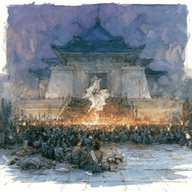
In March 1990, the chill of early spring had not yet fully faded from Taipei, yet on the broad plaza before the Chiang Kai-shek Memorial Hall a tide of youth gathered — powerful enough to shake the entire national order. Thousands of university students from across Taiwan sat in protest on the cold stone ground, taking as their emblem the wild lily, a flower symbolizing autonomy, purity, and resilience, and raising a deafening cry against a political structure long since ossified.

Vol. 18

The End of Mobilization and the Remaking of Parliament

On June 21, 1990, the Council of Grand Justices issued Interpretation No. 261: senior members of the central representative bodies who had never stood for re-election must cease exercising their functions by December 31, 1991. The language was constitutional; the operation was political. It set a fixed end date for a parliament elected in mainland China in 1947 and 1948 and continued in Taiwan for more than forty years. Three months earlier those same delegates had moved, at Chungshan Hall on Yangmingshan, to extend their own terms — which is what set off the Wild Lily movement.

Vol. 19

The Ground Made at Mailiao

The plant Yilan refused came to rest at Mailiao in Yunlin in 1991. There are no mountains here to hold the air down, there was a long stretch of tidal flat that could be filled, and both the county and the township agreed.

Vol. 20

The Independent Taiwan Association Case and the End of Sedition

In the early hours of May 9, 1991, agents of the Investigation Bureau entered a graduate dormitory at National Tsing Hua University without the university's consent and took away Liao Wei-cheng, a student in the history institute. Arrested at the same time were Chen Cheng-jan, Wang Hsiu-hui, and Lin Yin-fu, an indigenous preacher. The accusation was that they had acted under the direction of the Independent Taiwan Association, founded by Su Beng from exile in Japan, to build an organization on the island. The statute invoked was Article 2, Paragraph 1 of the Statute for the Punishment of Sedition — a mandatory death sentence.

Vol. 21

Six Boxes on a Paper Card

On 25 February 1995 Premier Lien Chan ordered that National Health Insurance would open as planned on 1 March. The Bureau of National Health Insurance, which was to run it, had only been set up on 1 January, and its first director-general, Yeh Chin-chuan, said later that the real preparation time was three days. The insurance cards had not been printed. The computer system was not in place.

2 images

Vol. 22

The People Choose

On March 23, 1996, the skies over Taiwan were charged with an unprecedented tension and exhilaration. On this day, twenty-one million Taiwanese would, for the first time, directly elect the head of their own nation with the ballots in their hands. Yet on the eve of this historic moment, missiles from across the strait were streaking across the heavens one after another, falling into the waters off Keelung and Kaohsiung. A test launch meant to intimidate by force, and a democracy realized through the ballot, formed upon this land the sharpest and most stirring of contrasts.

Vol. 23

The 921 Earthquake

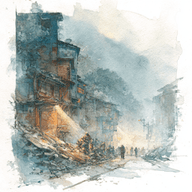
At 1:47 on the morning of September 21, 1999, the Chelungpu fault ruptured and a magnitude 7.3 earthquake spread outward from about eight kilometers beneath Jiji, in Nantou County. The surface rupture ran for nearly a hundred kilometers; asphalt roads in central Taiwan were lifted into steps, and waterfalls several meters high appeared in riverbeds. It was the worst natural disaster in Taiwan since the Hsinchu–Taichung earthquake of 1935.