


The Constitutional Convention
At the end of 1946, the Republic of China convened the Constitutional Convention in Nanjing, with Taiwan sending representatives to participate in national-level constitutional deliberations for the first time. These Taiwan representatives — many of them Japanese-educated intellectuals — entered the assembly with expectations for democratic institutions, only to discover vast gaps in language and political culture between themselves and mainland delegates.
The marginalization of Taiwan's representatives during the constitutional process reflected deeper structural issues: al…
The marginalization of Taiwan's representatives during the constitutional process reflected deeper structural issues: although Taiwan had nominally "returned" to the ROC, its actual position within the political system remained ambiguous. The drafting of the ROC Constitution would profoundly influence Taiwan's future political development.
This volume documents the role and predicaments of Taiwan's delegates at the Constitutional Convention, as well as the historical significance of this constitution for Taiwan.
On November 15, 1946, the National Constituent Assembly opened in Nanking, and seventeen delegates elected from Taiwan sat for the first time in a Chinese national chamber. Their backgrounds say a good deal about the island: Lin Hsien-tang had spent more than twenty years petitioning for a Taiwanese parliament; Nan Chih-hsin, a Puyuma, was Taiwan's first indigenous physician trained in Western medicine and attended as a representative of indigenous people; Lin Lien-tsung of Changhua was a lawyer and also a provincial councilor; Chang Chi-lang, a doctor from Fenglin in Hualien, paid his own way north after raising an arch in his home town inscribed with words of welcome to the motherland. Most had been educated in Japanese, and parliamentary procedure, legal vocabulary, and the official speech of the hall all had to be learned on the spot. The demand they carried came down to one thing: provincial and county self-government. The Taiwanese delegates argued for writing local autonomy into the text concretely and irreversibly, so the island could elect its own governor and manage its own finances; that left a framework for local government in Chapter XI of the Constitution — and also left one clause requiring a general statute on provincial and county self-government. Without the statute, no autonomy. The Constitution passed its third reading on December 25 and the delegates went home with a basic law they had helped write. Three months later Lin Lien-tsung was taken away in Taipei and never seen again; on April 4, Chang Chi-lang and two of his sons were taken and shot at Fenglin. Part of the roll of the constitution-makers and part of the roll of the dead of February 28 are the same names.
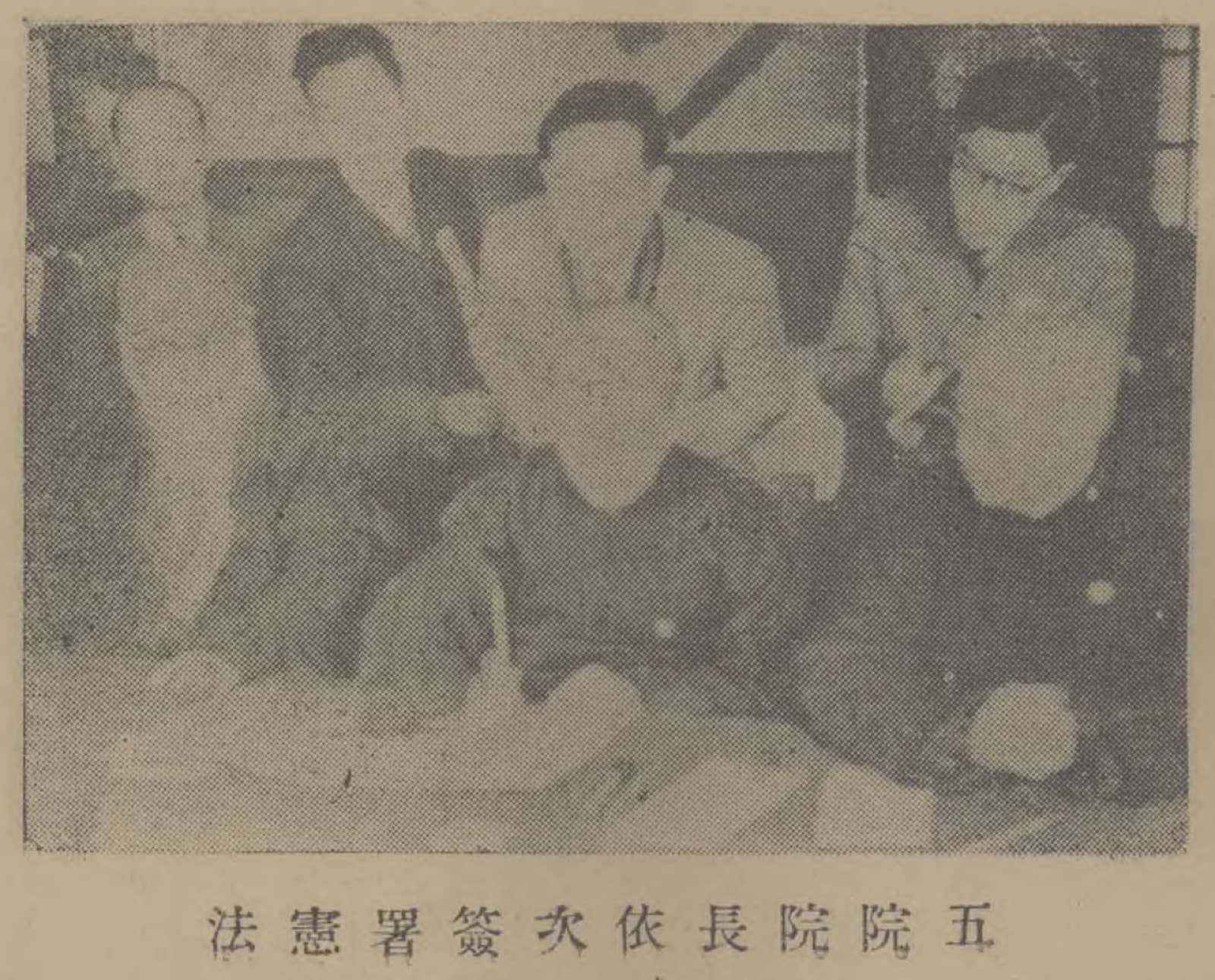
The heads of the five branches signing the Constitution of the Republic of China. The National Assembly adopted it on 25 December 1946 — the same year the hopes Taiwan's delegates carried home came to nothing.
*Gazette of the Ministry of National Defense*
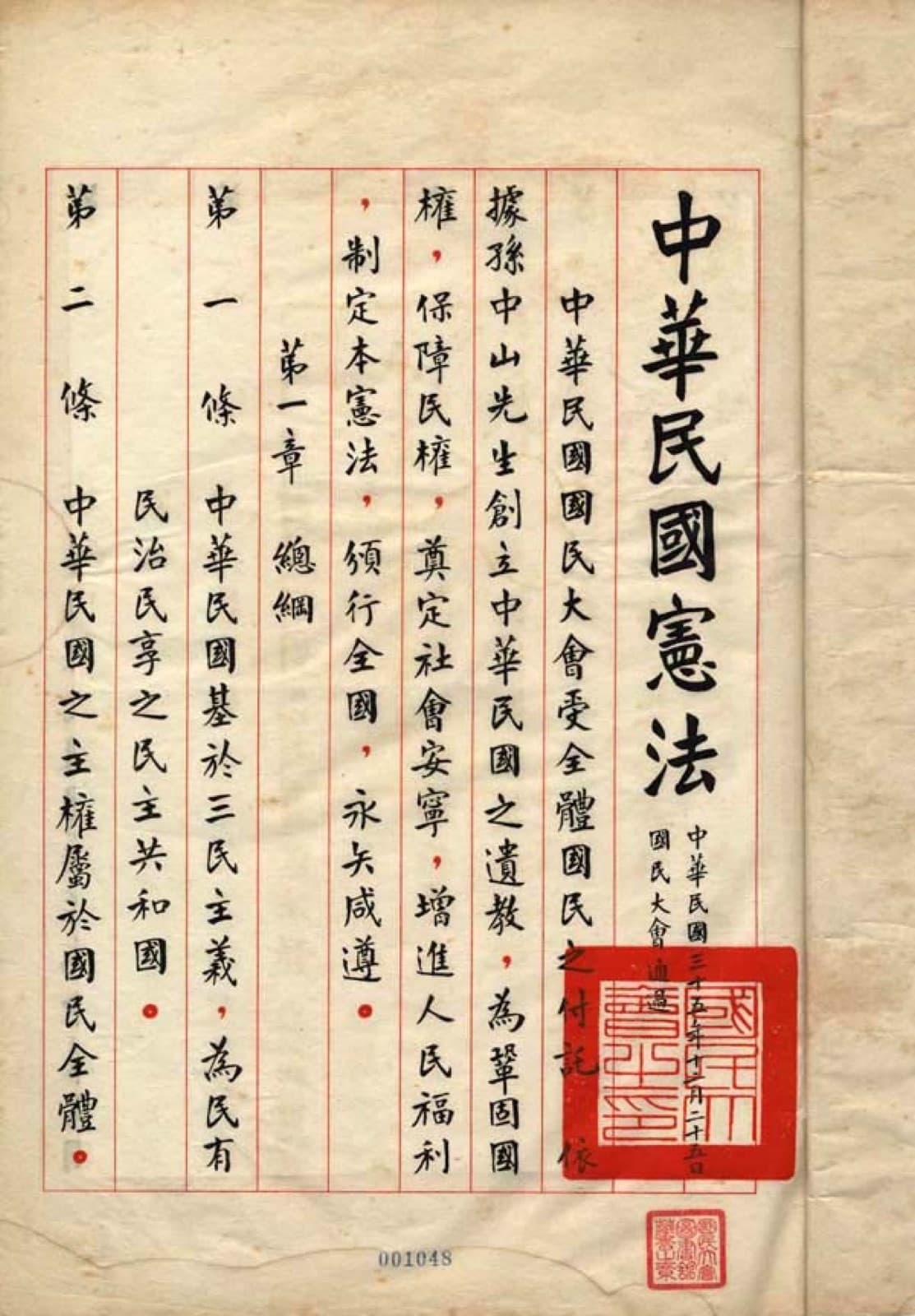
The constitutional National Assembly in session, December 1946. Taiwan sent seventeen delegates to Nanjing, several of them educated in Japanese, taking part in a national constitutional debate for the first time.
National archives
Isle of Time