


The Parliamentary System
In the early post-war period, the Nationalist government established local self-governance and political participation systems in Taiwan. In 1946, Taiwan held its first-ever provincial assembly elections, giving Taiwanese their first opportunity to participate in politics through the ballot. However, this system was constrained from the outset: the Provincial Assembly had only an advisory function, with actual decision-making power remaining in the hands of the Chief Executive's office.
Language barriers placed many Taiwanese assemblymen at a disadvantage in the chamber, and Chen Yi's government imposed v…
Language barriers placed many Taiwanese assemblymen at a disadvantage in the chamber, and Chen Yi's government imposed various restrictions on native Taiwanese political participation, rendering "democracy" a mere decoration in name only. This pattern of "granting form while limiting substance" became a significant factor in native Taiwanese disillusionment with the new regime.
This volume explores the germination of post-war Taiwan's democratic institutions and their structural contradictions.
In 1946 more than eleven hundred candidates ran for thirty seats in the provincial assembly — the first time Taiwanese chose by ballot who would speak for them. Once the chamber opened on May 1, it quickly became the most watched room on the island: Kuo Kuo-chi interrogated officials so ferociously that he was nicknamed "Kuo the Cannon," and Wang Tien-teng, who took as his motto the greatest happiness of the greatest number, pressed session after session on the Monopoly Bureau's books, the Trade Bureau's sugar and rice, police discipline, and the proportion of mainlanders in official appointments. Newspapers printed the questions and answers verbatim, and readers saw officials publicly contradicted for the first time. Then they discovered how much institutional distance lay between the questions they could ask and the things they could change. The assembly's powers were to resolve and to recommend; the Administrative Executive Office was free not to adopt. Budget, personnel, monopoly, and trade all stayed in the Office's hands. By the end of 1946 the tone of interrogation had shifted from inquiry to warning, and the words Wang Tien-teng spoke in that chamber became, a year later, the text of the demands issued by the February 28 Settlement Committee. He was killed in March 1947 and Kuo Kuo-chi was arrested; most of the boldest speakers in that room paid for it during the incident. The first provincial assembly thus left a contradictory record: the freest place for speech in postwar Taiwan was also the place with the least power.
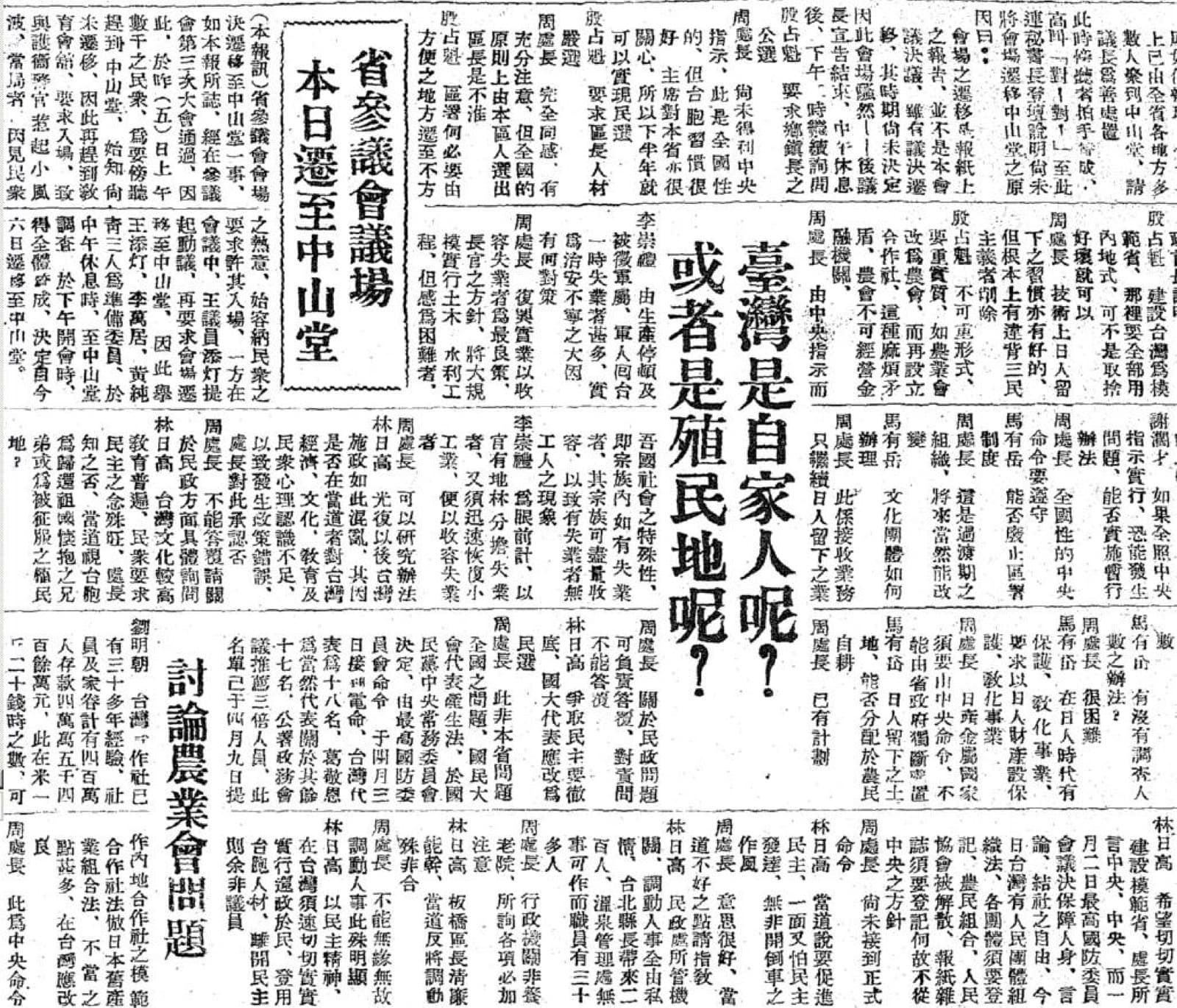
The *Min Pao* of 5 May 1946, the day the Provincial Assembly moved to Zhongshan Hall. The headline asks it outright: is Taiwan our own people's, or a colony?
*Min Pao*, 5 May 1946
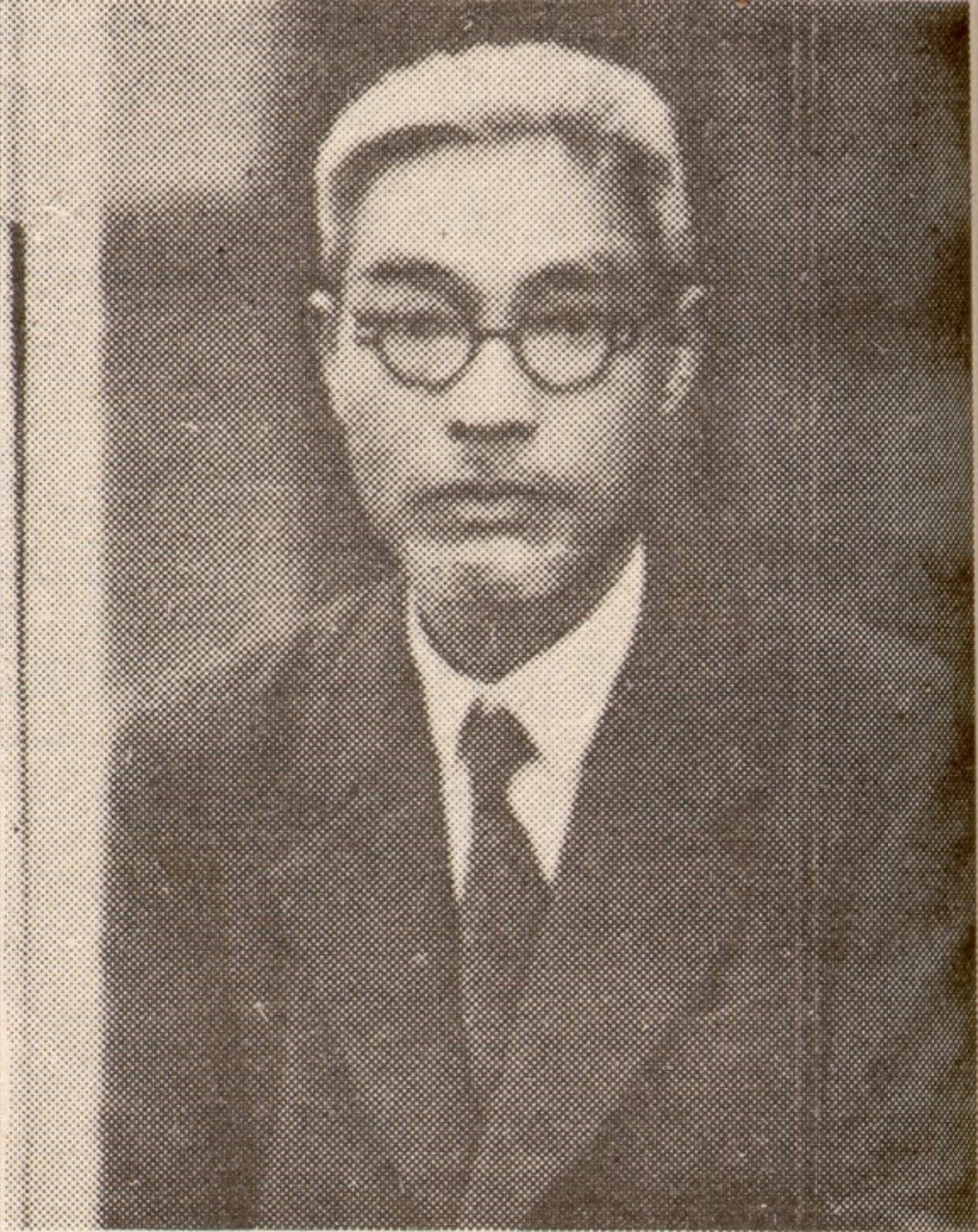
Chang Chi-lang, first speaker of the Hualien county assembly. A doctor by training, he threw himself into the new local government. On the night of 4 April 1947 he and two of his sons were taken away and shot.
*The Establishment of Taiwan's Representative Bodies*, Civil Affairs Department, Taiwan Provincial Administrative Executive Office, 1946
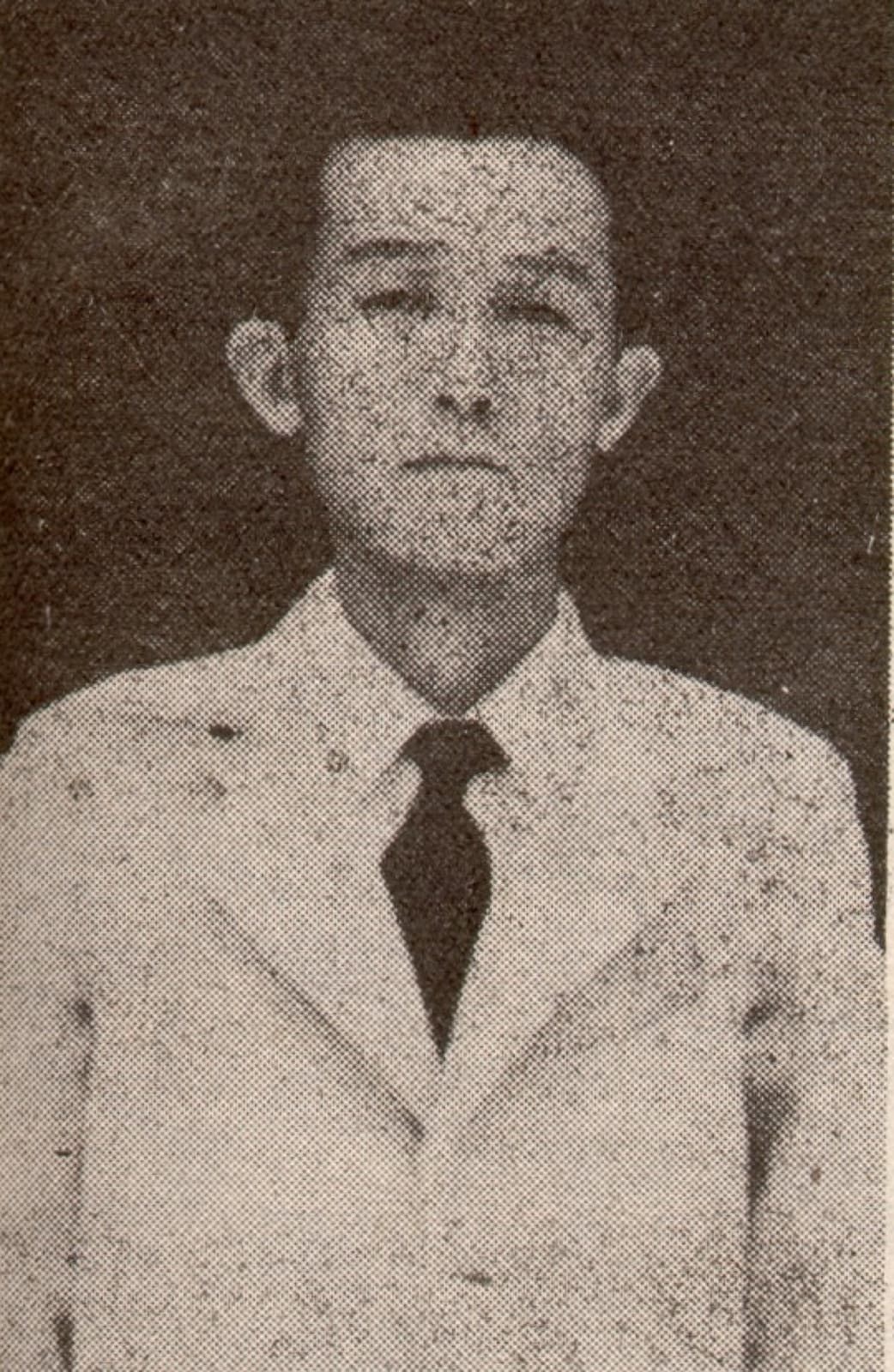
Yeh Chiu-mu, first deputy speaker of the Pingtung city assembly. In the February 28 Incident townspeople made him acting mayor; within days he was shot and his body paraded through the streets.
*The Establishment of Taiwan's Representative Bodies*, Civil Affairs Department, Taiwan Provincial Administrative Executive Office, 1946
Isle of Time