Archives

Light and Shadow

Taiwan Under the Regime Transition: Postwar, Takeover, and Order Reconstruction (1945–1949)

18 volumes

Vol. 1

From Cairo to Taipei

In November 1943, the leaders of China, the United States, and Great Britain reached a consensus at the Cairo Conference, declaring that "all territories Japan has stolen from the Chinese, such as Manchuria, Formosa, and the Pescadores, shall be restored to the Republic of China." Although not a formal treaty, this declaration became the political foundation for post-war territorial rearrangement in East Asia.

3 images

Vol. 2

Surrender and Takeover

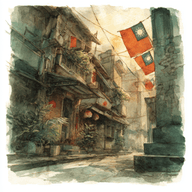
In October 1945, the Nationalist government held a surrender ceremony in Taipei, formally ending Japan's fifty-year colonial rule over Taiwan. However, the joy of "retrocession" was quickly overshadowed by numerous problems during the takeover. Chen Yi's civil-military unified administration, the uneven quality of incoming officials, administrative barriers caused by language differences, and the wholesale transformation of Taiwan's existing institutions rapidly intensified social tensions.

3 images

Vol. 3

The Shibuya Incident

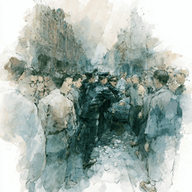
In the early post-war period, tens of thousands of Taiwanese residing in Japan faced an unprecedented identity crisis. They were no longer Japanese nationals in legal terms, yet the ROC's nationality determination process remained unclear. The 1946 "Shibuya Incident" — a street clash between Taiwanese and Japanese police — became emblematic of this dilemma, drawing international attention to the legal status of Taiwanese people.

2 images

Vol. 4

Homecoming of the Overseas

During the Japanese colonial era, large numbers of Taiwanese were mobilized or voluntarily traveled throughout the Japanese Empire. After the war ended, Taiwanese scattered across mainland China, Southeast Asia, and Japan proper faced the question of repatriation. Some returned to the "motherland" filled with anticipation, only to find their homeland utterly transformed.

1 image

Vol. 5

De-Japanization

After taking over Taiwan, the Nationalist government immediately launched comprehensive "de-Japanization" and "re-Sinicization" policies. Japanese was banned in public spaces, Japanese-style place names were replaced with Chinese ones, and school instruction switched from Japanese to Chinese. Social organizations, legal systems, and administrative practices formed during the Japanese era were completely overhauled.

1 image

Vol. 6

The Parliamentary System

In the early post-war period, the Nationalist government established local self-governance and political participation systems in Taiwan. In 1946, Taiwan held its first-ever provincial assembly elections, giving Taiwanese their first opportunity to participate in politics through the ballot. However, this system was constrained from the outset: the Provincial Assembly had only an advisory function, with actual decision-making power remaining in the hands of the Chief Executive's office.

3 images

Vol. 7

The Constitutional Convention

At the end of 1946, the Republic of China convened the Constitutional Convention in Nanjing, with Taiwan sending representatives to participate in national-level constitutional deliberations for the first time. These Taiwan representatives — many of them Japanese-educated intellectuals — entered the assembly with expectations for democratic institutions, only to discover vast gaps in language and political culture between themselves and mainland delegates.

2 images

Vol. 8

The Early Economic Crisis

In the early days of the takeover, Taiwan experienced severe economic turmoil. The Nationalist government shipped massive quantities of Taiwan's resources to mainland China to support the civil war, causing skyrocketing prices and shortages of daily necessities on the island. Chen Yi's government implemented a command economy that monopolized major industries, and the monopoly bureau system provoked intense public resentment.

Vol. 9

The February 28 Incident

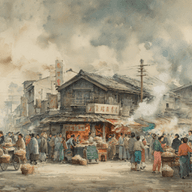
On the evening of February 27, 1947, Monopoly Bureau agents seized contraband cigarettes from a widow outside the Tianma Teahouse in Taipei's Dadaocheng district, striking her with a pistol butt and, in the ensuing chaos, firing into the crowd and killing a bystander. More than a year of accumulated grievances — runaway inflation, food shortages, official corruption, and the exclusion of native Taiwanese from power — found their outlet that night. The next day, February 28, crowds marched on the Governor-General's Office to petition, only to be raked with gunfire from guards above. Word spread across the island by radio and by mouth, and within days, from Keelung to Pingtung, local committees formed and took over public order. A full-scale uprising against postwar rule had begun.

4 images

Vol. 10

March at the Port of Keelung

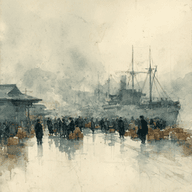
On the afternoon of 8 March 1947 the ships of the reorganised 21st Division came alongside at the Port of Keelung. These were the reinforcements Chen Yi had asked Nanjing for; they had sailed from Shanghai and were two days out. In the ten days before, the clash in Taipei had spread into settlement committees and armed standoffs across the island. In the ten days after, the membership lists of those committees became the lists for the arrests.

1 image

Vol. 11

The 27 Brigade

The gunfire of February 28, 1947, spread outward from Taipei, and the fury raced south along the trunk railway; within two days it had reached Taichung. On March 2, residents and students poured into the streets, and the city council convened an emergency citizens' assembly. Onto the platform stepped a woman of forty-six — Hsieh Hsueh-hung. Born into a poor family in Changhua and sold as a child bride, she had taught herself to read and made her way to Shanghai and to the Communist University of the Toilers of the East in Moscow. In 1928 she had helped found the Taiwanese Communist Party, and she had endured repeated imprisonment under the Japanese colonial authorities. In that moment, no one else on the island understood better how to forge a scattered crowd into a force.

2 images

Vol. 12

The Battle of Wuniulan

By March 14, 1947, the sky over Taichung had already changed. The 21st Division, which had landed at Keelung on March 8, was driving south, and wherever its machine guns and bayonets reached, blood ran in the streets. The 27 Brigade, which had held the city for barely ten days, could no longer stand against a regular army on the open plain. Hsieh Hsueh-hung and the officers of the operational headquarters made a decision that was heavy yet clear-eyed: to abandon Taichung and withdraw to the mountain town of Puli. This was no rout but a planned redeployment — to draw the fighting away from the crowded city, to spare its innocent residents the ruin of street combat, and, leaning on the barrier of the Central Mountain Range, to preserve the last strength of this young force. That night, trucks and marching fighters wound their way east along the mountain roads, their headlamps forming a thin thread of fire in the darkness, carrying rifles and ammunition — and the last desperate gamble of an entire generation of the island's youth.


2 images

Vol. 13

The Penghu Incident of 13 July

In the summer of 1949 the staff and students of eight joint middle schools from Shandong came south by way of Qingdao and Canton, and were finally put ashore in Penghu. Most of them were in their teens. They had followed their schools for thousands of kilometres and their baggage had come down to textbooks. The terms the schools had secured from the government were that the students would go on with their schooling, and only those of age would serve.

Vol. 14

The Dilemma of Native Elites

In the early post-war period, native Taiwanese elites faced an agonizing choice: cooperate with the new regime to secure space for reform, or resist unjust rule? Many intellectuals, local gentry, and professionals who had been active during the Japanese era initially chose to collaborate with the Nationalist government, hoping to improve governance through institutional channels.

2 images

Vol. 15

Chiang Kai-shek's Diary

Chiang Kai-shek's diary is an invaluable primary source for studying post-war Taiwan history. In these private notes, we glimpse the national leader's true thoughts on Taiwan affairs — from his expectations for Taiwan's "retrocession," to his dissatisfaction with Chen Yi's governance, to his reflections and responses following the February 28 Incident.

Records2 images

Vol. 16

Voices from Elite Diaries

Beyond official archives and the ruler's diary, the private diaries of native Taiwanese elites offer another perspective for understanding this history. These diaries record intellectuals' daily observations, emotional fluctuations, and political reflections during the regime transition.

Records

Vol. 17

The American Perspective

The United States played a subtle yet critical role in post-war Taiwan history. As the principal victor of the Pacific War, the U.S. wielded significant influence over Taiwan's disposition, yet its policies wavered between strategic interests and democratic values.

2 images

Vol. 18

1949

On 27 January 1949, the day before Lunar New Year's Eve, the Taiping sailed from Shanghai for Keelung. At a quarter to midnight, near Baijieshan in the Zhoushan Islands, she struck the Jianyuan, a freighter carrying 2,700 tons of coal and timber, and went down in about forty-five minutes. Nine hundred and thirty-two people died aboard the Taiping and seventy-two aboard the Jianyuan. Around fifty were pulled from the water.

2 images