

The Banishment of the Inibs
Siraya religion was in the hands of women. The inibs conducted the rites, treated the sick and read what was auspicious, and they also enforced a strict order around childbearing: a woman under thirty-five who conceived had to abort, husbands and wives lived apart after marriage, and only when the man was around forty did they share a house. These were not personal choices. They were a system, and the inibs administered it.
It was this that the Dutch missionaries ran into first. Candidius wrote of them in a report as old crones who teach the very contrary of what I teach. The line has been quoted ever since, because it puts the conflict accurately: what the two sides were contesting was not the name of God but who had the authority to decide over life and birth.
By 1633 Sinkan had largely gone over to the new faith as a village. In 1636 Junius opened the first school there and taught seventy boys to read and write in roman letters. The church took its ground an inch at a time in exactly that order: first the script, then the school, and only then the baptism figures.
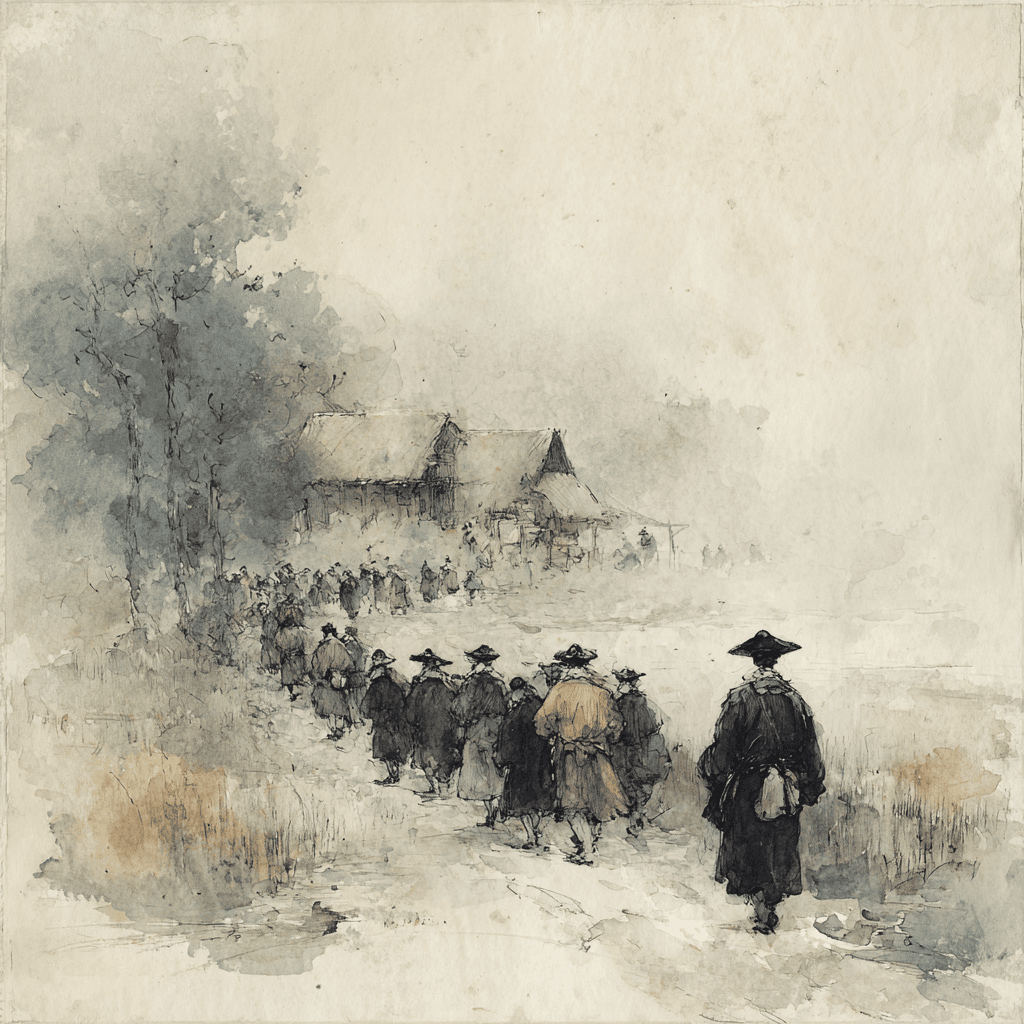
The turn came at the end of 1641. On 10 December seventy inibs were banished from Mattau, and the next day, 11 December,…
The turn came at the end of 1641. On 10 December seventy inibs were banished from Mattau, and the next day, 11 December, fifty-six from Soulang. With the other villages counted in, more than a hundred were driven from their homes. Banishment was not something a village could carry out. Only Company men could.
The vacancy was filled by the missionaries. When Junius left Taiwan in 1643 more than five thousand four hundred people had been baptised across six villages, and five to six hundred gathered for worship on a Sunday. The figures are handsome. The cost is entered in a different book.
Most of the banished women did not come back. Where they were taken and what they lived on appears in the records only in scattered entries. The Dutch recorded the dates of the banishments and the numbers. What became of the women afterwards they did not record, that being a kind of record nobody needed.
What is remembered of the Dutch period today is the Sinkan script and the first school. The same people and the same programme had another half: a few hundred women past middle age were taken out of their own villages, and a faith that had carried on for centuries was left, within twenty years, with nobody to carry it.
Everything of theirs that survives was quoted in order to be refuted. A missionary writing back to Batavia needed to show how stubborn the opposition was, and so set down what the opposition said. That is the only route by which these women entered writing at all. What can be drawn from the records is action: in 1632 elders and inibs in some villages agreed to give the practices up; at the end of 1641 women were marched out of their villages. Whether they minded, and how they saw it, is not there in a single line. This account stays short because the rest could only be supplied by someone else speaking for them.
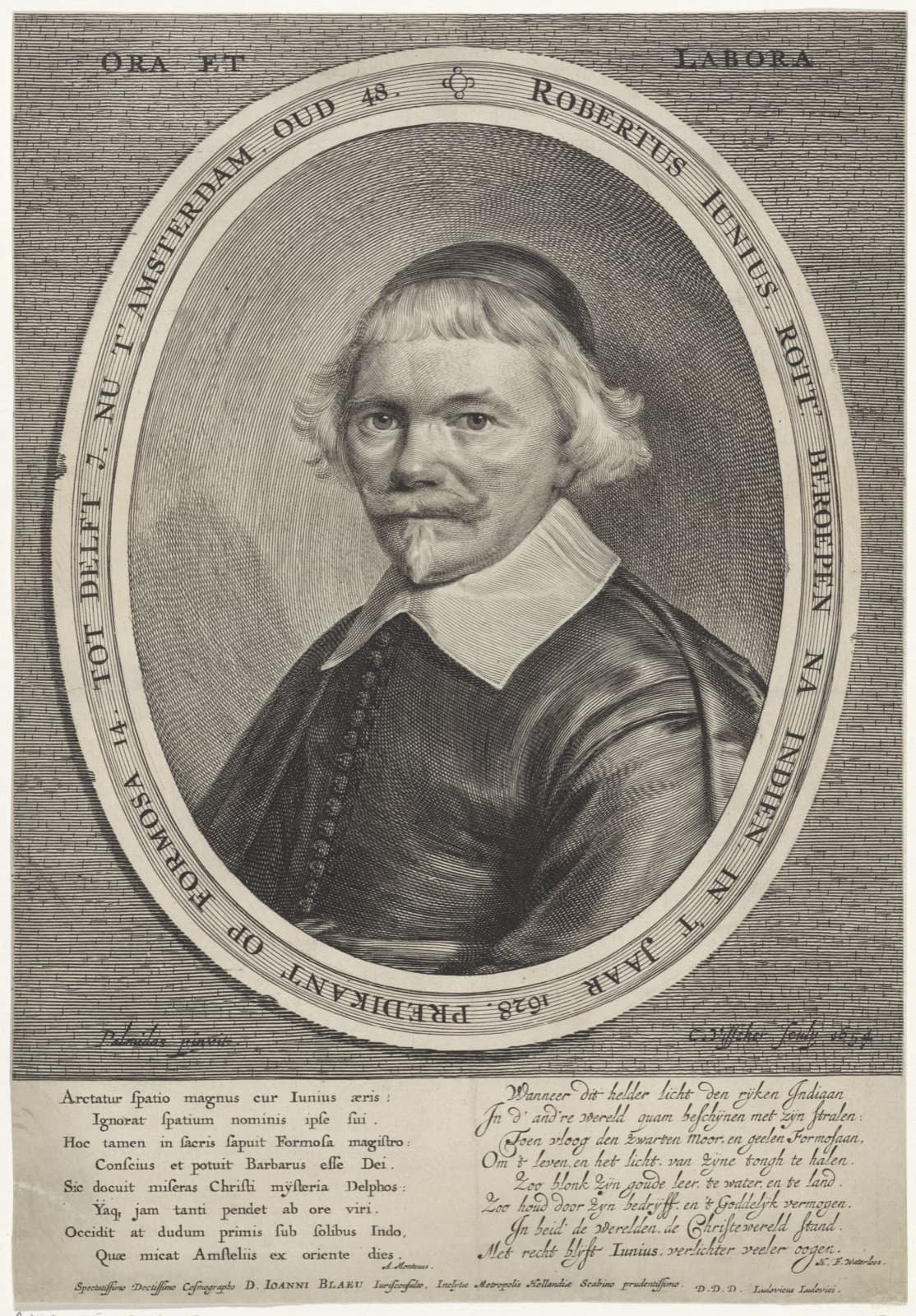
Robert Junius engraved by Cornelis Visscher, 1654. He served fourteen years in Formosa, and the banishment of the inibs at the end of 1641 was carried out at his urging.
Rijksmuseum, RP-P-1887-A-11535 (public domain)
Isle of Time