


The First Woman President, and an Apology
On January 16, 2016, Tsai Ing-wen was elected president with 6,894,744 votes, 56.12 percent. On the same day the Democratic Progressive Party took sixty-eight seats in the legislature, its first outright majority. Executive and legislative power changed hands together in a single election, something that had not happened since the first direct presidential vote in 1996.
She was Taiwan's first woman head of state, and the first woman to lead in East Asia without arriving through a family — Park Geun-hye was her father's daughter, Corazon Aquino her husband's widow, Indira Gandhi Nehru's daughter. Tsai's record was a doctorate in law, a trade negotiator's career, the Mainland Affairs Council, the vice premiership. Foreign coverage returned to this repeatedly; at home it was discussed rather less. Women held 38 percent of the seats in that legislature, the highest proportion in Asia, and most people were used to it.
The weightiest act of her first year came on August 1, Indigenous Peoples' Day. In the main hall of the Presidential Office she apologized, on behalf of the government, to the indigenous peoples of Taiwan: for four centuries of dispossession, for the denial of Pingpu identity, for the erasure of languages and cultures, and for the nuclear waste on Orchid Island. No Taiwanese head of state had ever apologized for this. That same day she announced a Presidential Office Indigenous Historical Justice and Transitional Justice Committee, convened by the president herself, which first met on December 20.
Six months later the same matter cracked open. On February 14, 2017, the Council of Indigenous Peoples published the rul…
Six months later the same matter cracked open. On February 14, 2017, the Council of Indigenous Peoples published the rules for delineating traditional territory, and excluded privately held land from the areas that could be designated. In practice that meant land already bought up around communities by developers fell outside the requirement of consultation and consent. From February 23, Panai Kusui, Nabu Husungan Istanda and Mayaw Biho camped on Ketagalan Boulevard in protest; they were later moved to the pavement beside the National Taiwan University Hospital MRT station, where they stayed for more than two thousand days.
The distance between the apology and the protest is what most deserves recording about this year. An apology is something an executive can complete on its own. Writing the definition of land into regulation means facing landowners, titles, development projects and local politics. The first took a day. The second is not finished.
2016 is usually remembered as a year of firsts. It also demonstrated something else: that a government can apologize in complete sincerity and then, within six months, through one technical administrative order, put the people it apologized to back on the street.
Women in Taiwanese politics did not begin in 2016. Hsu Shih-hsien was elected mayor of Chiayi in 1968, the first woman to head a city or county; Annette Lu became the first woman vice president in 2000; reserved seats for women had been written into the system since 1946, and a constitutional amendment in 2005 required that women make up no less than half of a party's at-large list. By 2016 those arrangements had produced a legislature that was 38 percent women. Which is why the reaction of many women that year was not excitement but a sense that this was in order. What actually got discussed was a matter of form: an unmarried woman with no children as head of state, and an opponent's remark during the campaign that not having given birth meant she could not understand families. The scale of the backlash to that sentence said more about where the society stood than the election did — not that a first woman president had changed things, but that this was no longer a sayable thing.
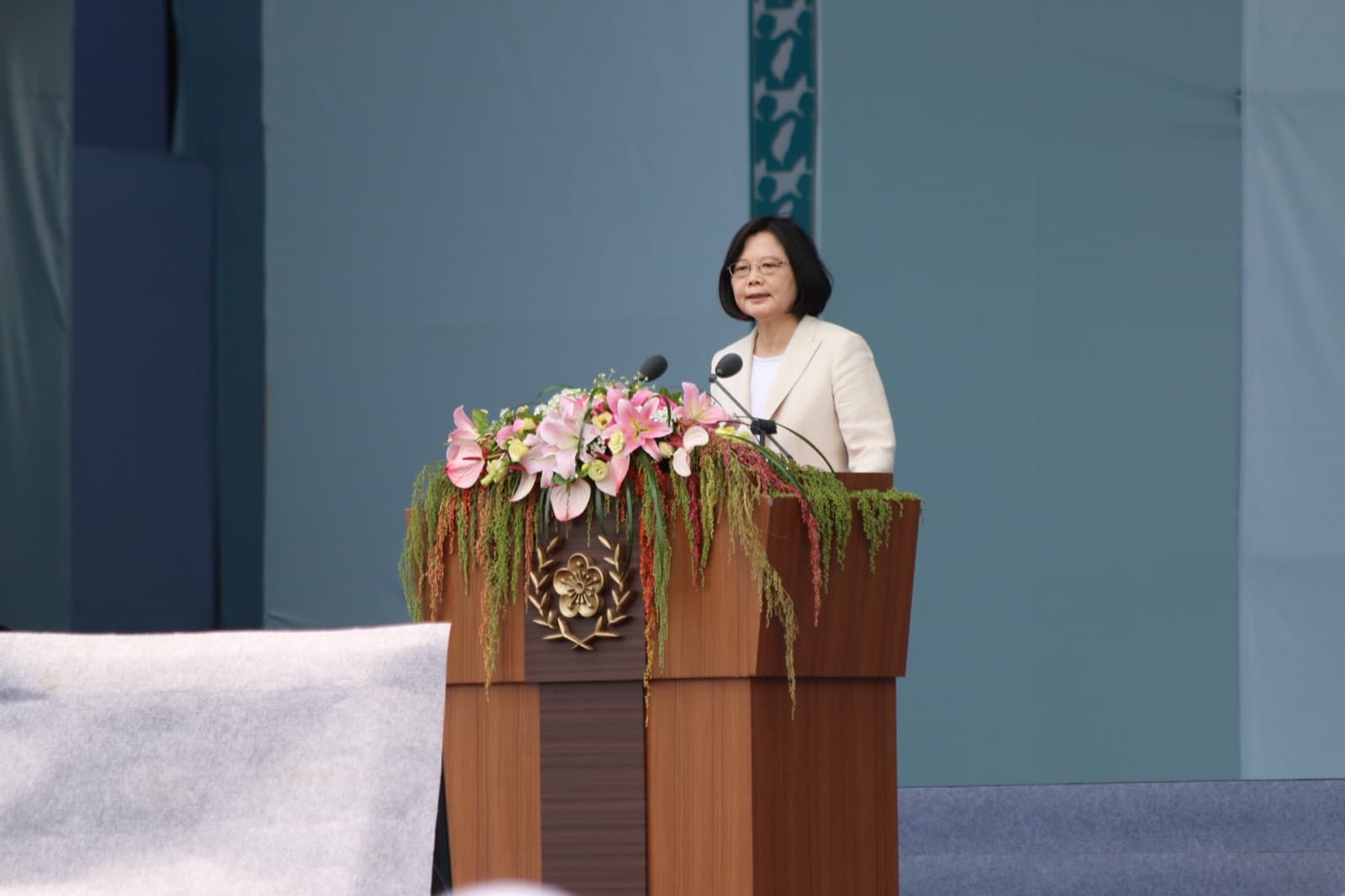
Tsai Ing-wen delivering her inaugural address, 20 May 2016. She was Taiwan's first woman president, and the first national leader to arrive there through elections alone, without a political family behind her.
Photograph by Chi Yung-ming, Voice of America
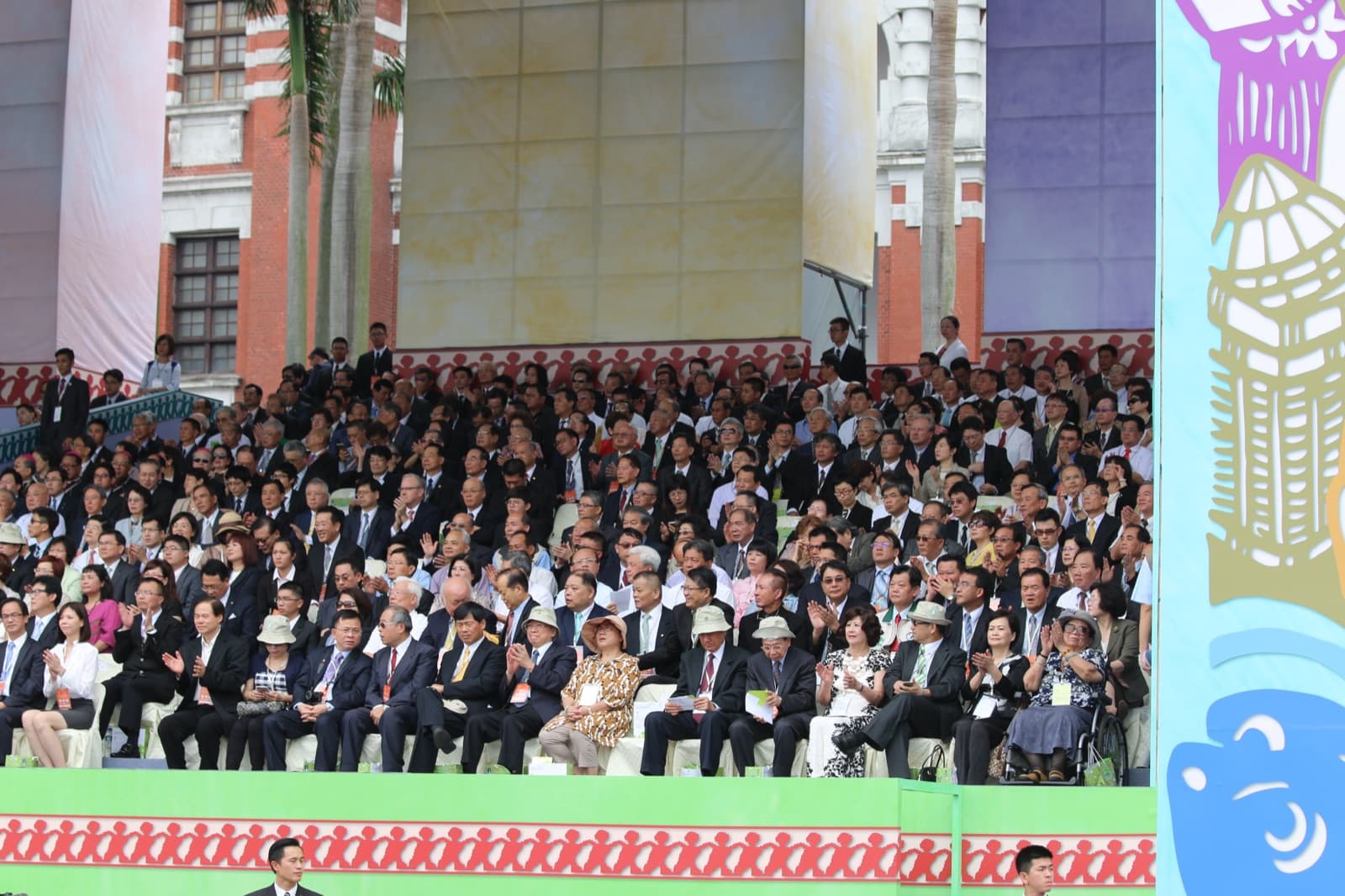
The audience at the inauguration. On 1 August that year she apologised to the indigenous peoples on the government's behalf — the first time a Taiwanese head of state had formally apologised for four centuries of dispossession.
Photograph by Chi Yung-ming, Voice of America
Isle of Time