


Treasures Beneath the Skies
On December 28, 2015, the Southern Branch of the National Palace Museum officially opened for trial operation in Taibao City, Chiayi County, bringing the Palace Museum's collection — long concentrated at Waishuangxi in Taipei — systematically into Taiwan's south for the first time. Positioned as a 'Museum of Asian Art and Culture,' this branch was not merely a newly built exhibition hall, but carried a profound contemporary ideal — cultural equity, and a southern perspective that repositioned Taiwan.
For a long time, Taiwan's cultural resources had been highly concentrated in the north; major museums, performance venues, and large arts events mostly gathered in the Taipei metropolis, and residents of the south and east wishing to behold the Palace Museum's national treasures often had to spend the better part of a day traveling far north — the gap in cultural access between city and countryside became a real, long-neglected issue.
The establishment of the Southern Branch was precisely meant to break this imbalance in the distribution of cultural resources, so that residents of central, southern, and eastern Taiwan, as well as students from surrounding townships who had rarely had the chance to encounter world-class collections, could appreciate precious artifacts close to home and enjoy an equal right of access to culture and an equal right to imagine the world.
Unlike the Taipei branch's focus on the imperial court collections of successive Chinese dynasties, the Southern Branch deliberately cast its gaze toward a broader Asia. Centered on Asian textiles, tea culture, Buddhist art, ceramics, and other cross-cultural exchanges, it presents, through artifacts from across Asia, the pluralistic face of Taiwan as a link in the Asian maritime network, reminding people that Taiwan's cultural coordinates should not look up only to a single Central Plain, but should be reunderstood and resituated within the context of all of Asia and even the maritime world.
This is the deep meaning of the 'southern perspective' — setting out from the land of the south, unfolding toward Asia, …
This is the deep meaning of the 'southern perspective' — setting out from the land of the south, unfolding toward Asia, toward the ocean, toward the world, allowing Taiwan to recognize anew its place in the world with a broader vision. In architecture, the Southern Branch was designed by a local team, with flowing curved volumes echoing the brush intentions of thick ink, flying white, and wash in calligraphy, set off by the artificial lake, greenery, landscape bridge, and expansive garden landscaping surrounding the grounds, creating a cultural park fusing the humanistic and the natural, open for the public to approach and rest, amid the open expanse of the Chianan Plain.
Although the road to opening was not without obstacles — site selection, construction progress, and the selection and interpretation of exhibits all sparked discussion and scrutiny from various quarters — the significance of the Southern Branch settling on this agricultural plain in Taibao, Chiayi, cannot be overlooked.
It symbolizes Taiwanese society's awareness of cultural equity, symbolizes the state's resources beginning to be willing to tilt toward long-marginalized localities, and symbolizes a turn in values willing to listen to the south, to confront the urban-rural divide, and to redistribute cultural voice.
As national treasures and Asian art slowly unfold under the warm sunlight of southern Taiwan, and children can gaze up at the treasures of the world on the very land where they grew up, the Southern Branch quietly tells of a simple yet profound conviction: culture should not belong only to a certain city, a certain class, or a certain people, but should, like sunlight, fall equally upon every corner of this island.
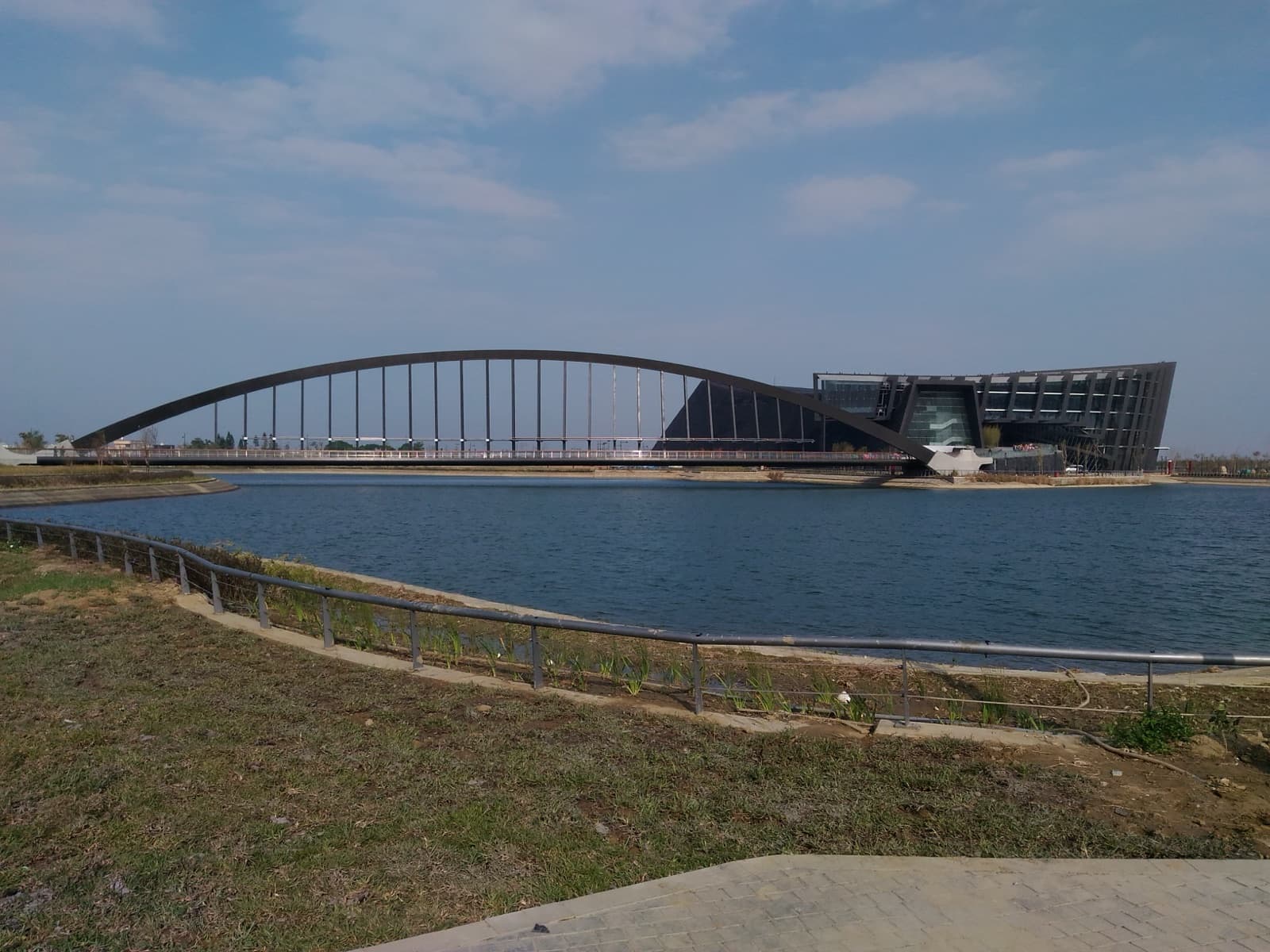
The main building of the National Palace Museum's Southern Branch with the Zhimei bridge, in its opening year of 2015. Sited at Taibao in Chiayi, it answered a policy question: whether the museum belonged only to Taipei.
B2322858 / public domain via Wikimedia Commons
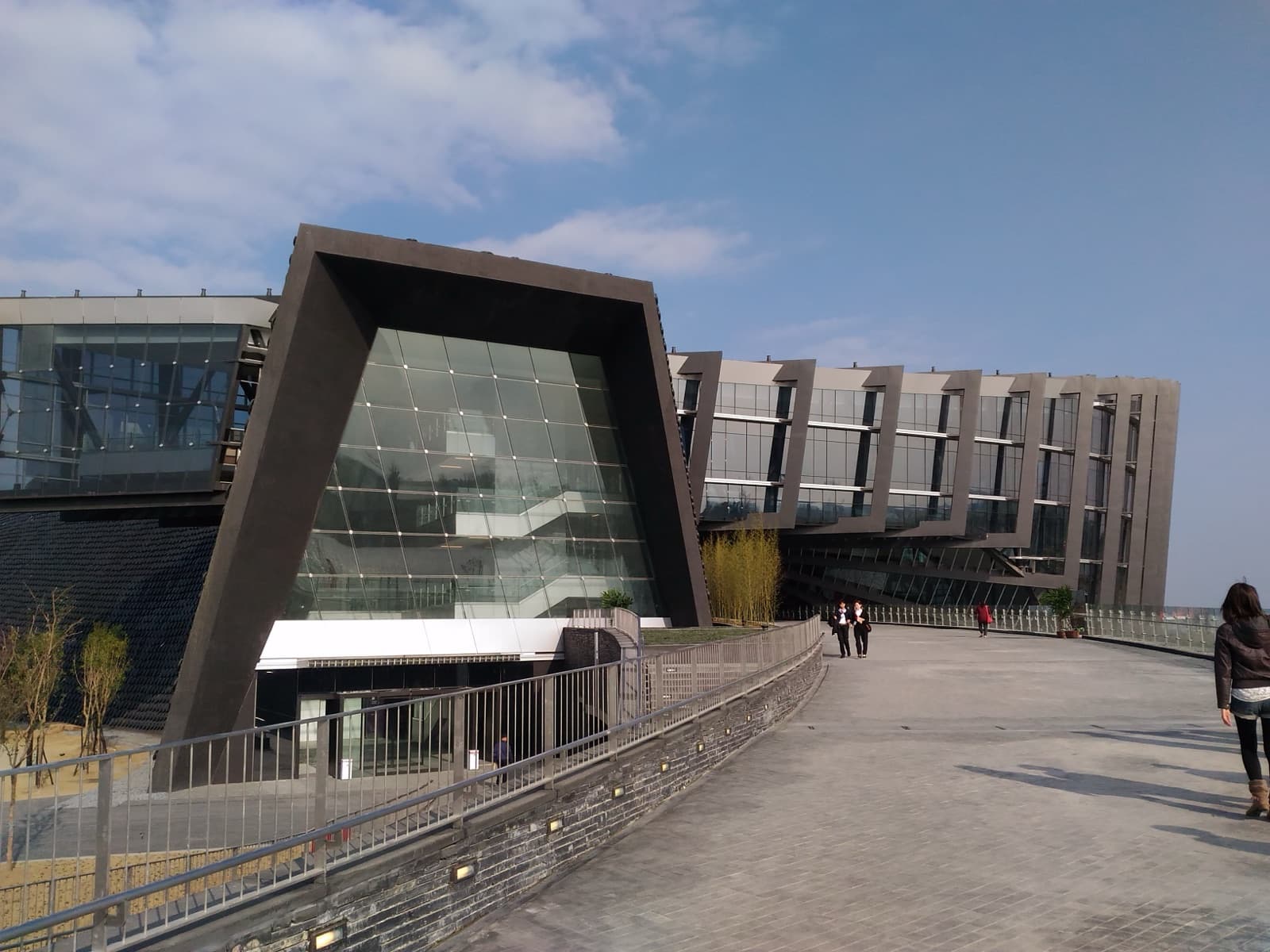
The entrance slope of the Southern Branch. Twenty years passed between the plan and the opening, through a change of design team, a halt in construction, and a running argument about what a national museum in the south should hold.
B2322858 / public domain via Wikimedia Commons
Isle of Time