


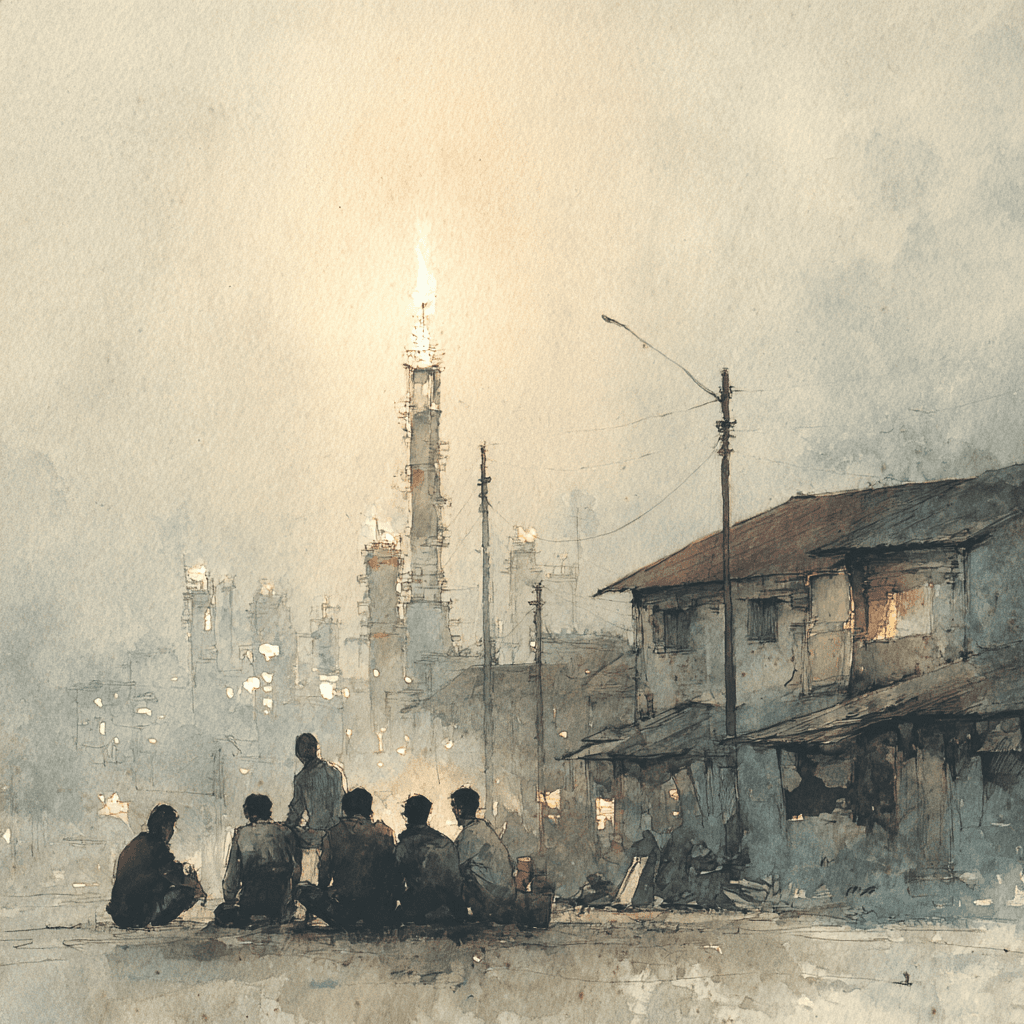
The refinery at the foot of Banping Mountain in Kaohsiung began as the Imperial Japanese Navy's Sixth Fuel Depot. After the war the Nationalist government took it over and made it the Chinese Petroleum Corporation's Kaohsiung refinery. In 1968 CPC built Taiwan's first naphtha cracker there, and in 1976 the second began production. Just outside the refinery wall lay Houjin.
The people of Houjin knew early on what they lived beside. On 4 June 1976 black rain fell on Houjin for the first time. The water in the Houjin River shone black, and before rain, when the air pressure dropped, the whole neighbourhood smelled of gas. On 30 July 1988 someone found that groundwater pumped from a well would catch fire.
In June 1987 CPC announced plans to build a fifth naphtha cracker at the Kaohsiung refinery. On 24 July the Minister of Economic Affairs, Li Ta-hai, came to inspect the site. Residents waited at the gate to see him, and he left by a side door. So they blocked the refinery's west gate, and the siege began that day. On the first night a resident, Wang Hsin-chang, put up three thousand dollars for a banquet cook to make salty rice porridge on the spot, and many of those who ate it stayed.
On 5 August a village meeting set up the Anti-Fifth Naphtha Cracker Self-Help Committee. On 22 December close to three thousand residents faced armed troops and police at the gate of the Zuoying military zone. On the last day of that year, residents brought the costumes of a Song Jiang martial troupe and coffins to confront the riot police.
On 31 December 2015 the twenty-five years were up, and the Kaohsiung refinery closed.
The siege lasted more than three years. Liu Yung-ling turned his tailor's shop into the Anti-Fifth Naphtha Cracker Tailor, the movement's headquarters, and on 25 March 1990 he climbed the refinery's flare tower.
On 6 May 1990 Houjin held Taiwan's first referendum, with a turnout of 66.4 percent. Against the cracker were 4,499 votes, about sixty-one percent. In favour were 2,900.
The vote was not binding. That September Premier Hau Pei-tsun brought riot troops into Houjin, and construction began under police guard. Li Yu-kun of the Houjin social welfare foundation carried a bottle of Houjin's black water to a breakfast meeting with Hau in protest. The government and CPC offered terms: 1.5 billion dollars in compensation, and a promise to move the refinery in twenty-five years. The fifth cracker was completed in 1994.
The accidents did not stop. On 3 April 2002 the P37 tank leaked 27,850 kilolitres of crude oil. A 2004 study found that cancers of the lymphatic and blood-forming system among girls in the community ran at 4.5 times the rate of a control area, and that June the Q102 tank overflowed. On 29 July 2007 a feedstock pipeline burst and caught fire, and on 29 October the No. 6 distillation unit burned. On 5 January 2008 the No. 2 vacuum gas oil unit exploded, relatives as far away as Luzhu phoned to ask if everyone was all right, and Houjin tied on yellow ribbons to demand that CPC leave on schedule.
On 31 December 2015 the twenty-five years were up, and the Kaohsiung refinery closed.
In the plans of the Executive Yuan and CPC, the fifth cracker was a link in the petrochemical supply chain. Plastics, fibre and rubber plants downstream needed feedstock, and with the first two crackers already on the site, expanding there was simplest. Houjin's siege lasted more than three years and the referendum came out sixty percent against, but the vote had no legal force, and the decision lay with the government.
In September 1990 Hau Pei-tsun brought in riot troops and, as construction began, offered two conditions: 1.5 billion dollars in compensation and relocation in twenty-five years. In the government's reckoning, money and time were being exchanged for a necessary plant. The cracker was finished in 1994, and the twenty-five-year promise was honoured on the last day of 2015.
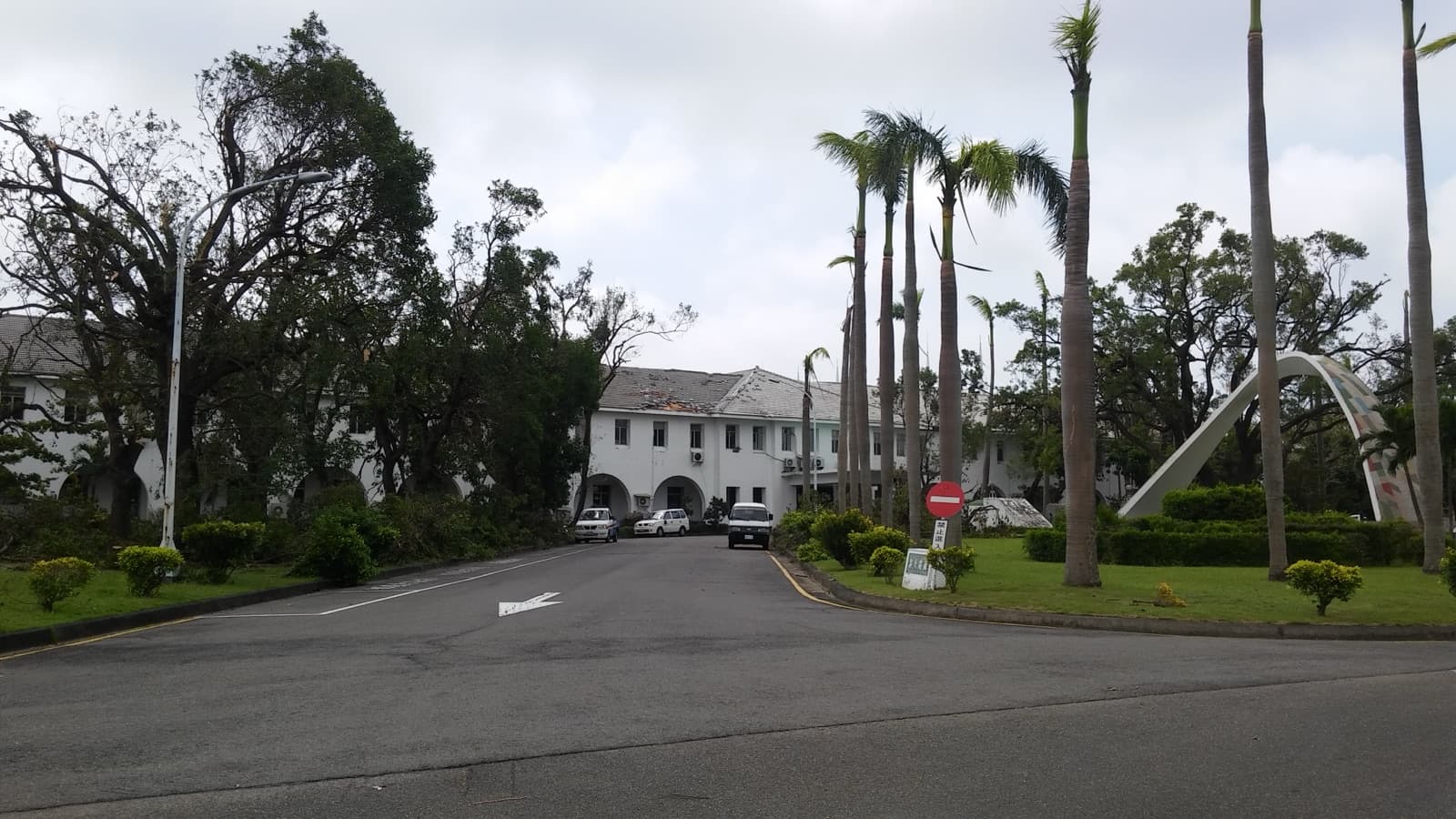
The main office of the former Japanese Navy Sixth Fuel Depot, now a Kaohsiung city heritage site. After the war CPC took over the plant as the Kaohsiung refinery, and Houjin lay just outside its wall.
地下高雄 / CC BY-SA 4.0 via Wikimedia Commons
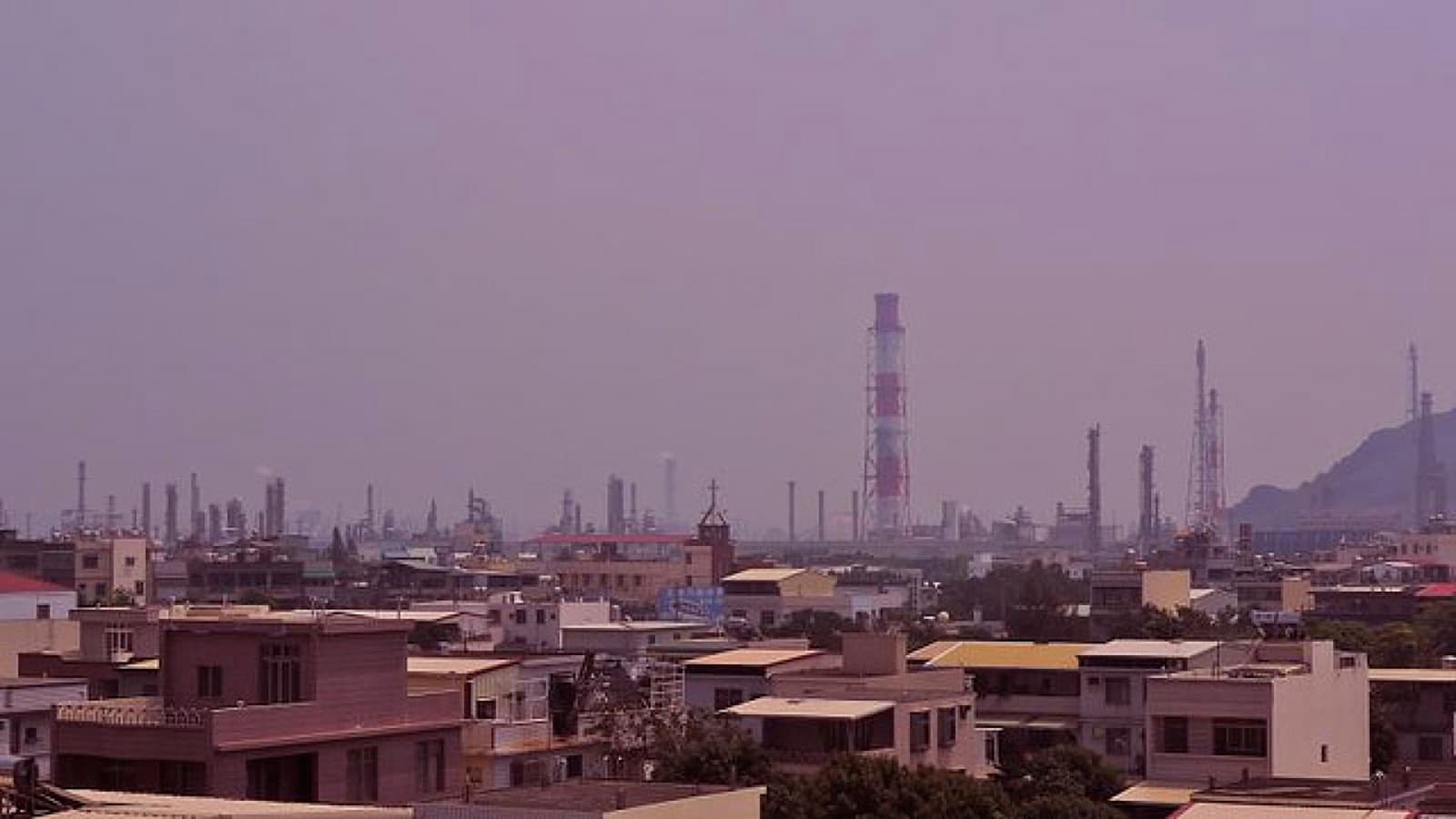
The Kaohsiung refinery seen from Nanzi in 2009, its stacks and flare tower rising behind the houses. The plant closed on the last day of 2015.
Cudown / CC BY-SA 2.0 via Wikimedia Commons