


On 29 December 1984 a group of young indigenous intellectuals met in the fifth lecture hall of Mackay Memorial Hospital in Taipei and founded the Alliance of Taiwan Aborigines. Its president was the Puyuma singer Kimbo Hu, and its founders included Icyang Parod, Chang-Fa Tung and Tuobasi Tamapima. At the time, the government's legal term for them was "mountain compatriots". The following February the alliance launched its journal, Aborigines.
In January 1986 Tang Ying-shen, nineteen years old, left the Tsou village of Tfuya in Alishan to look for work in Taipei. He had been studying at the teachers' college in Chiayi. An employment agency cheated him and placed him in a laundry on Xinsheng North Road, where his employer kept his identity card and made him work excessive hours. On 25 January, after drinking, he fought with the employer and killed the employer, his wife and their two-year-old daughter, then turned himself in. Every court found the facts clear and rejected pleas for leniency based on his surrender and on diminished responsibility. On 15 May 1987 he was executed by firing squad, aged nineteen years and ten months.
The Tang Ying-shen case made many people ask for the first time what young indigenous people met when they came to the city. Another thing reopened was the textbook story of Wu Feng. From the common-school reader the Japanese compiled in 1914, the tale of Wu Feng giving his life to end Tsou headhunting had been told in schoolbooks for more than seventy years. On 9 September 1986 Tsou people took to the streets to demand that Wufeng Township be renamed. On 31 December 1988 the Reverend Lin Zong-zheng and several young indigenous men used a chainsaw and steel cables to pull down the statue of Wu Feng in front of Chiayi Station. On 1 March 1989 Wufeng Township was renamed Alishan Township, and on 12 September Education Minister Mao Kao-wen approved removing the Wu Feng story from the textbooks.
The Alliance of Taiwan Aborigines was dissolved by its founders in 1998.
Over the same years, land became the biggest issue. On 25 August 1988 more than three thousand people from nine peoples, each in their own traditional dress, marched through Taipei chanting: to survive, give us back our land. It was the first large indigenous social movement since martial law ended. They marched again on 27 September 1989 under new slogans, land is life and land is our mother. The third march, on 10 December 1993, asserted that indigenous peoples held natural sovereignty over their land. Each time, two to three thousand people came.
Change began with names. On 1 August 1994 the third round of constitutional amendments replaced "mountain compatriots" with "indigenous people" in the Additional Articles. In 1995 the Name Act was amended so that indigenous people could restore their traditional names. On 10 December 1996 the Executive Yuan's Council of Indigenous Peoples was set up. In 1997 the constitutional term was changed again, to "indigenous peoples".
Land moved much more slowly. The Indigenous Peoples Basic Law, which recognises indigenous rights to land and natural resources, was not promulgated until 5 February 2005, and how and where traditional territories should be drawn is still disputed today.
The Alliance of Taiwan Aborigines was dissolved by its founders in 1998. In 2018 some of its former officers set it up again.
Most of those who met in the fifth lecture hall at Mackay Hospital at the end of 1984 were young indigenous people studying and working in the city. The first thing they had to deal with was a word. Government documents, household registers and schoolbooks called them "mountain compatriots", as if they were simply fellow citizens who happened to live in the hills. The alliance had three departments, for research, services and development, and from February 1985 it published Aborigines.
Over the next few years they were present at nearly everything: the campaign for Tang Ying-shen, the opposition to the deification of Wu Feng, protests against television dramas that mocked indigenous people, and the land movement they launched in 1988. On 1 August 1994 "indigenous people" was written into the Additional Articles of the Constitution. It was the alliance's most concrete gain in ten years. In 1998 its founders declared it dissolved.
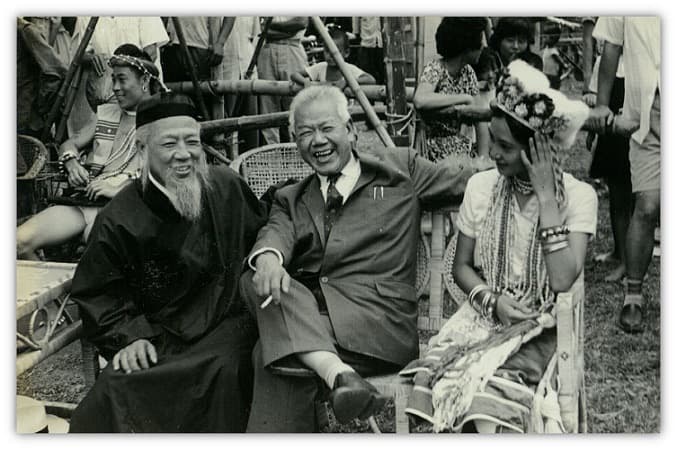
A still from the 1962 film Wu Feng, which won Best Educational Feature at the second Golden Horse Awards the next year. The story was still in the primary-school textbooks.
Taiwan History Archive System
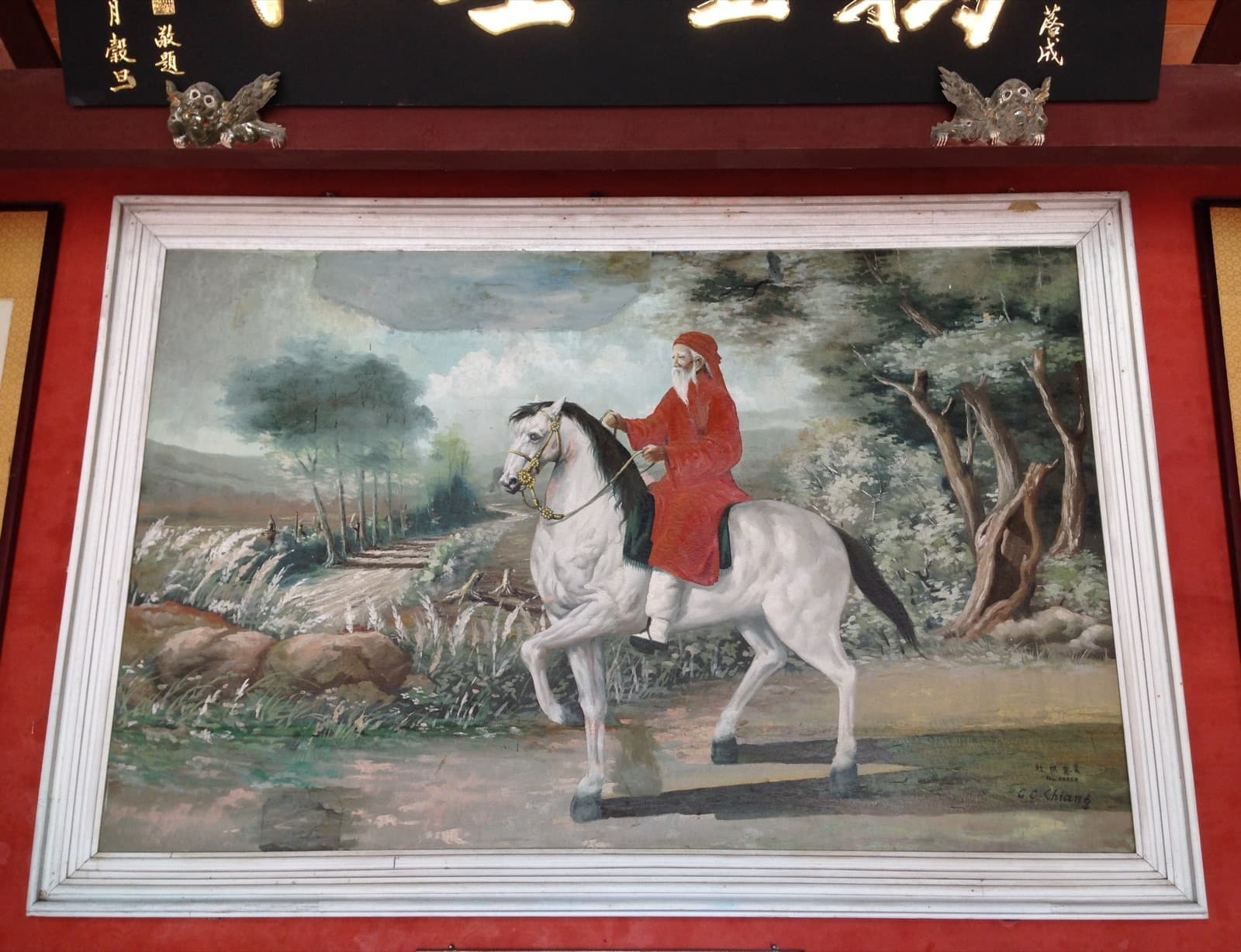
A painting inside the Wu Feng Temple in Chiayi showing him in a red robe on a white horse, the scene from the textbook story of the day he gave his life. Photographed in 2016.
Outlookxp / CC BY-SA 4.0 via Wikimedia Commons
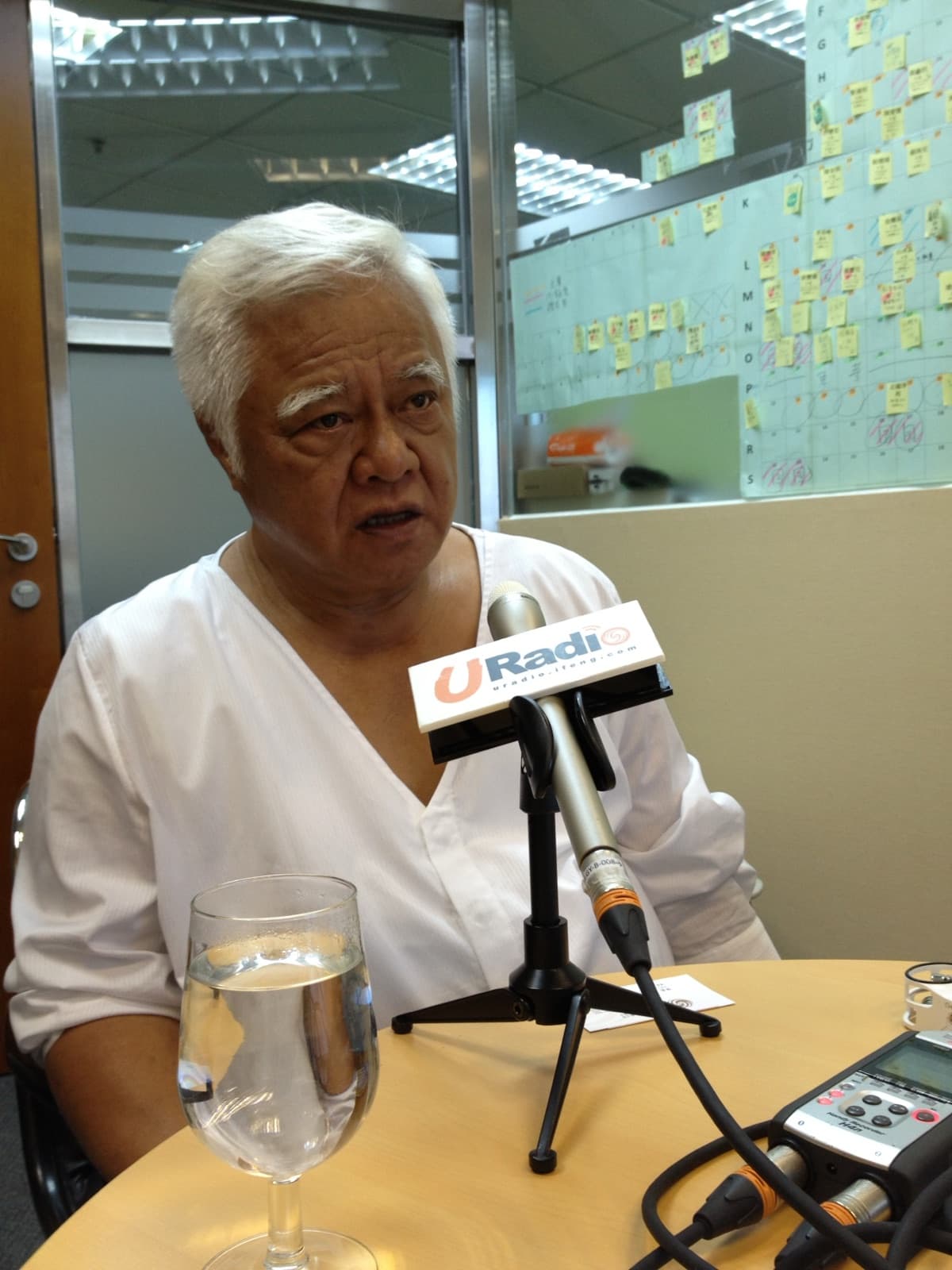
Kimbo Hu in 2014. When the Alliance of Taiwan Aborigines was founded in 1984, he was its first president.
Ivanafansu / CC0 via Wikimedia Commons