

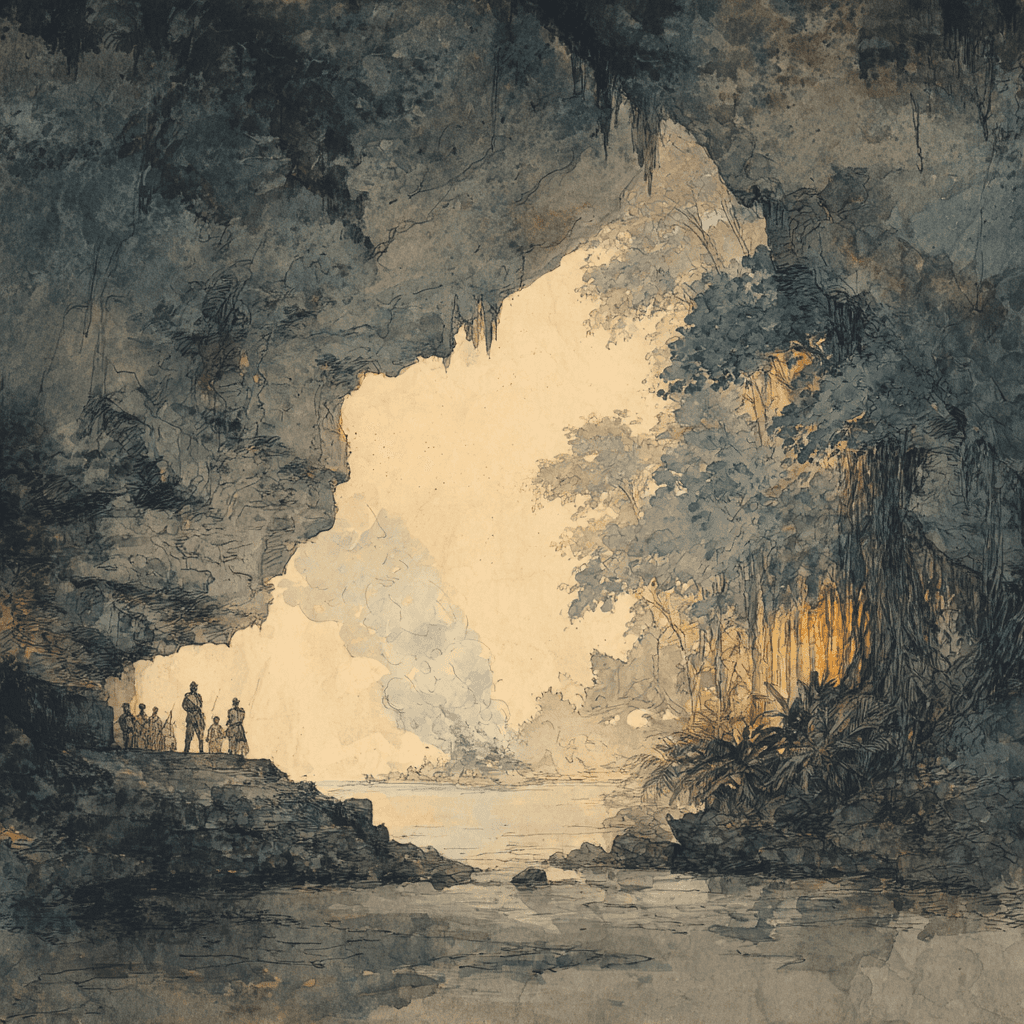
The Cave on Lamey
In October 1622 a Dutch East India Company ship, the Gouden Leeuw, put in at a coral island off the south-west coast of Taiwan for water. The men who went ashore did not come back. On Dutch charts the place became Golden Lion Island. The people living there called it Lamey.
In September 1631 the yacht Beverwijck struck the same reefs. Around fifty survivors held out on the shore for two days, and one man got away alive. Nine years separated the two wrecks, and on the Company's books they sat as two debts unsettled.
A first punitive expedition landed in November 1633 and stayed seven days. The soldiers found nobody. The islanders had withdrawn into the caves in the coral, where they had always gone when trouble came. The Dutch burned the villages and left.
The second expedition came ashore on 19 April 1636 under Jan Jurriaensz van Linga, with Sinkan warriors marching alongsi…
The second expedition came ashore on 19 April 1636 under Jan Jurriaensz van Linga, with Sinkan warriors marching alongside. On 26 April they found the cave. What followed is set down in the Zeelandia daybook in a level voice: block every mouth of it, leave one small opening, and feed burning coal and sulphur through that.
From 1 May people began to crawl out. On 4 May the entrance was opened, and the men who went in recorded two to three hundred bodies inside; three hundred and twenty-three were shipped to Tayouan. A third expedition followed in July. The men were sent into slavery in Batavia and around Taiwan, and the women and children were distributed among Dutch and Sinkan households.
A few people were still on the island for another nine years. In 1645 the Chinese tax farmer who had leased it from the Company carried off the last thirteen, and Lamey had no inhabitants of its own after that. The land was rented out for cultivation, and the name on the charts became Xiaoliuqiu.
The cave is now called the Black Ghost Cave, a stop on the tourist route in Liuqiu township, Pingtung, with stone steps and an interpretive board at the entrance. The board carries more than one version of the story, African slaves in one and pirates in another. The people who actually died in there left no names of their own. The Dutch wrote down the numbers.
The Lameyans left no writing. Everything of theirs that survives passed through a Dutch pen first, translated by an interpreter into Sinkan and then into Dutch before it reached a report. So this account holds to what the reports record as action: in 1633 they gave the village up to the fire and went into the cave; in 1636, walled in, some were willing to come out and some were not. The daybook records how they looked as they crawled out, and it records how many. It does not record names. This account is short because to carry it further would stop being a relay of their voice and start being a substitute for it.
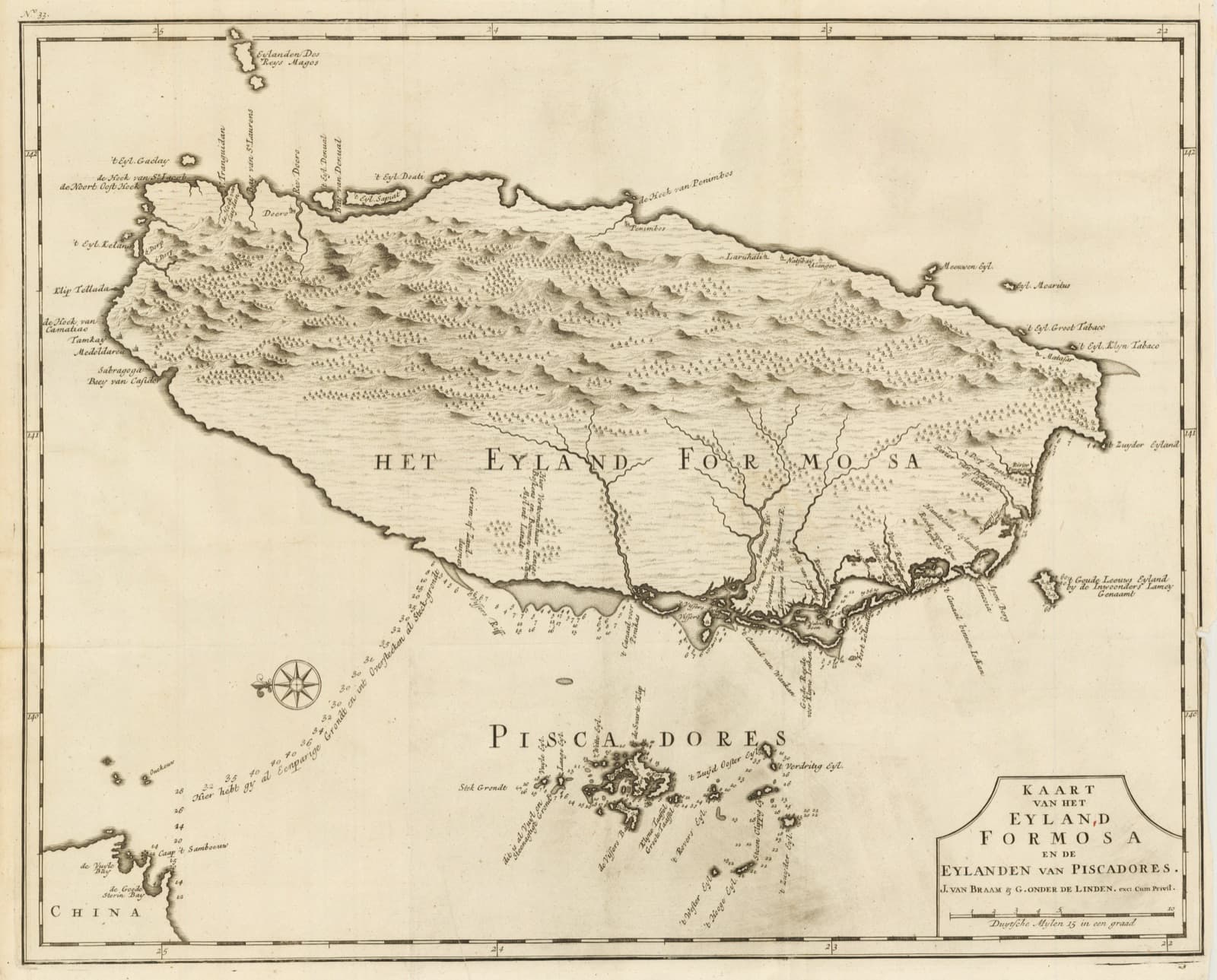
Chart of Formosa and the Pescadores from Valentijn's Oud en Nieuw Oost-Indien, 1727. Lamey lies off the south-west of the sheet; on Dutch charts it carried the name Golden Lion Island.
Engraved by Joannes van Braam and Gerard onder de Linden for Francois Valentijn, Oud en Nieuw Oost-Indien (public domain)
Isle of Time